

- Advertisement -
Jealous Husband | Signs, Causes & How to Deal With Jealousy
Is Your Husband Jealous? 15 Warning Signs & What You Can Do

- Advertisement -
Jealous Husband
If you’re living with a jealous husband, you already know how exhausting it can be to constantly explain your whereabouts, defend innocent conversations, and walk on eggshells to avoid triggering another jealous episode. Husband jealousy affects millions of marriages, transforming love into suspicion and trust into constant surveillance.
But here’s the truth: a jealous husband isn’t showing love—he’s showing insecurity. While mild jealousy is normal in relationships, excessive jealousy in marriage can destroy the foundation of trust, intimacy, and respect that healthy partnerships require.
What makes a husband jealous? The roots often lie in deep insecurity, past relationship trauma, fear of abandonment, or unhealthy attachment patterns developed in childhood. Understanding these causes is essential whether you’re searching for “how to deal with a jealous husband” or wondering “can a jealous husband change?”
In this comprehensive guide, you’ll discover:
- The top 10 signs your husband’s jealousy has become toxic
- Root psychological causes behind male jealousy
- Proven strategies to address jealousy in your marriage
- When to seek professional help vs. when to prioritize your safety
- Real success stories from couples who overcame jealousy
Whether you’re dealing with possessive husband behavior, constant accusations, or controlling jealousy that’s crossed into abuse, this article provides the expert insights and actionable advice you need to navigate this challenging situation.
Ready to understand what’s really happening in your marriage and what you can do about it? Let’s dive in.
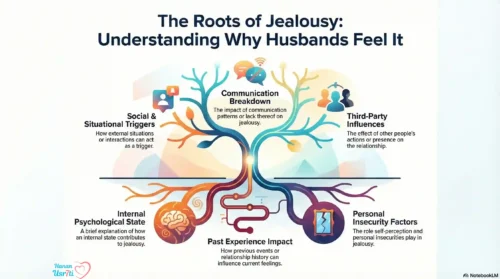
What Causes a Husband to Become Jealous?
Jealousy doesn’t appear out of nowhere. It’s usually rooted in deeper emotional or psychological issues. Let’s break down the most common causes:
Insecurity and Low Self-Esteem
When a man doesn’t feel good about himself, he may project those feelings onto his relationship. A husband with low self-esteem might constantly worry that he’s not good enough for his wife, leading him to fear that she’ll leave him for someone better. This insecurity manifests as jealousy—he becomes hypervigilant about potential threats, real or imagined.
Think of it like this: if someone is constantly worried about losing something valuable, they’ll guard it obsessively. Unfortunately, people aren’t possessions, and this kind of thinking can quickly become toxic.
Past Relationship Trauma
Has your husband been cheated on before? Past betrayals can leave deep emotional scars that carry over into new relationships. Even if you’ve never given him a reason to doubt you, his previous experiences might make him see threats everywhere. It’s like having a broken alarm system that goes off even when there’s no intruder.
Fear of Abandonment
Some men carry deep-seated fears of being left alone, often stemming from childhood experiences like parental divorce, neglect, or inconsistent caregiving. This abandonment anxiety can make them cling tightly to their partners and become jealous at the slightest hint of distance.
Cultural and Social Influences
Cultural background can play a significant role in how jealousy manifests. In some cultures, men are conditioned to view their wives as extensions of their honor and identity. Social media has also amplified jealousy issues—constant exposure to others’ lives and the ease of digital communication can fuel suspicious thoughts.
Lack of Trust and Communication
Sometimes jealousy stems from poor communication patterns established early in the relationship. If a couple hasn’t built a strong foundation of trust and open dialogue, misunderstandings can fester into jealous assumptions. When people don’t talk openly about their feelings, imagination fills in the gaps—and imagination is rarely kind.
Recognizing the Signs of a Jealous Husband
Not all jealousy looks the same. Here are the telltale signs that your husband’s jealousy might be problematic:
Constant Monitoring and Surveillance
Does he check your phone when you’re not looking? Does he track your location through apps or call repeatedly when you’re out? This surveillance behavior indicates a serious lack of trust and respect for your privacy.
Warning signs include:
- Demanding passwords to your devices and social media accounts
- Installing tracking apps on your phone
- Showing up unexpectedly at places you’ve mentioned visiting
- Checking your call logs and messages regularly
Excessive Questioning About Daily Activities
A jealous husband might interrogate you about every aspect of your day. Who did you talk to? What did they say? Why did it take you so long? This constant questioning isn’t about interest in your life—it’s about control and suspicion.
Isolation from Friends and Family
Does your husband get upset when you spend time with others? Does he find reasons why you shouldn’t see certain friends or family members? Isolation is a classic tactic used by jealous or controlling partners to maintain power in the relationship.
Accusations Without Evidence
Unfounded accusations are a major red flag. If your husband regularly accuses you of flirting, cheating, or being attracted to others without any real evidence, his jealousy has moved into irrational territory.
Controlling Behavior
Jealousy and control often go hand in hand. A jealous husband might:
- Dictate what you can wear
- Limit your work opportunities or social activities
- Control finances to limit your independence
- Make decisions without consulting you
Emotional Outbursts and Anger
Does your husband become angry or emotionally volatile when jealous feelings arise? Explosive reactions, silent treatment, or emotional manipulation are signs that jealousy is affecting his ability to regulate emotions.
![Jealous Husband Signs, Causes]() The Psychology Behind Male Jealousy
The Psychology Behind Male Jealousy
 The Psychology Behind Male Jealousy
Understanding the psychological roots of jealousy can help you address it more effectively.
Evolutionary Perspectives on Jealousy
From an evolutionary standpoint, some researchers suggest that male jealousy developed as a mechanism to ensure paternity certainty. While we’ve evolved far beyond our cave-dwelling ancestors, these primal instincts can still influence behavior at a subconscious level. However, this explanation doesn’t excuse jealous behavior—it simply provides context.
Attachment Styles and Jealousy
Attachment theory offers valuable insights into jealous behavior. People with anxious attachment styles—often developed in childhood—tend to be more prone to jealousy. They fear rejection and abandonment, leading to clingy behavior and constant need for reassurance.
The four attachment styles:
| Attachment Style | Characteristics | Jealousy Level |
|---|---|---|
| Secure | Trusting, comfortable with intimacy | Low |
| Anxious | Clingy, fears abandonment | High |
| Avoidant | Distant, values independence | Moderate |
| Disorganized | Unpredictable, contradictory needs | Variable/High |
The Role of Possessiveness in Relationships
Possessiveness treats partners as objects to be owned rather than individuals with autonomy. A possessive husband views his wife’s independence as a threat to his control. This mindset is fundamentally unhealthy and incompatible with the mutual respect necessary for a thriving marriage.
How Jealousy Affects Marriage and Family Life
The ripple effects of jealousy extend far beyond just the couple.
Emotional and Mental Health Impact
Living with a jealous husband can take a serious toll on your mental health. Many women report:
- Chronic anxiety and stress
- Depression and feelings of hopelessness
- Loss of self-esteem and confidence
- Emotional exhaustion
You might find yourself constantly trying to prove your loyalty or avoid situations that might trigger his jealousy. This hypervigilance is mentally draining and can lead to burnout.
Effects on Children and Family Dynamics
Children are perceptive—they notice tension, arguments, and unhealthy dynamics. Growing up in a home with jealousy-fueled conflict can affect children’s development and their future relationship patterns. They may learn that jealousy equals love or that controlling behavior is normal.
The Erosion of Trust and Intimacy
Ironically, jealousy destroys the very thing it seeks to protect. When a husband’s jealousy drives constant suspicion and control, trust crumbles. Without trust, genuine intimacy becomes impossible. The relationship transforms from a partnership into a power struggle.
Is Your Husband’s Jealousy Normal or Toxic?
Not all jealousy is created equal. Here’s how to distinguish between normal and toxic jealousy.
Healthy vs. Unhealthy Jealousy
Healthy jealousy:
- Occurs occasionally in response to real situations
- Is communicated calmly and respectfully
- Motivates positive relationship investment
- Doesn’t restrict your freedom or independence
- Passes relatively quickly
Unhealthy jealousy:
- Is constant and irrational
- Leads to controlling or aggressive behavior
- Restricts your activities and relationships
- Is accompanied by accusations and mistrust
- Escalates over time
When Jealousy Crosses Into Abuse
Jealousy becomes abusive when it’s used as a tool for control. Warning signs of abuse include:
- Physical intimidation or violence
- Threats of harm to you, himself, or others
- Complete isolation from support systems
- Financial control preventing independence
- Destruction of property during jealous episodes
Important note: If you’re experiencing any form of abuse, your safety is the priority. Reach out to domestic violence resources in your area.
Red Flags You Shouldn’t Ignore
Pay attention to these serious warning signs:
- Escalating intensity of jealous behavior
- Jealousy that occurs regardless of your behavior
- Refusal to acknowledge the problem
- Unwillingness to seek help
- Jealousy accompanied by substance abuse
How to Deal With a Jealous Husband
If your husband’s jealousy is in the “unhealthy but not abusive” category, there are strategies that might help.
Open and Honest Communication
Communication is your most powerful tool. Choose a calm moment (not during a jealous episode) to have an honest conversation. Use “I” statements to express how his behavior affects you: “I feel suffocated when you check my phone” rather than “You’re too controlling.”
Effective communication tips:
- Pick the right time and place
- Stay calm and non-accusatory
- Listen to his concerns without becoming defensive
- Focus on specific behaviors, not character attacks
- Work together to find solutions
Setting Healthy Boundaries
Boundaries aren’t about creating distance—they’re about creating respect. You have the right to:
- Privacy in your personal communications
- Time with friends and family
- Pursue your own interests and hobbies
- Make decisions about your own life
Be clear about what behaviors you’ll accept and what you won’t. Boundaries only work if you consistently enforce them.
Building Trust Through Transparency
While you shouldn’t have to prove your loyalty constantly, reasonable transparency can help build trust. This doesn’t mean surrendering your privacy, but rather being open about your life in ways that feel comfortable. Share details about your day voluntarily, introduce him to your friends, and involve him in parts of your life he feels excluded from.
Encouraging Professional Help
Sometimes jealousy issues require professional intervention. Suggest couples counseling as a way to improve your relationship together. Frame it positively: “I want us to be stronger, and I think a therapist could help us communicate better.”
Can a Jealous Husband Change?
This is the million-dollar question, isn’t it? The answer is: yes, but only if he wants to.
The Importance of Self-Awareness
Change begins with recognition. Your husband must acknowledge that his jealousy is a problem and take responsibility for his behavior. Without this self-awareness, no amount of external pressure will create lasting change.
Therapy and Counseling Options
Professional help can make a significant difference. Options include:
Therapy types and their benefits:
| Therapy Type | Focus | Best For |
|---|---|---|
| Cognitive Behavioral Therapy (CBT) | Changing thought patterns | Irrational jealousy, anxiety |
| Individual Therapy | Personal issues and trauma | Deep-rooted insecurity |
| Couples Counseling | Relationship dynamics | Communication problems |
| Group Therapy | Shared experiences | Feeling less alone |
Long-Term Strategies for Improvement
Change doesn’t happen overnight. Long-term improvement requires:
- Consistent effort and practice
- Regular self-reflection
- Ongoing communication
- Patience from both partners
- Celebrating small victories
When to Seek Professional Help
Don’t wait until things are completely broken before seeking help.
Marriage Counseling
Consider couples counseling if:
- Communication has completely broken down
- You’re stuck in negative patterns
- Trust has been significantly damaged
- You’re considering separation
- You want to prevent things from getting worse
A skilled therapist can provide neutral ground for difficult conversations and teach you tools for healthier interaction.

Individual Therapy for Your Husband
Your husband might benefit from individual therapy to address:
- Personal insecurities
- Past trauma
- Anxiety or depression
- Anger management issues
- Attachment problems
Support Groups and Resources
Both of you might find value in support groups where you can connect with others facing similar challenges. Online communities and local support groups provide validation, advice, and the reminder that you’re not alone.
Protecting Yourself in a Relationship With a Jealous Husband
Your wellbeing matters just as much as the relationship.
Maintaining Your Independence
Never lose yourself in the process of managing your husband’s jealousy. Continue to:
- Maintain friendships and family connections
- Pursue your career and personal goals
- Engage in hobbies and interests
- Have your own financial resources when possible
Independence isn’t about preparing to leave—it’s about maintaining your identity and mental health.
Recognizing Emotional Abuse
Jealousy-fueled emotional abuse can be subtle but devastating. Signs include:
- Gaslighting (making you doubt your own perceptions)
- Constant criticism disguised as concern
- Humiliation in front of others
- Using jealousy to justify unacceptable behavior
If you recognize these patterns, seek support from trusted friends, family, or professionals.
Creating a Safety Plan
If jealousy has escalated to threats or violence, you need a safety plan:
- Identify safe places you can go quickly
- Keep important documents accessible
- Have a code word with trusted friends or family
- Save money in a separate account if possible
- Know the contact information for local domestic violence resources
Remember: You are not responsible for your husband’s jealousy, and you deserve to feel safe in your own home.
Success Stories: Couples Who Overcame Jealousy
While the challenges are real, many couples have successfully worked through jealousy issues. The common threads in success stories include:
- Both partners committing to change
- Consistent professional help
- Patience and persistence
- The jealous partner taking ownership of their behavior
- Improved communication patterns
- Rebuilding trust gradually over time
One woman shared that after two years of couples counseling and her husband attending individual therapy, their marriage transformed. Her husband learned that his jealousy stemmed from childhood abandonment issues. With this understanding and ongoing work, he developed healthier coping mechanisms, and they rebuilt their relationship on a foundation of trust.
Another couple found success by establishing clear boundaries and practicing radical transparency. The wife agreed to share her location during outings (something she felt comfortable with), while the husband worked on managing his anxiety without monitoring her constantly. Over time, as trust rebuilt, these measures became unnecessary.
These stories remind us that change is possible—but it requires work, commitment, and often professional guidance.
Conclusion
Living with a jealous husband is challenging, but understanding the root causes and recognizing the signs can empower you to address the issue effectively. Whether jealousy stems from insecurity, past trauma, or unhealthy attachment patterns, the key to improvement lies in open communication, healthy boundaries, and often professional help.
Remember that some jealousy in relationships is normal—it’s the excessive, controlling, and irrational jealousy that damages relationships and wellbeing. You have the right to a relationship built on trust, respect, and mutual support, not suspicion and control.
If your husband is willing to acknowledge the problem and work toward change, there’s hope for your relationship. Therapy, consistent communication, and time can heal jealousy issues. However, if his jealousy has crossed into abuse or he refuses to seek help, prioritizing your safety and wellbeing isn’t selfish—it’s necessary.
Whatever path you choose, know that you deserve happiness, freedom, and a partner who trusts and respects you. Don’t lose yourself in the process of trying to fix someone else. And most importantly, remember that you’re not alone—resources, support, and help are available.
FAQs
1. What’s the difference between normal jealousy and toxic jealousy in a husband?
Normal jealousy is occasional, based on real situations, communicated respectfully, and doesn’t restrict your freedom. Toxic jealousy is constant, irrational, leads to controlling behavior, restricts your activities and relationships, and escalates over time. Toxic jealousy often involves monitoring, unfounded accusations, isolation from loved ones, and emotional manipulation. If your husband’s jealousy makes you feel trapped, anxious, or controlled, it’s crossed into toxic territory.
2. Can therapy really help a jealous husband change his behavior?
Yes, therapy can be highly effective if your husband is willing to participate and do the work. Cognitive Behavioral Therapy helps address the thought patterns driving jealous behavior, while individual therapy can uncover root causes like past trauma or insecurity. Couples counseling improves communication and rebuilds trust. However, therapy only works if your husband acknowledges the problem and genuinely wants to change—you can’t force someone into meaningful change.
3. How should I respond when my husband makes jealous accusations?
Stay calm and don’t become defensive, as defensiveness can escalate the situation. Acknowledge his feelings without accepting false accusations: “I understand you’re feeling insecure, but your accusation isn’t accurate.” Offer reasonable reassurance but don’t feel pressured to “prove” your innocence constantly. If accusations are frequent, address the pattern in a calm conversation outside of jealous episodes, and consider suggesting professional help to address underlying trust issues.
4. Is it my fault that my husband is jealous?
No. Your husband’s jealousy is his responsibility, not yours. While relationship dynamics involve both partners, you are not responsible for his insecurities, past traumas, or emotional regulation. Even if you’ve made mistakes in the relationship, jealousy that manifests as control, monitoring, or abuse is never justified. You can support him in addressing his jealousy, but you cannot fix it for him, and you shouldn’t sacrifice your wellbeing or independence trying to manage his emotions.
5. When should I consider leaving a relationship with a jealous husband?
Consider leaving if his jealousy has become abusive (physical violence, threats, complete isolation, financial control), if he refuses to acknowledge the problem or seek help, if the jealousy is escalating despite intervention, if your mental or physical health is suffering significantly, or if you feel unsafe. Trust your instincts—if you’re researching this topic, part of you already knows something isn’t right. Leaving isn’t failure; sometimes it’s the healthiest choice for everyone involved. Seek support from domestic violence resources if needed.
References:
- American Psychological Association – “Understanding Jealousy and Its Impact on Relationships” – https://www.apa.org
- Journal of Marriage and Family Therapy – Research on attachment styles and relationship patterns – https://www.aamft.org