

- Advertisement -
Wheat Oil for Skin | 11 Proven Benefits, Uses &, Application Guide (2026)
How to Use Wheat Oil for Skin | Anti-Aging Benefits & Expert Tips


- Advertisement -
Wheat Oil for Skin
Have you ever wondered if there’s a natural solution hiding in your pantry that could transform your skincare routine? While we often rush to expensive serums and chemically formulated creams, nature offers remarkable alternatives that have been used for centuries. Wheat oil, derived from the kernel of wheat grains, is emerging as a powerhouse ingredient in natural skincare, and for good reason.
This golden-hued oil isn’t just another trendy ingredient—it’s packed with essential nutrients that can nourish, repair, and rejuvenate your skin. Whether you’re battling dryness, fighting signs of aging, or simply looking for a natural moisturizer, wheat oil might be exactly what your skin has been craving. In this comprehensive guide, we’ll explore everything you need to know about using wheat oil for skin, from its science-backed benefits to practical application methods that fit seamlessly into your daily routine.
What is Wheat Oil?
Wheat oil is a nutrient-rich oil extracted from the kernels of wheat grains (Triticum species). Unlike wheat germ oil, which comes specifically from the germ portion of the wheat kernel, wheat oil can be derived from the entire kernel, though the two terms are sometimes used interchangeably in cosmetic applications.
Extraction Process and Composition
The extraction of wheat oil typically involves two primary methods:
- Cold-pressing, This mechanical process preserves the oil’s natural nutrients, vitamins, and antioxidants. The wheat kernels are pressed at low temperatures, ensuring that heat-sensitive compounds remain intact. This method produces the highest quality oil for skincare purposes.
- Solvent extraction, This chemical process uses solvents to extract oil from the wheat kernels. While it yields more oil, it may reduce the concentration of beneficial nutrients and often requires further refining.
The resulting oil contains a complex mixture of bioactive compounds that make it particularly valuable for skin health.
Types of Wheat Oil Available
When shopping for wheat oil for skincare, you’ll encounter several varieties:
- Pure wheat oil Extracted from whole wheat kernels.
- Wheat germ oil Extracted specifically from the wheat germ, typically richer in vitamin E.
- Refined wheat oil Processed to remove impurities, lighter in color and scent.
- Unrefined wheat oil Minimally processed, retaining more nutrients and natural aroma.
Nutritional Profile of Wheat Oil
What makes wheat oil such a valuable addition to your skincare arsenal? The answer lies in its impressive nutritional composition.
Essential Fatty Acids
Wheat oil contains a balanced profile of essential fatty acids that are crucial for maintaining healthy skin:
| Fatty Acid | Percentage | Skin Benefit |
|---|---|---|
| Linoleic Acid (Omega-6) | 50-60% | Strengthens skin barrier, reduces inflammation |
| Oleic Acid (Omega-9) | 15-20% | Deep penetration, enhances absorption |
| Palmitic Acid | 15-18% | Moisturization, skin softening |
| Alpha-Linolenic Acid (Omega-3) | 5-8% | Anti-inflammatory properties |
Vitamins and Minerals
The vitamin content in wheat oil is particularly noteworthy:
Vitamin E (Tocopherols), Wheat oil is exceptionally rich in vitamin E, with concentrations reaching up to 300 mg per 100g. This powerful antioxidant protects skin cells from oxidative damage and premature aging.
Vitamin A, Supports skin cell turnover and regeneration, promoting a fresh, youthful appearance.
Vitamin D, Aids in skin cell growth and repair while supporting the skin’s immune function.
B-Complex Vitamins, Including B6, niacin, and thiamine, these vitamins support overall skin health and vitality.
Minerals, Including iron, zinc, and phosphorus, which contribute to skin repair and maintenance.
Antioxidant Properties
Beyond vitamins, wheat oil contains additional antioxidant compounds:
- Carotenoids Provide protection against UV damage.
- Phytosterols Support skin barrier function and reduce inflammation.
- Squalene Mimics skin’s natural oils, providing excellent moisturization.
The Science Behind Wheat Oil for Skin
Understanding how wheat oil works on your skin helps you appreciate why it’s so effective.
How Wheat Oil Penetrates Skin Layers
The molecular structure of wheat oil allows it to penetrate beyond the superficial layers of skin. The linoleic acid content is particularly important here—this essential fatty acid is naturally present in healthy skin but depletes with age and environmental stress. When you apply wheat oil, you’re essentially replenishing these vital components.
The oil’s emollient properties create a protective barrier on the skin’s surface while simultaneously delivering nutrients to deeper layers. This dual action means you get both immediate relief from dryness and long-term nourishment.
Clinical Research and Studies
Research has validated many traditional uses of wheat-derived oils for skincare. Studies have demonstrated that topical application of vitamin E-rich oils, like wheat oil, can significantly improve skin hydration and reduce transepidermal water loss. The antioxidant properties have been shown to protect against photoaging and environmental damage.
Additionally, research indicates that oils high in linoleic acid can help restore the skin’s natural barrier function, particularly beneficial for those with compromised skin barriers due to conditions like eczema or excessive dryness.
Top Benefits of Wheat Oil for Skin
Let’s dive into the specific ways wheat oil can transform your skin health.
Deep Moisturization and Hydration
Think of wheat oil as a tall glass of water for your thirsty skin. Its rich fatty acid profile creates an occlusive layer that locks in moisture while its smaller molecules penetrate to hydrate from within. Unlike some heavier oils that sit on the surface, wheat oil strikes a perfect balance.
Key benefits include:
- Long-lasting hydration without greasy residue.
- Improved skin elasticity.
- Reduced appearance of dry patches.
- Smoother, softer skin texture.
Anti-Aging Properties
Aging is inevitable, but premature aging? That’s something wheat oil can help combat. The concentrated vitamin E acts as a shield against free radicals—those unstable molecules that break down collagen and elastin, leading to wrinkles and sagging skin.
Regular application can help:
- Reduce the appearance of fine lines.
- Improve skin firmness.
- Brighten overall complexion.
- Minimize age spots and hyperpigmentation.
Skin Barrier Repair
Your skin barrier is like a fortress wall protecting you from environmental aggressors. When compromised, you experience increased sensitivity, dryness, and vulnerability to irritants. Wheat oil’s lipid composition closely resembles your skin’s natural sebum, making it ideal for barrier repair.
Treatment for Dry and Flaky Skin
If you’ve ever dealt with patches of dry, flaky skin that no lotion seems to fix, wheat oil might be your solution. Its deep penetrating ability addresses dryness at its source rather than just masking symptoms.
Application tips for dry skin:
- Apply to damp skin after bathing to seal in moisture.
- Mix with your regular moisturizer for enhanced hydration.
- Use as an overnight treatment on particularly dry areas.
Scar and Stretch Mark Reduction
While no topical treatment can completely eliminate scars or stretch marks, wheat oil’s regenerative properties can significantly improve their appearance. The vitamin E promotes skin cell regeneration while fatty acids improve elasticity and texture.
Before and After: What to Expect
With consistent use over 8-12 weeks, many users report:
- Fading of red or purple stretch marks to lighter, less noticeable lines.
- Softening of scar tissue.
- Improved overall skin texture in treated areas.
- More even skin tone.
Wheat Oil vs. Other Popular Skin Oils
How does wheat oil stack up against other beloved skincare oils?
Wheat Oil vs. Wheat Germ Oil
These terms are often confused, but there are differences:
| Feature | Wheat Oil | Wheat Germ Oil |
|---|---|---|
| Source | Entire wheat kernel | Wheat germ only |
| Vitamin E Content | High | Very high (2-3x more) |
| Texture | Lighter | Thicker, more viscous |
| Shelf Life | Longer | Shorter (oxidizes faster) |
| Price Point | More affordable | Premium priced |
Bottom line: Wheat germ oil is more concentrated but also heavier and more expensive. For daily use, regular wheat oil offers excellent benefits at a better value.
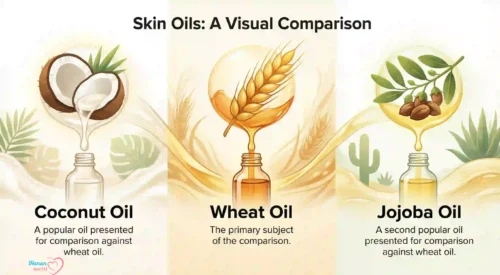
Comparison with Coconut Oil
Coconut oil has dominated the natural skincare scene, but wheat oil offers distinct advantages:
- Absorption, Wheat oil absorbs faster and doesn’t leave a heavy film.
- Comedogenic rating, Wheat oil is less likely to clog pores (rating 2 vs. 4 for coconut oil).
- Vitamin content, Wheat oil contains significantly more vitamin E.
- Fatty acid profile, Better suited for barrier repair due to higher linoleic acid.
Comparison with Jojoba Oil
Jojoba oil is technically a wax ester rather than an oil, but it’s often compared:
- Similarity to sebum, Both mimic natural skin oils well.
- Nutrient density, Wheat oil contains more vitamins.
- Skin types, Jojoba excels for oily skin; wheat oil for dry to normal.
- Stability, Jojoba is more shelf-stable.
How to Use Wheat Oil for Different Skin Types
Not all skin is created equal, and your approach to using wheat oil should reflect your unique skin type.
For Dry Skin
If your skin constantly feels tight and parched, wheat oil can be a game-changer.
Application method:
- Cleanse your face with a gentle, non-stripping cleanser.
- While skin is still damp, apply 3-4 drops of wheat oil.
- Gently press into skin using upward motions.
- Follow with your regular moisturizer if needed.
- Use twice daily for best results.
For Oily and Combination Skin
You might think adding oil to already oily skin sounds counterproductive, but hear me out. Oily skin often produces excess sebum because it’s actually dehydrated underneath. Wheat oil’s linoleic acid content can help balance oil production.
Recommended approach:
- Use sparingly—1-2 drops for entire face
- Apply only to dry areas if you have combination skin
- Use as a treatment oil 2-3 times per week rather than daily
- Always start with clean, toned skin
For Sensitive Skin
Sensitive skin requires gentle care, and wheat oil’s natural composition makes it generally well-tolerated.
Important considerations:
- Always patch test first (apply small amount to inner wrist, wait 24 hours).
- Choose cold-pressed, organic wheat oil to avoid processing chemicals.
- Start with once-daily application to assess tolerance.
- Avoid if you have wheat or gluten allergies (protein traces may remain).
For Mature Skin
As skin ages, it produces less natural oil and becomes thinner. Wheat oil’s nourishing properties make it particularly beneficial for mature skin.
Targeted treatment:
- Focus on areas with pronounced wrinkles (around eyes, mouth, forehead).
- Use as a night treatment for intensive repair.
- Combine with facial massage to boost circulation.
- Consider mixing with rosehip or argan oil for enhanced anti-aging benefits.
Practical Application Methods
Let’s get practical. Here’s how to incorporate wheat oil into your skincare routine.
As a Facial Moisturizer
Simple daily routine:
- Morning 2-3 drops mixed with your regular moisturizer.
- Evening 3-5 drops applied to damp skin, massaged in gentle circular motions.
- Key tip A little goes a long way—start small and add more if needed.
In DIY Face Masks
Create targeted treatments by combining wheat oil with other natural ingredients:
Hydrating Mask:
- 1 tablespoon wheat oil.
- 2 tablespoons mashed avocado.
- 1 teaspoon honey.
- Apply for 15-20 minutes, rinse with warm water.
Brightening Mask:
- 1 tablespoon wheat oil.
- 1 tablespoon plain yogurt.
- 1 teaspoon turmeric.
- 1 teaspoon lemon juice.
- Apply for 10 minutes, rinse thoroughly.
For Body Massage
Wheat oil makes an excellent massage oil, providing slip while nourishing skin.
Application:
- Warm slightly (place bottle in warm water for a few minutes).
- Apply generously to body.
- Massage in long, flowing strokes.
- Pay special attention to dry areas like elbows, knees, and feet.
- Allow to absorb for 10-15 minutes before dressing.
As a Makeup Remover
Yes, oil removes oil-based makeup effectively without stripping your skin!
Method:
- Apply wheat oil to dry face.
- Massage gently, focusing on eye area and lips.
- Wipe away with a warm, damp washcloth.
- Follow with your regular cleanser.
- Proceed with toner and moisturizer.
Best Practices and Application Tips
Maximize your results with these expert tips:
Storage matters» Keep wheat oil in a cool, dark place. Consider refrigeration after opening to extend shelf life.
Timing is everything» Apply oils to damp, not completely dry skin. This helps seal in moisture and improves absorption.
Layer correctly» In a multi-product routine, oils generally go last (after water-based serums but before heavy creams).
Boost absorption» Warm the oil between your palms before applying. Body heat improves penetration.
Consistency counts» Like any skincare ingredient, wheat oil works best with regular use. Give it at least 4-6 weeks before evaluating results.
Mix and match» Don’t be afraid to blend wheat oil with other carrier oils or essential oils (properly diluted) to customize benefits.
Potential Side Effects and Precautions
While wheat oil is generally safe, awareness of potential issues helps you use it wisely.
Allergic Reactions
Though rare, allergic reactions can occur, particularly in individuals with:
- Wheat allergies.
- Gluten sensitivities.
- General sensitivity to topical oils.
Symptoms to watch for:
- Redness or rash.
- Itching or burning sensation.
- Swelling.
- Breakouts or pustules.
If you experience any of these, discontinue use immediately and consult a dermatologist.
Comedogenic Rating
Wheat oil has a comedogenic rating of 2-3 out of 5, meaning it has a low to moderate potential to clog pores. This makes it suitable for most skin types but potentially problematic for very acne-prone skin.
Risk mitigation:
- Use non-comedogenic formulations.
- Apply lighter amounts if prone to breakouts.
- Ensure thorough cleansing to remove excess oil.
- Monitor skin response closely when first starting.
Who Should Avoid Wheat Oil?
Certain individuals should exercise caution or avoid wheat oil altogether:
- People with confirmed wheat or gluten allergies.
- Those with very acne-prone skin (unless under dermatologist guidance).
- Individuals currently using retinoids (consult your dermatologist first).
- Anyone who develops irritation upon patch testing.
Special note for celiac disease» While topical application differs from ingestion, some individuals with celiac disease may react to trace proteins in wheat oil. If you have celiac disease, consult your healthcare provider before use.
How to Choose Quality Wheat Oil
Not all wheat oils are created equal. Here’s what to look for:
Cold-Pressed vs. Refined
Cold-pressed wheat oil:
- Retains maximum nutrients.
- Deeper color (golden to amber).
- Stronger, slightly nutty aroma.
- Shorter shelf life (6-12 months).
- Higher price point.
- Best for skincare applications.
Refined wheat oil:
- Lighter in color and scent.
- Longer shelf life.
- Lower nutrient concentration.
- More affordable.
- Better for cooking, less ideal for skincare.
Verdict: For skincare purposes, invest in cold-pressed, unrefined wheat oil whenever possible.
Organic Certifications
Organic certification ensures:
- No synthetic pesticides or fertilizers used.
- Non-GMO wheat sources.
- Environmentally sustainable farming practices.
- Purer end product with fewer contaminants.
Look for certifications from:
- USDA Organic.
- ECOCERT.
- COSMOS.
- Soil Association.
Storage and Shelf Life
Proper storage extends wheat oil’s usability:
| Storage Condition | Shelf Life | Quality Impact |
|---|---|---|
| Cool, dark pantry | 6-9 months | Good |
| Refrigerated | 12-18 months | Excellent |
| Exposed to heat/light | 2-4 months | Poor (rapid oxidation) |
Signs of rancidity:
- Off or sour smell.
- Bitter taste.
- Cloudy appearance.
- Changes in color.
Always discard rancid oil—it can actually harm your skin rather than help it.
Conclusion
Wheat Oil for Skin stands as a testament to the power of natural skincare. With its impressive array of vitamins, essential fatty acids, and antioxidants, this golden oil offers real, science-backed benefits for your skin. From deep moisturization to anti-aging support, from barrier repair to scar reduction, wheat oil proves that sometimes the simplest solutions are the most effective.
Whether you’re a natural skincare enthusiast or simply looking to enhance your current routine, wheat oil deserves a place on your vanity. Its versatility means you can use it alone or incorporate it into countless DIY formulations. The key is choosing quality oil, applying it correctly for your skin type, and giving it time to work its magic.
Remember, great skin isn’t built overnight. Consistency, patience, and the right ingredients—like wheat oil—create lasting results. Your skin is your largest organ and deserves nourishment from the inside out and the outside in. Why not let wheat oil be part of that nourishing journey?
Frequently Asked Questions
1. Can I use wheat oil on my face if I have gluten intolerance?
Gluten intolerance relates to ingesting gluten proteins, not topical application. However, wheat oil may contain trace proteins that could theoretically cause reactions in highly sensitive individuals or those with celiac disease. If you have severe gluten sensitivity, perform a patch test first or consult your healthcare provider. Many people with gluten intolerance use wheat oil topically without issues, but individual responses vary.
2. How long does it take to see results from using wheat oil on skin?
You’ll notice immediate moisturizing effects after your first application, but deeper benefits take time. Expect to see improvements in skin texture and hydration within 2-3 weeks of consistent use. For anti-aging benefits, scar reduction, or stretch mark improvement, allow 8-12 weeks of regular application. Remember that skincare is a marathon, not a sprint—consistency matters more than any single application.
3. Can wheat oil replace my regular moisturizer completely?
It depends on your skin type and climate. For very dry skin or during winter months, wheat oil alone might provide sufficient moisture. However, most people benefit from using wheat oil in combination with a moisturizer—either mixed together or layered. Oily skin types might find wheat oil sufficient on its own when used sparingly. Experiment to find what works best for your unique skin needs.
4. Is there a difference between wheat oil sold for cooking and wheat oil for skincare?
Yes, significant differences exist. Cooking-grade wheat oil is often refined at high temperatures, which destroys many beneficial nutrients. It may also contain additives unsuitable for skin. Cosmetic-grade wheat oil is typically cold-pressed, preserving vitamins and antioxidants, and is processed to ensure skin-safe purity. Always choose oil specifically labeled for cosmetic or topical use when applying to your skin.
5. Can I use wheat oil during pregnancy for stretch mark prevention?
Wheat oil is generally considered safe for topical use during pregnancy and is actually quite popular for preventing stretch marks. Its vitamin E content and ability to improve skin elasticity make it ideal for this purpose. Apply it twice daily to areas prone to stretching (belly, breasts, hips, thighs) starting in the second trimester. However, if you have wheat allergies or any concerns, consult your healthcare provider before use. Some women prefer mixing it with other oils like sweet almond or cocoa butter for enhanced benefits.
References:
https://www.ncbi.nlm.nih.gov/pmc/articles/PMC5796020/
https://www.ncbi.nlm.nih.gov/pmc/articles/PMC3583891/
https://www.aad.org/public/everyday-care/skin-care-basics/dry/dry-skin-relief
