

- Advertisement -
Bitter Almond Oil | Benefits, Uses
What Is Bitter Almond Oil? Complete Guide to Benefits, Risks & Uses


- Advertisement -
Bitter Almond Oil
Let’s be real — the world of essential oils can feel overwhelming. Sweet almond, bitter almond, almond extract… it all sounds similar until you dig deeper and realize these are vastly different substances with very different rules attached to them. Bitter almond oil, in particular, is one of the most misunderstood oils on the market. It carries a reputation that’s part mystique, part caution, and entirely fascinating.
Whether you’ve stumbled upon it in a skincare formula, an aromatherapy blend, or a perfume ingredient list, this guide is your one-stop resource. We’ll break down what bitter almond oil actually is, what it does, how to use it responsibly, and why it deserves a place in your informed wellness toolkit — with all the caveats that come along with it.
What Is Bitter Almond Oil?
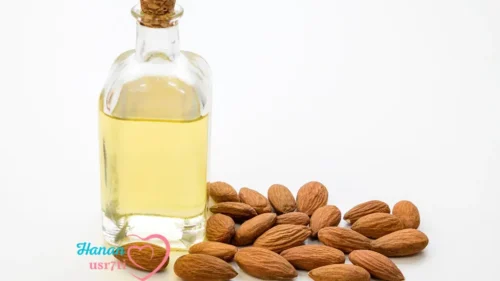
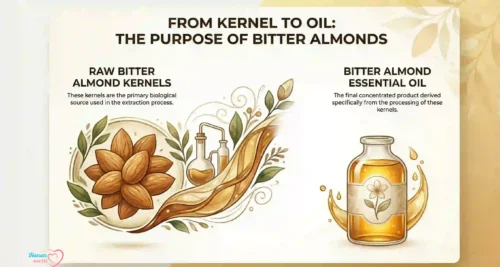
Bitter almond oil is an essential oil extracted from the kernels of Prunus dulcis var. amara — the bitter almond tree. Unlike its sweet cousin, bitter almonds contain a naturally occurring compound called amygdalin, which is responsible for the oil’s distinctive, intensely nutty aroma and its complex safety profile.
It’s worth noting right away: this is not a simple carrier oil you slather on without thinking. Bitter almond oil is a potent substance, and understanding it properly is the first step toward using it wisely.
How Is It Different from Sweet Almond Oil?
This is one of the most common points of confusion, and honestly, it’s understandable. Both oils come from almond trees, both smell vaguely nutty, and both appear in cosmetic ingredient lists. But that’s where the similarity ends.
| Feature | Bitter Almond Oil | Sweet Almond Oil |
|---|---|---|
| Source | Prunus dulcis var. amara | Prunus dulcis var. dulcis |
| Amygdalin content | High | Negligible |
| Aroma | Intensely nutty, cherry-like | Mild, faintly sweet |
| Primary use | Fragrance, flavoring (regulated) | Skincare, carrier oil |
| Toxicity risk | Present (especially non-rectified) | None |
| Regulatory status | Restricted in many countries | Widely unrestricted |
Sweet almond oil is a mild, nourishing carrier oil ideal for massage and moisturizing. Bitter almond oil is an essential oil used primarily for its aroma and flavor — and only in its processed, rectified form for safe applications.
The Chemistry Behind Bitter Almond Oil
When bitter almond kernels are crushed and exposed to water, an enzymatic reaction converts amygdalin into three compounds: glucose, benzaldehyde, and hydrogen cyanide (prussic acid). Benzaldehyde is what gives bitter almond oil its characteristic warm, marzipan-like scent. Prussic acid is what makes raw, unprocessed bitter almond oil potentially dangerous.
The good news? Most commercially available bitter almond oil is rectified — meaning the prussic acid has been removed through distillation — making it far safer for cosmetic and flavoring applications.
A Brief History of Bitter Almond Oil
Bitter almonds have been used for thousands of years. Ancient Egyptians used them in cosmetic preparations. Romans prized the oil as a flavor enhancer. In traditional Chinese medicine and Ayurveda, bitter almonds were incorporated into remedies for respiratory complaints and skin conditions.
Traditional Uses Across Cultures
In Europe during the medieval period, bitter almond oil was a staple in apothecary formulas, used as a cough remedy and digestive aid — though we now know internal use carries real risks. In North African and Middle Eastern cuisines, the essence of bitter almond flavors iconic pastries and confections. Its distinctive scent also made it a cornerstone ingredient in classic perfumery, particularly in oriental and gourmand fragrance families.
How Is Bitter Almond Oil Made?
The production of bitter almond oil involves two primary methods, each yielding a product with different characteristics and safety profiles.
Cold-Pressed vs. Steam Distillation
Cold-pressing crushes the kernels mechanically to extract oil, preserving more of the original compounds — including amygdalin. This produces a fixed oil rather than a true essential oil and is less common commercially.
Steam distillation is the more typical process for producing bitter almond essential oil. The kernels are first macerated with water to trigger the enzymatic breakdown of amygdalin into benzaldehyde and prussic acid, and then steam-distilled. The resulting oil contains benzaldehyde as its primary active component.
Rectified vs. Non-Rectified Oil
This distinction is critically important:
- Non-rectified bitter almond oil contains residual hydrocyanic acid (prussic acid) and is considered toxic. It is heavily regulated or outright banned for consumer use in many jurisdictions.
- Rectified bitter almond oil (FFPA — Free From Prussic Acid) has the toxic compound removed and is used safely in regulated quantities in food flavoring and cosmetics.
Key Takeaway: Always check that any bitter almond oil product you purchase is labeled FFPA (Free From Prussic Acid) or “rectified.” This is non-negotiable for safe use.
Key Chemical Compounds and Active Ingredients
Amygdalin and Benzaldehyde Explained
Amygdalin is a naturally occurring cyanogenic glycoside. In its intact form within the kernel, it’s relatively stable. But once the kernel is broken down and exposed to moisture and enzymes, it converts — rapidly — into benzaldehyde and prussic acid.
Benzaldehyde is the star compound of rectified bitter almond oil. It’s responsible for that deeply nostalgic, marzipan-meets-cherry aroma. It’s used extensively as a flavoring agent in the food industry and as a fragrance component in perfumery. Benzaldehyde itself has demonstrated antimicrobial and antifungal properties in several studies, which partially explains why bitter almond oil has been used medicinally throughout history.
Prussic Acid (Hydrocyanic Acid): What You Need to Know
Prussic acid, or hydrocyanic acid (HCN), is a fast-acting cellular toxin. In sufficient quantities, it interferes with the body’s ability to use oxygen at the cellular level. This is why non-rectified bitter almond oil is classified as toxic and why consuming raw bitter almonds in large amounts can be dangerous — and in documented historical cases, fatal.
That said, context matters enormously. The rectified oil used in regulated food and cosmetic applications contains no prussic acid. The concern applies specifically to raw, unprocessed bitter almond kernels and non-rectified oil.

Bitter Almond Oil Benefits — What the Research Says
Aromatherapy and Emotional Wellness
The warm, rich, nutty aroma of bitter almond oil makes it a valuable addition to aromatherapy blends. Benzaldehyde has been studied for mild sedative and anxiolytic (anti-anxiety) effects in animal models. Aromatherapists use it in diffuser blends designed to promote relaxation, warmth, and a sense of comfort — particularly in the colder months or in environments where a cozy, grounding scent is desired.
Skin and Hair Care Applications
In cosmetic formulations, rectified bitter almond oil is used in small concentrations as a fragrance component and active ingredient. Its purported skin benefits include:
- Softening and smoothing: The benzaldehyde content may contribute to mild keratolytic (skin-softening) effects.
- Brightening: Some traditional recipes use bitter almond preparations for dull or uneven skin tone.
- Scalp care: Historically applied to the scalp to address dandruff and promote circulation.
It’s important to note that these applications rely on diluted, rectified oil in compliant cosmetic products — not concentrated, undiluted application.
Antimicrobial and Antifungal Properties
Research has confirmed that benzaldehyde, the primary component of rectified bitter almond oil, exhibits meaningful activity against a range of bacteria and fungi. A study published in the Journal of Agricultural and Food Chemistry found benzaldehyde to be effective against common food-spoilage organisms. This is part of why bitter almond oil has been studied as a potential natural preservative in food science.
Flavoring and Food Industry Use
Perhaps the most widespread legitimate use of rectified bitter almond oil is as a food flavoring agent. It’s the backbone of marzipan flavor, almond extract (in some formulations), amaretto, and countless European confections. Regulatory bodies like the FDA and EFSA permit its use in food products at strictly defined concentrations, ensuring consumer safety.
How to Use Bitter Almond Oil Safely
Dilution Guidelines
If you’re using rectified bitter almond essential oil in DIY projects, dilution is non-negotiable. The International Fragrance Association (IFRA) provides guidelines for safe usage levels in various product categories. As a general rule:
- Rinse-off products (body wash, shampoo)- Maximum 0.1–0.5%.
- Leave-on products (lotions, serums)- Maximum 0.1%.
- Diffuser/aromatherapy use- 2–3 drops per 100ml of water.
These are conservative guidelines — and for good reason. Always err on the side of less.
Topical Application Tips
Never apply bitter almond oil directly to skin without dilution in a carrier oil. Suitable carriers include jojoba oil, sweet almond oil (ironic but effective), or fractionated coconut oil. Always perform a patch test on a small area of skin 24 hours before wider application.
Aromatherapy Diffusion
A drop or two in a cold-air diffuser is sufficient to fill a room with its characteristic scent. Avoid prolonged, direct inhalation of concentrated vapors, especially in small, poorly ventilated spaces.
Bitter Almond Oil Safety Concerns and Toxicity
Is Bitter Almond Oil Safe to Ingest?
This is the big question — and the honest answer is nuanced. Rectified, FFPA-grade bitter almond oil, used in regulated food products at approved concentrations, is considered safe by international food safety authorities. The doses used in flavoring are minuscule and well below any threshold of concern.
However, consuming concentrated bitter almond oil — even rectified — is not recommended outside of approved food applications. And non-rectified oil should never be ingested under any circumstances.
| Scenario | Safety Status |
|---|---|
| Rectified oil in approved food flavoring | Safe (regulated doses) |
| Rectified oil in cosmetics (topical) | Safe (diluted, following IFRA guidelines) |
| Rectified oil in aromatherapy diffuser | Generally safe (normal use) |
| Concentrated rectified oil ingested | Not recommended |
| Non-rectified oil (any use) | Potentially toxic — avoid |
| Raw bitter almonds in large quantities | Toxic — avoid |
Regulatory Status Around the World
- United States (FDA)- Bitter almond oil (FFPA) is approved as a flavoring substance (21 CFR).
- European Union (EFSA)- Permitted in food applications at specified levels.
- UK- Follows EU-derived standards post-Brexit.
- Australia (TGA/FSANZ)- Regulated; non-rectified oil not permitted for sale to consumers.
Who Should Avoid Bitter Almond Oil?
Certain groups should exercise extra caution or avoid bitter almond oil entirely:
- Pregnant and breastfeeding women Insufficient safety data; better avoided.
- Children Higher sensitivity to benzaldehyde; keep all essential oils out of reach.
- People with nut allergies Cross-reactivity is possible, though the oil contains no protein (the allergenic component); still worth consulting an allergist.
- People with liver or kidney conditions These organs process detoxification; additional chemical load may be inadvisable.
- People on certain medications Benzaldehyde may interact with some medications metabolized through the liver.
How to Buy the Best Bitter Almond Oil
The market for essential oils is unfortunately rife with adulteration and mislabeling. Here’s how to navigate it intelligently.
What to Look for on the Label
- ✅ “FFPA” or “Free From Prussic Acid”.
- ✅ “Rectified” clearly stated.
- ✅ Latin name: Prunus dulcis var. amara (or Prunus amygdalus amara).
- ✅ Batch/lot number and GC/MS report availability.
- ✅ Country of origin (Morocco, Spain, and Italy are reputable sources).
- ❌ Avoid any product without clear rectification labeling.
- ❌ Avoid suspiciously cheap products (quality distillation has a cost).
Top Quality Indicators
Request or look for a GC/MS (Gas Chromatography/Mass Spectrometry) report. This is the gold standard for verifying essential oil purity. A reputable supplier will provide one without hesitation. The report should confirm high benzaldehyde content and zero detectable prussic acid.
Storing Bitter Almond Oil Correctly
Like all essential oils, bitter almond oil is sensitive to light, heat, and oxygen — all of which accelerate oxidation and degrade the oil’s quality and safety profile.
- Store in a dark glass bottle (amber or cobalt blue).
- Keep in a cool, dark location (away from sunlight and heat sources).
- Ensure the cap is tightly sealed after each use.
- Use within 1–2 years of opening for optimal quality.
- Do not store near children or pets.
Frequently Searched Questions About Bitter Almond Oil
Before we wrap up, let’s quickly address some of the most common questions people search about this topic:
Does bitter almond oil smell like marzipan? Yes — that warm, sweet, almond-cherry aroma is largely due to benzaldehyde, the same compound responsible for the classic marzipan scent.
Can I use bitter almond oil for hair growth? While there’s no strong clinical evidence for hair growth specifically, its historical use for scalp health and the known antimicrobial properties of benzaldehyde suggest it may support a healthier scalp environment when used appropriately diluted.
Is almond extract the same as bitter almond oil? Not exactly. Some almond extracts are made with synthetic benzaldehyde, others use bitter almond oil. Always check the label.

Conclusion
Bitter almond oil is one of those ingredients that rewards careful attention. It’s not something to use casually or carelessly, but when you understand it — what it is, how it’s made, what form is safe, and how to use it correctly — it opens up a genuinely fascinating world of aromatherapy, cosmetic formulation, and culinary tradition.
The key takeaways are simple: always choose rectified, FFPA-grade oil; follow dilution guidelines religiously; never ingest concentrated oil; and buy from reputable suppliers who can provide documentation. Treat it with the respect any potent botanical extract deserves, and bitter almond oil can be a richly rewarding addition to your wellness and beauty toolkit.
FAQs
1. Is bitter almond oil the same as cyanide?
Not exactly. Raw, non-rectified bitter almond oil contains prussic acid (hydrocyanic acid), which is related to cyanide compounds. However, rectified bitter almond oil (FFPA) has this removed and is safe for approved uses. They are chemically distinct products.
2. Can bitter almond oil be used directly on skin?
No — it should always be diluted in a carrier oil before topical application. Undiluted application can cause sensitization or irritation. Follow IFRA dilution guidelines for your specific product type.
3. What’s the difference between bitter almond oil and almond essential oil?
“Almond essential oil” is often a marketing term that may refer to either bitter almond oil or a synthetic benzaldehyde product. Always read the full ingredient label and verify whether it’s rectified bitter almond oil.
4. How many bitter almonds are toxic to humans?
This varies by body weight, but ingesting as few as 7–10 raw bitter almonds has been reported to cause toxic symptoms in adults; fewer for children. Raw bitter almonds are not the same as commercially available rectified bitter almond oil.
5. Where can I buy genuine rectified bitter almond essential oil?
Look for reputable essential oil suppliers who publish GC/MS reports, clearly label their products as FFPA/rectified, and have transparent sourcing information. Specialty aromatherapy retailers and professional fragrance suppliers are generally more reliable than generic online marketplaces.
References:
- U.S. Food and Drug Administration. CFR – Code of Federal Regulations Title 21: Sec. 182.60 Essential oils. https://www.ecfr.gov/
- International Fragrance Association (IFRA). IFRA Standards 49th Amendment. https://ifrafragrance.org/
- Burdock, G.A. (2010). Fenaroli’s Handbook of Flavor Ingredients (6th ed.). CRC Press.
- European Food Safety Authority (EFSA). Scientific Opinion on the safety of bitter almond oil. https://www.efsa.europa.eu/
