

- Advertisement -
Almond Oil Benefits for Hair | 7 Science-Backed Reasons to Start Using It Today
Almond Oil for Hair | Benefits, Uses & Expert Tips for Stronger, Shinier Strands

- Advertisement -
Almond Oil Benefits for Hair
What if the secret to your healthiest hair ever wasn’t sitting on a high-end salon shelf — but had been quietly resting in your grandmother’s kitchen cabinet all along?
Almond oil benefits for hair have been celebrated across cultures for centuries, from ancient Ayurvedic rituals to traditional Mediterranean beauty routines. And today, modern science is finally catching up, validating what generations of women already knew: sweet almond oil is one of the most versatile, nourishing, and effective natural oils you can put on your hair.
Whether you’re struggling with breakage, a dry itchy scalp, frustrating frizz, or hair that just refuses to grow, almond oil could be the one ingredient your routine is genuinely missing. Rich in vitamin E, oleic acid, linoleic acid, magnesium, zinc, and natural proteins, this lightweight golden oil works on a structural level — penetrating the hair shaft, feeding the follicle, and smoothing the cuticle all at once.
In this guide, we’re going beyond the surface. We’ll walk you through the 7 most powerful, research-supported almond oil benefits for hair, break down exactly how to use it for your specific hair type, compare it against other popular oils, and give you practical DIY recipes you can try this week.
Ready to give your hair what it’s actually been asking for? Let’s get into it.
What Makes Almond Oil So Special for Hair?
Before we talk benefits, it helps to understand what’s actually inside this oil that makes it work so well. Almond oil isn’t just another carrier oil — it’s a nutrient-dense powerhouse extracted from the seeds (nuts) of the Prunus dulcis tree.
Sweet Almond Oil vs. Bitter Almond Oil — What’s the Difference?
There are two types of almond oil, and this distinction matters a lot for hair care. Sweet almond oil is the one you want. It’s cold-pressed from edible almonds, safe for topical use, widely available, and packed with skin and hair-loving nutrients. Bitter almond oil, on the other hand, comes from a different variety and is often processed into an essential oil that contains compounds like amygdalin — it’s not safe for direct skin or hair application without dilution, and it’s rarely used in cosmetic formulations.
So when we talk about almond oil benefits for hair throughout this article, we’re talking about sweet almond oil. Got it? Great.
Key Nutrients in Almond Oil That Your Hair Craves
Think of almond oil like a multivitamin for your hair. Here’s what’s inside:
| Nutrient | Role in Hair Health |
|---|---|
| Oleic Acid (Omega-9) | Penetrates the hair shaft, moisturizes from within |
| Linoleic Acid (Omega-6) | Strengthens the hair membrane, reduces moisture loss |
| Vitamin E | Antioxidant that protects hair follicles, adds shine |
| Vitamin A | Supports sebum production and scalp health |
| Vitamin D | Linked to hair follicle cycling and growth |
| Magnesium | Prevents mineral buildup that blocks hair growth |
| Zinc | Supports follicle structure and reduces hair loss |
| Proteins | Fills in damaged cuticles, reduces breakage |
That’s not just a list — that’s a rescue mission for struggling hair.
Top Science-Backed Almond Oil Benefits for Hair
1. Deep Moisturization and Hydration
Dry hair is unhappy hair. It’s prone to breakage, looks dull, and feels rough to the touch. Almond oil’s high oleic acid content allows it to actually penetrate the hair shaft rather than just sitting on top of the strand like a film. This means your hair isn’t just coated — it’s genuinely moisturized from the inside out.
This is a meaningful difference. Many silicone-based products create the illusion of hydration by coating the strand, but almond oil delivers real, lasting moisture. Think of it like the difference between wearing a raincoat and actually drinking water — both look similar on the outside, but only one actually hydrates you.
2. Reduces Hair Breakage and Strengthens Strands
One of the most well-documented almond oil benefits for hair is its ability to improve hair’s mechanical strength. A study published in the Journal of Cosmetic Science found that oils rich in fatty acids — particularly those like almond oil — can reduce protein loss during washing and styling when used as a pre-treatment.
The proteins naturally present in almond oil also help fill in the damaged areas of the hair cuticle. If your hair cuticle looks like a roof with missing shingles (thanks to heat, chemical treatments, or environmental stress), almond oil helps patch those gaps, making your hair more resilient and less likely to snap.
3. Promotes Hair Growth
Can almond oil actually make your hair grow faster? Potentially — and here’s why. Almond oil is rich in magnesium, and research suggests that magnesium deficiency can contribute to hair loss. When you massage almond oil into your scalp, you’re also stimulating blood circulation, which carries oxygen and nutrients to your follicles.
Additionally, vitamin E in almond oil has been studied for its role in hair growth. A 2010 randomized controlled trial published in Tropical Life Sciences Research found that participants who supplemented with vitamin E showed a significant increase in hair count compared to the placebo group. While this study focused on oral supplementation, the topical benefits of vitamin E for scalp health are well-established.
Key Takeaway: Regular scalp massages with almond oil can improve circulation and deliver follicle-nourishing nutrients directly to the roots.
4. Fights Scalp Conditions Like Dandruff
Dandruff is often a sign of a dry, irritated, or fungal-imbalanced scalp. Almond oil’s anti-inflammatory properties — driven largely by its vitamin E and fatty acid content — can help soothe the scalp and reduce the flaking and itching associated with dandruff and seborrheic dermatitis.
Unlike harsh medicated shampoos that can strip your scalp of its natural oils (making the problem worse in the long run), almond oil works gently. It rehydrates the scalp without disrupting its natural microbiome. Think of it as resetting your scalp to factory settings — calm, balanced, and comfortable.
5. Adds Natural Shine and Reduces Frizz
Let’s talk aesthetics for a second. Almond oil creates a lightweight coating on the hair shaft that smooths down the cuticle and reflects light more evenly — which is exactly what produces that enviable, glossy shine. Unlike heavier oils (think coconut or castor oil), almond oil is light enough to add shine without weighing hair down or making it look greasy.
Frizz happens when the hair cuticle is raised, allowing humidity to enter and swell the strand. By smoothing and sealing the cuticle, almond oil creates a barrier against humidity, which means less frizz and more manageable hair — even in the middle of a sticky summer.
6. Protects Hair from Heat and Environmental Damage
Every time you blow-dry, flat iron, or curl your hair, you’re introducing thermal stress that damages the cuticle. Almond oil, used as a pre-styling treatment, acts like a heat buffer. It doesn’t make you immune to damage, but it significantly reduces the amount of protein loss and moisture evaporation that happen when heat is applied.
Environmental stressors like UV radiation, pollution, and hard water also take a toll. Vitamin E, a potent antioxidant found abundantly in almond oil, neutralizes free radicals before they can degrade your hair’s structure. It’s essentially sunscreen for your strands.
7. Soothes an Irritated Scalp
Scalp issues like psoriasis, eczema, or general sensitivity can make hair care feel like a minefield. Almond oil has well-documented anti-inflammatory and emollient properties that make it incredibly soothing for irritated skin. A 2019 study published in Phytotherapy Research highlighted the skin-calming effects of sweet almond oil, noting its ability to reduce erythema (redness) and improve skin barrier function.
Almond Oil for Different Hair Types
Almond Oil for Dry and Damaged Hair
This is where almond oil truly shines. If your hair is parched, chemically treated, or heat-damaged, almond oil can be used generously as a pre-shampoo treatment or an overnight mask. The fatty acids penetrate deeply and help reconstruct the hair’s lipid layer, which is usually the first casualty of chemical processing.
Almond Oil for Oily Hair — Can You Still Use It?
This is a question a lot of people have, and the answer might surprise you. Yes, even those with oily scalps can benefit from almond oil — the key is where you apply it. Focus the oil on your mid-lengths and ends rather than the scalp. Additionally, almond oil is classified as a non-comedogenic oil (meaning it doesn’t clog pores), which makes it less likely to exacerbate oiliness compared to heavier oils.
Almond Oil for Curly and Coily Hair
Curly and coily hair textures are naturally drier because the natural sebum from the scalp has a harder time traveling down the coiled shaft. Almond oil’s combination of moisturizing fatty acids and lightweight texture makes it an excellent choice for defining curls and keeping them hydrated without causing buildup or crunchiness.
Almond Oil for Fine and Thin Hair
Heavy oils can spell disaster for fine hair — hello, limp, flat, greasy strands. But almond oil’s lightweight molecular structure makes it one of the few oils fine-haired folks can actually use without weighing their hair down. Use it sparingly as a finishing oil on dry hair to add gloss and tame flyaways.
How to Use Almond Oil for Hair — Practical Methods
Pre-Shampoo Treatment
Apply almond oil generously to dry hair from roots to ends. Leave it on for 30 minutes to 2 hours before shampooing. This method protects hair from the mechanical damage of washing and helps the oil penetrate before being partially washed away.
Scalp Massage Oil
Warm a few drops of almond oil between your palms and use your fingertips to massage it into your scalp in circular motions for 5–10 minutes. This promotes circulation and allows the nutrients to reach the follicles directly. Do this 1–2 times per week.
Leave-In Conditioner
After washing and towel-drying your hair, apply 2–3 drops of almond oil to your palms and distribute it through your mid-lengths and ends. This seals in moisture from your conditioner and helps prevent humidity-induced frizz throughout the day.
DIY Hair Masks with Almond Oil
Almond Oil + Egg Hair Mask
Combine 2 tablespoons of almond oil with 1 egg yolk. Apply to dry hair, cover with a shower cap, and leave for 30 minutes before rinsing with cool water (warm water will cook the egg — learned that the hard way). Egg yolk is rich in biotin and protein, making this a powerhouse mask for strength and growth.
Almond Oil + Honey and Yogurt Mask
Mix 2 tablespoons of almond oil with 1 tablespoon of raw honey and 3 tablespoons of plain yogurt. Honey is a natural humectant that draws moisture into the hair, while yogurt contains lactic acid which gently cleanses the scalp and adds softness. Leave on for 20–30 minutes and rinse thoroughly.
Almond Oil vs. Other Popular Hair Oils
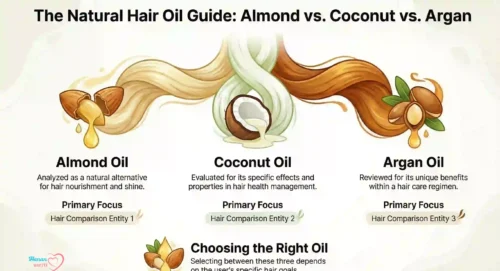
| Oil | Best For | Weight | Penetration | Key Benefit |
|---|---|---|---|---|
| Almond Oil | All hair types | Light | Medium | Shine, moisture, scalp care |
| Coconut Oil | Thick/coarse hair | Medium | High | Protein retention |
| Argan Oil | Frizzy/damaged hair | Light | Low-Medium | Frizz control, shine |
| Castor Oil | Hair growth | Heavy | Low | Scalp stimulation |
| Jojoba Oil | Oily scalp | Very Light | Low | Mimics sebum, balances oil |
Each oil has its strengths, but almond oil stands out for its versatility — it genuinely works across hair types and serves multiple functions simultaneously.
How Often Should You Apply Almond Oil to Your Hair?
There’s no one-size-fits-all answer here, but here’s a sensible starting guide:
- Dry or damaged hair, 2–3 times per week as a pre-wash treatment.
- Normal hair, Once a week as a scalp massage or pre-wash.
- Oily hair, Once every 1–2 weeks, focusing on ends only.
- As a leave-in, Daily or as needed, just a few drops.
Listen to your hair. If it starts to feel heavy or look greasy, scale back. If it’s thirsty and dull, be more generous.
Potential Side Effects and Who Should Avoid It
Almond oil is generally very well tolerated, but there are a few things to be aware of:
- Nut allergies, If you have a tree nut allergy (particularly to almonds), avoid almond oil entirely. Always do a patch test first if you’re unsure.
- Acne-prone scalp, While almond oil is non-comedogenic, some individuals with very sensitive skin may react to it. Start with small amounts.
- Buildup, Like any oil, excessive use without proper cleansing can lead to product buildup that clogs follicles over time. Use a clarifying shampoo once a month to reset.
Reader Note: Always perform a patch test by applying a small amount of almond oil to your inner wrist and waiting 24 hours before applying it to your scalp or hair.
How to Choose the Best Almond Oil for Hair
Not all almond oils are created equal. Here’s what to look for:
- Cold-pressed, This extraction method preserves the maximum amount of nutrients and ensures the oil hasn’t been degraded by heat.
- 100% pure, undiluted, Avoid blends that mix almond oil with fillers like mineral oil.
- Unrefined (when possible), Refined oils have a longer shelf life but fewer active nutrients.
- Dark glass bottle, This protects the oil from light degradation.
- Certifications, Look for organic certifications where available to minimize pesticide residue.
Reputable brands worth considering include those sold through health food stores, pharmacies, and beauty retailers with transparent ingredient lists and cold-press labeling.
Conclusion
Almond Oil Benefits for Hair miracle in a bottle — but it comes pretty close. Whether your goal is to grow longer, stronger hair, soothe a troubled scalp, or simply add some life and lustre back to dull strands, this nutrient-rich oil has the science and centuries of tradition behind it to back up its reputation. The best part? It’s affordable, widely available, versatile, and suitable for almost every hair type.
Start small, be consistent, and let almond oil do what it does best — quietly, steadily transforming your hair health from the inside out. Your future self (and your future hair) will thank you.
FAQs
1. Can I leave almond oil in my hair overnight?
Yes, absolutely. Leaving almond oil in your hair overnight as a deep conditioning treatment is one of the most effective ways to use it. Just cover your hair with a silk or satin scarf to protect your pillowcase, and wash it out thoroughly in the morning.
2. Does almond oil help with hair thinning?
Almond oil can support a healthy scalp environment and may help reduce breakage-related thinning. However, if you’re experiencing significant hair loss, it’s important to consult a dermatologist to rule out underlying medical causes.
3. Can I mix almond oil with other oils?
Definitely! Almond oil blends beautifully with other oils. Popular combinations include almond + argan oil for shine, almond + castor oil for growth, and almond + rosemary essential oil for scalp stimulation.
4. Is almond oil safe to use on color-treated hair?
Yes — in fact, it’s especially beneficial for color-treated hair, which tends to be more porous and prone to dryness and damage. Almond oil helps restore moisture and smooth the cuticle without affecting color.
5. How long does it take to see results from using almond oil on hair?
Most people notice improvements in shine, softness, and manageability within a few uses. For benefits like reduced breakage or improved scalp health, consistent use over 4–8 weeks typically shows more meaningful results.
References:
- Rele, A. S., & Mohile, R. B. (2003). Effect of mineral oil, sunflower oil, and coconut oil on prevention of hair damage. Journal of Cosmetic Science. https://pubmed.ncbi.nlm.nih.gov/12715094/
- Beoy, L. A., Woei, W. J., & Hay, Y. K. (2010). Effects of tocotrienol supplementation on hair growth in human volunteers. Tropical Life Sciences Research. https://www.ncbi.nlm.nih.gov/pmc/articles/PMC3819075/
- Ahmad, Z. (2010). The uses and properties of almond oil. Complementary Therapies in Clinical Practice. https://pubmed.ncbi.nlm.nih.gov/20129403/
- Pazyar, N., & Yaghoobi, R. (2011). Jojoba in dermatology: a succinct review (for comparative reference). G Ital Dermatol Venereol. https://pubmed.ncbi.nlm.nih.gov/22008570/
