

- Advertisement -


- Advertisement -
When most people think about marriage problems, they imagine dramatic arguments, infidelity, or financial conflicts. But there’s a quieter, more insidious issue that slowly erodes countless relationships: emotional neglect. Unlike loud conflicts that demand immediate attention, emotional neglect operates in silence, making it one of the most overlooked yet damaging patterns in modern marriages.
If you’ve ever felt lonely despite sharing a home with your spouse, or wondered why your relationship feels more like a roommate arrangement than a marriage, you’re not alone. Understanding emotional neglect is the first step toward healing and rebuilding genuine connection.
What Is Emotional Neglect in Marriage?
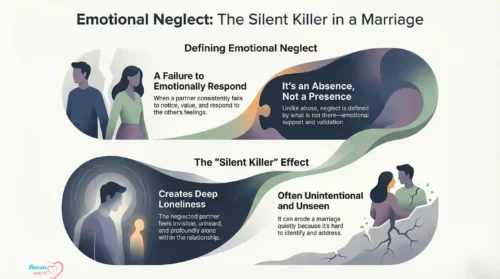
Emotional neglect occurs when one or both partners consistently fail to respond to each other’s emotional needs, dismissing feelings, avoiding meaningful conversations, or remaining emotionally unavailable. It’s not about what happens in the relationship, but rather what doesn’t happen.
Think of it this way: just as a plant withers without water, a marriage deteriorates without emotional nourishment. The relationship might look fine on the surface—bills get paid, routines continue, meals are shared—but the emotional foundation slowly crumbles.
How Emotional Neglect Differs from Abuse
It’s important to distinguish emotional neglect from emotional abuse. While both are harmful, they operate differently:
Emotional abuse involves active harm through criticism, manipulation, intimidation, or deliberate cruelty. The abuser intentionally inflicts emotional pain.
Emotional neglect typically involves passive disconnection. The neglectful partner may not intend harm but fails to provide emotional support, validation, or presence. They might be physically present but emotionally absent.
Important Note: While emotional neglect is often unintentional, its impact can be just as devastating as intentional harm. The absence of emotional connection creates profound pain and loneliness.
Recognizing the Signs of Emotional Neglect
Identifying emotional neglect can be challenging because it’s defined by what’s missing rather than what’s present. Here are the key indicators:
In Your Partner’s Behavior
- Consistent dismissal of your feelings – Your emotions are minimized, ignored, or met with irritation rather than curiosity or concern
- Absence of meaningful conversation – Discussions stay superficial, focused only on logistics like schedules, finances, or household tasks
- Lack of curiosity about your inner world – Your partner doesn’t ask about your day, dreams, worries, or experiences in genuine ways
- Emotional unavailability during distress – When you’re upset, anxious, or struggling, your partner remains detached or uncomfortable
- Minimal physical affection – Beyond obligatory gestures, there’s little warmth, touch, or physical connection
- Forgetting important events – Your achievements, concerns, or significant dates consistently slip their mind
- Preference for distractions – They regularly choose phones, television, work, or other activities over spending quality time together
- Defensive reactions to emotional needs – Expressing needs for connection is met with defensiveness, annoyance, or blame
![Emotional Neglect]() In Your Own Experience
In Your Own Experience
 In Your Own Experience
- Feeling profoundly lonely despite being married
- Believing your thoughts and feelings don’t matter
- Hesitating to share emotions because you expect dismissal
- Questioning whether something is wrong with you for wanting more connection
- Experiencing persistent sadness or emptiness in the relationship
- Feeling more understood by friends or family than by your spouse
- Noticing that your self-esteem has gradually diminished
- Finding yourself emotionally or mentally checking out of the marriage
The Hidden Causes Behind Emotional Neglect
Understanding why emotional neglect happens helps remove blame and opens pathways to healing. Most emotionally neglectful partners aren’t intentionally cruel—they’re often operating from their own wounds and limitations.
Childhood Emotional Neglect
Many people who emotionally neglect their spouses grew up in families where emotions were ignored, minimized, or discouraged. When children don’t learn that feelings matter and connection is important, they become adults who struggle to provide emotional attunement.
These individuals often describe their childhood as “fine” because their basic needs were met—they had food, shelter, and perhaps even educational advantages. But the emotional vocabulary and skills necessary for intimate relationships were never developed.
Cultural and Gender Socialization
Traditional gender roles have taught generations of men that emotional expression equals weakness, while women are often socialized to suppress their needs in service of others. These deeply ingrained patterns can manifest as emotional unavailability in marriage.
Some cultures emphasize duty, respect, and practical partnership over emotional intimacy, leaving couples who desire deeper connection feeling conflicted or guilty for wanting more.
Mental Health and Neurodivergence
Depression, anxiety, trauma, and certain neurodivergent conditions can significantly impact a person’s capacity for emotional connection. Someone dealing with depression might have limited emotional energy to give, even when they genuinely care. Individuals with alexithymia struggle to identify and express their own emotions, making emotional attunement to a partner extremely difficult.
These aren’t excuses, but they are explanations that can guide more compassionate and effective responses.
Relationship Patterns and Resentment
Sometimes emotional neglect develops gradually as a protective response. After years of unresolved conflicts, feeling criticized, or experiencing rejection, one or both partners may emotionally withdraw as self-protection. This creates a painful cycle where neglect breeds more neglect.
Modern Life Demands
The relentless pace of contemporary life—demanding careers, financial pressures, child-rearing responsibilities, and digital distractions—can leave couples emotionally depleted. When survival mode becomes the default, emotional connection becomes a casualty.
The Profound Impact of Emotional Neglect
The consequences of sustained emotional neglect extend far beyond the marriage itself, affecting mental health, physical wellbeing, and even the next generation.
Psychological Effects
Living with emotional neglect creates a unique form of suffering. Unlike dramatic relationship problems that others can see and validate, emotional neglect often leaves victims questioning their own perceptions. Common psychological impacts include:
- Chronic loneliness and isolation – The paradox of feeling utterly alone while sharing a life with someone
- Depression and anxiety – The persistent emotional void contributes to clinical mental health conditions
- Low self-esteem and self-doubt – Consistent invalidation leads to questioning your own worth and perceptions
- Difficulty trusting your emotions – You may stop believing your feelings are legitimate or important
- Emotional numbness – As a protective mechanism, you might disconnect from your own emotions entirely
Physical Health Consequences
The mind-body connection means emotional neglect doesn’t stay psychological. Research has linked chronic loneliness and lack of emotional support to:
- Increased cortisol levels and chronic stress
- Weakened immune system functioning
- Higher risk of cardiovascular disease
- Sleep disturbances and fatigue
- Increased inflammation throughout the body
Your body keeps the score of emotional disconnection, even when your mind tries to minimize the problem.
Impact on Children
Children growing up in emotionally neglectful marriages learn powerful lessons about relationships, often perpetuating the cycle:
- They may normalize emotional disconnection and seek similar patterns in their own relationships
- They might struggle to identify and express emotions appropriately
- Their model of marriage becomes one of coexistence rather than genuine partnership
- They may develop anxiety about their own worthiness of love and attention
Even when parents don’t argue, children sense the emotional distance and often blame themselves.
Effects on Identity and Life Satisfaction
Over time, emotional neglect in marriage can fundamentally alter how you see yourself and your place in the world. Many people report:
- Losing touch with who they are outside the relationship
- Diminished joy in activities that once brought pleasure
- Difficulty making decisions without second-guessing
- A pervasive sense that something essential is missing from life
- Settling for far less than what relationships can offer
What Emotional Neglect Is NOT
To fully understand emotional neglect, it helps to clarify common misconceptions:
It’s not about constant attention. Healthy relationships include independence and personal space. Emotional neglect is about chronic unavailability, not occasional alone time.
It’s not the same as introversion. Introverts may need quiet time to recharge, but they’re still capable of emotional presence and deep connection. Being introverted doesn’t excuse emotional unavailability.
It’s not about perfect communication. All couples have communication challenges. Emotional neglect is a persistent pattern of dismissal and disconnection, not occasional misunderstandings.
It’s not always intentional or malicious. Most emotionally neglectful partners genuinely care about their spouse but lack awareness or skills for emotional intimacy.
It’s not something you caused. While relationships involve two people, you’re not responsible for your partner’s emotional unavailability, even if they blame you for it.
Can a Marriage Recover from Emotional Neglect?
This is perhaps the most important question, and the answer is genuinely hopeful: yes, many marriages can heal from emotional neglect, but recovery requires specific conditions and sustained effort.
Essential Prerequisites for Healing
Recovery becomes possible when these elements exist:
1. Recognition that a problem exists – Both partners must acknowledge the emotional neglect, even if they understand it differently initially
2. Willingness to change – The neglectful partner must genuinely want to develop emotional attunement, not just appease their spouse temporarily
3. Commitment to the process – Healing takes time, patience, and consistent effort, often months or years
4. Professional guidance – Most couples benefit enormously from working with a marriage therapist trained in emotionally-focused therapy or similar approaches
5. Safety to be vulnerable – Both partners need to feel safe expressing difficult emotions without retaliation or further neglect.
![Emotional Neglect]() What Recovery Actually Looks Like
What Recovery Actually Looks Like
 What Recovery Actually Looks Like
Healing from emotional neglect doesn’t mean achieving perfection. Instead, it involves:
- Gradually increasing moments of genuine connection
- Developing new communication patterns that honor emotions
- Learning to recognize and respond to each other’s emotional bids
- Building emotional vocabulary and comfort with feelings
- Repairing ruptures when they occur rather than avoiding them
- Rediscovering friendship and companionship
- Creating new relationship rituals that foster intimacy
Progress is typically non-linear, with advances and setbacks. The key indicator of successful recovery is whether the relationship trajectory moves toward greater connection over time.
When Recovery May Not Be Possible
Honestly, some marriages cannot recover from emotional neglect. This reality exists when:
- One partner categorically refuses to acknowledge the problem or participate in change
- The neglectful partner has a personality disorder that prevents genuine empathy
- Years of neglect have created irreparable damage to the foundation of trust and respect
- One or both partners have emotionally or physically moved on
- The emotional neglect is intertwined with abuse, control, or manipulation
Recognizing when a marriage cannot be saved is an act of self-compassion, not failure.
Practical Steps for the Emotionally Neglected Partner
If you’re experiencing emotional neglect, these strategies can help you navigate this difficult situation:
1. Validate Your Own Experience
Stop questioning whether your feelings are legitimate. If you feel emotionally neglected, that experience is real and valid. You don’t need your partner’s agreement to know your own truth.
Create a private journal where you document specific instances when you felt dismissed, ignored, or emotionally abandoned. This record serves two purposes: it validates your experience when you’re tempted to minimize it, and it provides concrete examples if you eventually discuss the issue with your partner or a therapist.
2. Communicate Clearly and Specifically
Rather than general complaints like “You never pay attention to me,” try specific, actionable requests: “When I share something that upset me at work, I need you to put down your phone, make eye contact, and ask me follow-up questions. That helps me feel heard and supported.”
Use “I” statements to express your needs without attacking: “I feel lonely in our marriage and I miss feeling emotionally connected to you” rather than “You’re cold and don’t care about me.”
3. Set and Maintain Boundaries
Establish clear boundaries around what you will and won’t accept. This might include:
- Not accepting responsibility for your partner’s emotional unavailability
- Refusing to engage when your emotions are dismissed or mocked
- Insisting on regular dedicated time together without distractions
- Making your participation in activities or decisions contingent on feeling respected
Boundaries aren’t punishments—they’re necessary frameworks for healthy relationships.
4. Invest in Your Own Emotional Wellbeing
You cannot control your partner’s emotional availability, but you can nurture your own emotional health:
- Seek individual therapy to process your experiences and strengthen your sense of self
- Maintain meaningful friendships where you feel seen and valued
- Pursue activities and interests that bring you joy and purpose
- Practice self-compassion rather than self-blame
- Consider support groups for people in similar situations
Building a life with meaning outside your marriage isn’t giving up—it’s ensuring you don’t disappear entirely while waiting for change.
5. Decide Your Bottom Line
At some point, you need to honestly assess what you’re willing to accept long-term. Questions to consider:
- Can I remain in this marriage if nothing changes?
- How much time am I willing to invest in attempting to repair this relationship?
- What are the dealbreakers that would lead me to leave?
- Am I staying out of genuine hope and commitment, or fear and obligation?
Having clarity about your own boundaries helps you make empowered decisions rather than drifting indefinitely.
Practical Steps for the Emotionally Neglectful Partner
If you recognize yourself as the emotionally neglectful partner, first: this awareness is valuable and courageous. Change is possible with commitment and guidance.
1. Accept Responsibility Without Defensiveness
Your partner’s emotional pain is real, even if you didn’t intend to cause it. Resist the urge to defend yourself with explanations about how busy you are, how you show love differently, or how they’re too sensitive.
Instead, try: “I hear that you’ve been feeling emotionally neglected, and I want to understand more about your experience. That’s not the marriage I want us to have.”
2. Educate Yourself About Emotional Needs
If you grew up with emotional neglect, you might genuinely not understand what emotional attunement looks like. This isn’t your fault, but it is your responsibility to learn.
Read books on emotional intelligence, attachment theory, and healthy relationships. Watch videos about active listening and emotional validation. Consider individual therapy to explore your own emotional history.
3. Practice Emotional Presence
Start small with concrete practices:
- Daily check-ins: Spend 15 minutes each day asking your partner about their inner experience, not just their schedule
- Active listening: When your partner speaks, put away distractions, maintain eye contact, and reflect back what you hear
- Emotional validation: Practice saying “That makes sense” or “I can understand why you’d feel that way” before offering solutions or opinions
- Physical affection: Initiate hugs, hold hands, or offer touch without sexual expectations
- Remember details: Write down important things your partner mentions and follow up on them later
4. Address Your Own Barriers
Explore what prevents you from being emotionally available:
- Are you carrying unresolved trauma or pain from your past?
- Do you have beliefs that emotions are weak or burdensome?
- Are you overwhelmed by stress, depression, or other mental health challenges?
- Do you fear vulnerability and intimacy?
Working on these underlying issues with a therapist is often essential for lasting change.
5. Commit to the Long-Term Process
Changing deep patterns takes sustained effort over months and years. Your partner may need considerable time to trust that the changes are genuine. Be patient with both yourself and your partner as you build new patterns together.

Professional Help: When and How to Seek It
Most couples dealing with emotional neglect benefit significantly from professional support. Here’s how to approach it:
Types of Therapy That Help
Emotionally Focused Therapy (EFT): Particularly effective for emotional neglect, EFT helps couples understand attachment needs and create secure emotional bonds.
Gottman Method: Focuses on building friendship, managing conflict, and creating shared meaning—all areas affected by emotional neglect.
Individual Therapy: Often necessary alongside couples work, especially if childhood neglect, trauma, or mental health issues contribute to the pattern.
Finding the Right Therapist
Look for therapists who:
- Specialize in couples work and have specific training in recognized methods
- Understand emotional neglect and attachment issues
- Create a safe environment where both partners feel heard
- Hold both partners accountable while showing compassion
- Have experience with the specific cultural or identity factors relevant to your relationship
Don’t hesitate to try multiple therapists until you find the right fit. The therapeutic relationship matters tremendously for outcomes.
What If Your Partner Refuses Therapy?
If your partner won’t attend couples therapy, you can still:
- Attend individual therapy to gain clarity and support
- Learn skills for better communication and boundary-setting
- Understand your own patterns and how they interact with your partner’s
- Make informed decisions about your future
Sometimes, one partner attending therapy eventually motivates the other to participate. Sometimes it provides the strength to accept what cannot change.
Preventing Emotional Neglect in Marriage
For couples who want to proactively protect their emotional connection, these practices make a significant difference:
Daily Rituals of Connection
- Morning goodbye rituals: Share a meaningful kiss and one thing you appreciate about each other before separating for the day
- Reuniting rituals: Give full attention to each other for the first few minutes of reconnecting, before diving into logistics
- Bedtime conversations: End each day with a few minutes of device-free connection
Regular Relationship Maintenance
Schedule weekly “state of the union” conversations where you discuss:
- How you’re each feeling about the relationship
- Appreciations for each other
- Any concerns or needs that have emerged
- Plans for nurturing connection in the coming week
Respond to Emotional Bids
Research shows that how partners respond to small bids for connection predicts relationship success. When your partner makes a comment, shares something, or reaches out, you can:
- Turn toward: Engage positively and show interest
- Turn away: Ignore or miss the bid
- Turn against: Respond negatively or with irritation
Consistently turning toward builds connection; consistently turning away creates neglect.
Prioritize Emotional Intimacy
Make emotional connection as important as sexual intimacy, financial planning, or household management. This includes:
- Sharing vulnerable feelings regularly
- Asking deep questions about each other’s inner worlds
- Supporting each other’s personal growth and dreams
- Creating experiences that foster emotional closeness
Address Small Disconnections Quickly
Don’t let emotional distance accumulate. When you notice decreasing connection, address it immediately rather than hoping it resolves itself. Small repairs prevent large ruptures.
Moving Forward
Whether your marriage recovers or you ultimately choose a different path, healing from emotional neglect is possible. You can rebuild your sense of self, learn to trust your emotions, and eventually experience the kind of emotional connection you deserve—either with your current partner or in future relationships.
The journey out of emotional neglect begins with the same first step: recognizing that what you’re experiencing has a name, it’s not your fault, and you don’t have to accept it as inevitable. Your need for emotional connection isn’t excessive or demanding—it’s fundamentally human.
Many people who have lived through emotional neglect describe the recovery process as reclaiming parts of themselves they’d lost or never fully developed. They report greater authenticity, stronger boundaries, deeper self-knowledge, and the capacity for richer relationships.
This painful chapter can become the catalyst for profound growth and transformation, whether that occurs within your current marriage or beyond it.
Remember: You deserve to feel emotionally seen, heard, valued, and cherished in your most intimate relationship. Settling for less diminishes both you and your partner. The courage to face emotional neglect—to name it, understand it, and address it—is an act of love for yourself, your partner, and the relationship you both deserve.