

- Advertisement -
Husband Insults Wife | Signs, Impact & What to Do (2026 Guide)
When Your Husband Insults You | Expert Solutions & Recovery


- Advertisement -
When a Husband Insults His Wife (Understanding the Hidden Crisis in Modern Marriages)
Does your husband insult you regularly? Do his words leave you feeling worthless, anxious, or questioning your own reality? You’re not alone, and you’re not overreacting. When a husband insults his wife, it creates psychological wounds that can be as damaging as physical violence—yet this form of emotional abuse often goes unrecognized and unaddressed.
According to recent studies, nearly 48% of women experience psychological aggression from an intimate partner in their lifetime. These verbal attacks—whether delivered as direct insults, passive-aggressive comments, or public humiliation—systematically erode self-esteem, destroy marital intimacy, and can lead to serious mental health consequences including depression, anxiety, and PTSD.
If you’ve searched “husband insults wife” or “my husband verbally abuses me,” you’ve taken the first crucial step: acknowledging that something is seriously wrong. This comprehensive guide will help you understand why husbands insult their wives, recognize the warning signs of emotional abuse versus normal marital conflict, assess the psychological and physical impact of verbal abuse on your health, implement effective boundaries and response strategies, and determine whether your marriage can recover—or when it’s time to leave.
Whether you’re seeking validation, practical solutions, or the courage to make difficult decisions, this article provides the expert guidance you need to reclaim your dignity and wellbeing. Because no matter what he’s told you, you deserve respect, kindness, and a relationship that builds you up rather than tears you down.
In this evidence-based guide, you’ll discover:
- The psychology behind why some husbands resort to insults and verbal abuse
- How to differentiate between constructive criticism and emotional abuse
- Proven communication strategies from relationship experts and therapists
- Self-care techniques for rebuilding your shattered self-esteem
- Warning signs that indicate it’s time to seek professional help or consider leaving
Let’s explore this painful topic with honesty, compassion, and practical wisdom that can help you move toward healing.
What Constitutes an Insult in Marriage?
Before we dive deeper, let’s get clear on what we mean by “insults.” It’s not just about name-calling, though that’s certainly part of it. An insult in marriage is any comment, gesture, or behavior that deliberately demeans, belittles, or disrespects your partner.
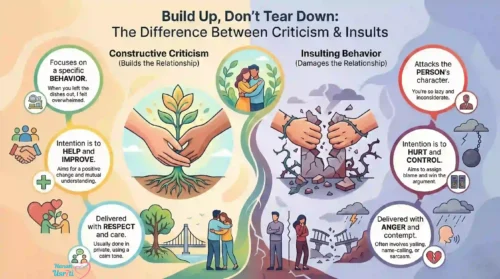
The Difference Between Constructive Criticism and Insults
Here’s where things get tricky. Not every negative comment is an insult. Constructive criticism, delivered with care and respect, can actually strengthen a relationship. So how do you tell the difference?
Constructive criticism focuses on specific behaviors and aims to improve the relationship. It sounds like: “I feel hurt when you make plans without consulting me. Can we work on communicating better?” An insult, on the other hand, attacks your character, intelligence, or worth as a person. It sounds like: “You’re so stupid, you can’t even handle simple plans.”
The key difference? Intent and delivery. Constructive feedback builds up, while insults tear down. One seeks solutions, the other inflicts pain.
Common Types of Insults Husbands Use
Insults come in many forms, and recognizing them is the first step toward addressing the problem.
⇒ Direct Verbal Attacks
These are the most obvious insults. They include name-calling, profanity directed at you, attacking your intelligence, appearance, or abilities. Comments like “You’re worthless,” “You’re a terrible mother,” or “No wonder nobody likes you” fall into this category. These attacks are intentionally cruel and leave no room for misinterpretation.
⇒ Passive-Aggressive Comments
Sometimes the insult is wrapped in sarcasm or disguised as a joke. “Oh, great job on dinner—if you were trying to poison us,” or “Wow, you actually managed to do something right for once.” These comments have plausible deniability built in. When you express hurt, the response is often, “Can’t you take a joke?” This gaslighting makes you question your own reactions.
⇒ Public Humiliation
Perhaps the most painful type of insult is when your husband demeans you in front of others—whether it’s family, friends, or even strangers. Public insults serve a dual purpose: they hurt you and damage your reputation simultaneously. They also isolate you, as others witness your humiliation and may distance themselves from the situation.
Why Do Husbands Insult Their Wives?
Understanding why doesn’t excuse the behavior, but it can help you navigate the situation more effectively.
Psychological Factors Behind Insulting Behavior
Many men who insult their wives are dealing with their own internal struggles. Low self-esteem often drives insulting behavior. When someone feels inadequate, they may try to build themselves up by tearing others down. It’s a twisted form of self-protection.
Control issues also play a significant role. Insults are a tool of manipulation and domination. By making you feel small, worthless, or dependent, an insulting husband maintains power in the relationship. Some psychologists describe this as emotional abuse, which is about control rather than anger.
![Husband Insults Wife Signs, Impact]() Learned Patterns from Childhood
Learned Patterns from Childhood
 Learned Patterns from Childhood
We learn how to be in relationships primarily from watching our parents. If your husband grew up in a home where insults were normal—where his father belittled his mother or where verbal aggression was the primary form of communication—he may have internalized these patterns. This doesn’t make it acceptable, but it does explain why some men don’t even recognize their behavior as problematic.
Stress and External Pressures
While never an excuse, external stressors can trigger or worsen insulting behavior. Job pressure, financial difficulties, health problems, or other life challenges can cause some men to lash out at the person closest to them. Their wife becomes an emotional punching bag for frustrations that have nothing to do with her.
The Devastating Impact of Insults on Wives
Let’s be absolutely clear: words hurt. The old saying “sticks and stones may break my bones, but words will never hurt me” is dangerously false.
Emotional and Psychological Consequences
When your husband repeatedly insults you, the psychological damage accumulates. You may experience depression, anxiety, or even symptoms of post-traumatic stress disorder. The constant criticism creates a state of hypervigilance—you’re always walking on eggshells, trying to avoid the next attack.
Many women describe feeling like they’re losing themselves. The person you once were—confident, capable, vibrant—gradually fades. You start to believe the insults. If you hear “you’re stupid” enough times, you begin to doubt your own intelligence. This internalization is perhaps the most insidious effect of verbal abuse.
Physical Health Effects
The mind-body connection is powerful. Chronic stress from verbal abuse manifests physically. You might experience headaches, digestive problems, sleep disturbances, or a weakened immune system. Some women develop chronic pain conditions. Your body is literally carrying the burden of emotional abuse.
Impact on Self-Esteem and Identity
Repeated insults systematically destroy self-esteem. You begin to question your worth, your abilities, and your right to be treated with respect. Many women describe feeling invisible or worthless. You might find yourself constantly seeking approval or apologizing for things that aren’t your fault.
Your sense of identity becomes tied to your husband’s opinions. Instead of knowing who you are independently, you define yourself through his criticisms. This loss of self is one of the most profound consequences of sustained verbal abuse.
How Insults Damage the Marriage Relationship
Insults don’t just hurt the wife—they poison the entire marriage.
Erosion of Trust and Intimacy
Trust is the foundation of intimacy. When your husband insults you, he violates that trust. How can you be vulnerable with someone who uses your vulnerabilities against you? How can you share your fears, dreams, or insecurities with someone who might weaponize them later?
Emotional intimacy requires safety, and insults create danger. Physical intimacy also suffers. Many women report feeling disconnected from their bodies or unable to be intimate with someone who regularly demeans them. The bedroom becomes another battlefield rather than a place of connection.
Communication Breakdown
Healthy relationships require open, honest communication. Insults shut down communication. When you’re afraid that sharing your thoughts or feelings will result in an attack, you stop sharing. Conversations become superficial or adversarial. Problems go unresolved because addressing them feels too risky.
Over time, couples develop parallel lives rather than a shared life. You coexist rather than truly connecting.
The Cycle of Resentment
Insults breed resentment. Each hurtful comment adds to an emotional debt that becomes impossible to repay. Even if your husband apologizes, the wounds remain. Resentment builds into contempt, which relationship researcher John Gottman identifies as the single greatest predictor of divorce.
Once contempt takes root, every interaction is filtered through negativity. You interpret even neutral actions as hostile. The relationship becomes characterized by defensiveness, criticism, and stonewalling—what Gottman calls the “Four Horsemen” of relationship apocalypse.
Recognizing the Warning Signs of Verbal Abuse
Not every argument or harsh word constitutes abuse, but patterns matter.
Is It Just a Bad Day or a Pattern?
Everyone has bad days. We all say things we regret when we’re stressed, tired, or overwhelmed. The difference between an isolated incident and abuse is frequency, intensity, and accountability.
Ask yourself» Does my husband insult me regularly? Are the insults becoming more frequent or severe? Does he take responsibility and genuinely apologize, or does he blame me for his behavior? Does he insult me even when things are going well, or only during high-stress situations?
A single harsh comment during a heated argument, followed by sincere remorse and changed behavior, is different from a pattern of daily belittlement and no accountability.
Red Flags to Watch For
Certain behaviors signal that insults have crossed into abuse territory. These include:
- Insults that escalate in severity over time
- Blame-shifting (making you responsible for his insults)
- Insults that isolate you from family and friends
- Public humiliation becoming more frequent
- Insults combined with controlling behavior
- Threats accompanying the insults
- Your emotional or physical health deteriorating
- You feel afraid of your husband’s reactions
If you’re experiencing these red flags, you’re not dealing with occasional harsh words—you’re experiencing emotional abuse.
What Should a Wife Do When Her Husband Insults Her?
This is the question many women ask, often feeling powerless and confused. You do have options.
Immediate Response Strategies
In the moment of an insult, your response matters. First, resist the urge to insult back. This escalates the situation and gives him ammunition to claim you’re “just as bad.” Instead, try these approaches:
Stay calm and state the fact» “That was disrespectful. I don’t deserve to be spoken to that way.” Keep your voice steady and your statement simple.
Remove yourself from the situation» If he continues or escalates, leave the room. Go for a walk, visit a friend, or simply create physical distance. This demonstrates that you won’t tolerate the behavior and gives you both time to cool down.
Don’t engage with the content of the insult» If he calls you stupid, don’t defend your intelligence. The insult itself is the problem, not whether it’s “true” or “false.”
Setting Boundaries with Dignity
Once emotions have settled, have a conversation about boundaries. Choose a calm time when you’re both clear-headed. Express clearly» “I will not accept being insulted. If you speak to me disrespectfully, I will leave the conversation until you can communicate respectfully.”
Then follow through. Boundaries without consequences are just suggestions. If he insults you again, calmly implement the consequence you stated. This might mean leaving the room, sleeping in another room, or even staying with family temporarily.
When to Seek Outside Help
Some situations require professional intervention. Consider seeking help if:
- The insults are frequent and damaging your mental health
- Your husband refuses to acknowledge his behavior
- You feel unsafe
- The pattern is escalating
- You’ve tried setting boundaries but nothing changes
Professional help might include individual therapy for you, couples counseling, or even legal consultation if you’re considering separation. Don’t wait until the damage is irreparable.
![Husband Insults Wife Signs]() Can a Marriage Recover from Habitual Insults?
Can a Marriage Recover from Habitual Insults?
 Can a Marriage Recover from Habitual Insults?
This is the question that keeps many women awake at night. The honest answer? It depends.
The Role of Genuine Remorse and Accountability
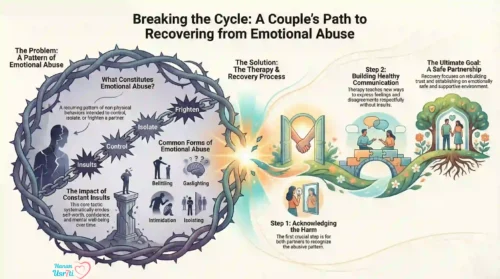
Recovery requires genuine remorse, not just apologies. What’s the difference? Remorse includes:
- Acknowledging the specific harm caused
- Taking full responsibility without excuses or blame-shifting
- Expressing understanding of how his behavior affected you
- Committing to concrete changes
- Following through on that commitment consistently over time
A simple “I’m sorry” followed by repeated insults isn’t remorse—it’s manipulation. True change requires sustained effort and accountability.
Couples Therapy and Professional Intervention
Professional help significantly increases the chances of recovery. A skilled therapist can help you both understand the underlying dynamics, develop healthier communication patterns, and rebuild trust.
However, couples therapy isn’t appropriate in all cases. If the verbal abuse is severe or accompanied by physical abuse or serious control issues, individual therapy is safer. A couples therapist might inadvertently give the abusive partner more tools for manipulation.
Practical Communication Strategies for Couples
If your marriage is in the recovery phase, these strategies can help rebuild healthier patterns.
Creating a Safe Space for Honest Dialogue
Both partners need to feel safe expressing themselves. Establish ground rules: no insults, no yelling, no interrupting. Take turns speaking and really listening. Use a “time-out” signal if emotions start escalating—this isn’t avoiding the issue, it’s preventing further damage.
Schedule regular check-ins to discuss how you’re both feeling about the relationship. Don’t wait for problems to explode.
Using “I” Statements Effectively
“I” statements reduce defensiveness. Instead of “You always insult me,” try “I feel hurt and disrespected when you make comments about my intelligence.” This focuses on your feelings rather than attacking his character.
Frame concerns around specific behaviors: “When you criticized my cooking in front of your parents, I felt humiliated” rather than “You’re always embarrassing me.”
Self-Care for Wives Dealing with Insulting Behavior
Whether you’re working on the marriage or considering leaving, taking care of yourself is essential.
Rebuilding Your Self-Worth
Start questioning the insults. Are you really stupid/lazy/worthless? Almost certainly not. Make a list of your strengths, accomplishments, and positive qualities. Ask trusted friends or family what they value about you. Their perspectives can counter the negative messages you’ve internalized.
Engage in activities that make you feel competent and valued. This might be work, hobbies, volunteering, or spending time with supportive people. Remind yourself that you existed before this relationship, and you have worth independent of your husband’s opinions.
Building a Support Network
Isolation makes abuse worse. Connect with friends, family, support groups, or online communities of women facing similar challenges. Sharing your experience reduces shame and provides perspective. Others can remind you that you’re not crazy, you’re not overreacting, and you deserve better.
Professional support is also valuable. A therapist who specializes in emotional abuse can help you process your experiences, develop coping strategies, and make decisions about your future.
When It’s Time to Consider Separation
This is perhaps the hardest section to write, but it’s necessary. Not all marriages should be saved.
Recognizing Irreparable Damage
Some situations indicate that the relationship is beyond repair:
- Your husband refuses to acknowledge his behavior or seek help
- The abuse is escalating despite your efforts
- Your physical or mental health is seriously deteriorating
- You feel afraid of your husband
- There’s no genuine remorse or accountability
- You’ve given the relationship multiple chances with no lasting change
- The relationship is modeling unhealthy dynamics for your children
Staying in a destructive relationship doesn’t serve anyone—not you, not your husband, and certainly not your children if you have them.
Planning for Your Safety and Future
If you decide to leave, plan carefully. Document the abuse (keep a journal, save texts or emails). Secure important documents and finances. Build a support network. Consult with a lawyer about your rights and options. Create a safety plan if you’re concerned about his reaction.
Leaving isn’t failure—it’s choosing your wellbeing and dignity. Many women describe separation from an insulting spouse as finally being able to breathe again.
![Husband Insults Wife Signs, Impact & What to Do (2026 Guide)]() Prevention: Building a Respectful Marriage Foundation
Prevention: Building a Respectful Marriage Foundation
 Prevention: Building a Respectful Marriage Foundation
For couples just starting out or those committed to maintaining a healthy relationship, prevention is key.
Establishing Communication Guidelines Early
Early in the relationship, discuss how you’ll handle conflict. Agree that insults, name-calling, and personal attacks are never acceptable, even in heated arguments. Establish that respect is non-negotiable.
Model the behavior you want to see. Speak respectfully even when frustrated. Apologize genuinely when you mess up. Create a relationship culture where kindness and respect are the norm.
Regular Relationship Check-ins
Don’t wait for problems to become crises. Schedule regular times to discuss how the relationship is going. Ask questions like: “How are you feeling about us?” “Is there anything I’m doing that hurts you?” “What can I do to make you feel more loved and respected?”
These conversations create opportunities to address small issues before they become big problems. They also reinforce that the relationship is a priority for both of you.
Conclusion
When a husband insults his wife, it creates profound damage that extends far beyond the moment the words are spoken. These verbal attacks undermine self-worth, destroy intimacy, and poison the entire relationship. No one deserves to be insulted by their partner, regardless of circumstances or stress levels.
If you’re experiencing this, please hear this: You are not overreacting. You are not too sensitive. You deserve to be treated with respect, kindness, and dignity. Your feelings matter. Your wellbeing matters.
Whether your marriage can heal depends largely on your husband’s willingness to take genuine accountability and make lasting changes. Recovery is possible when both partners are committed, when professional help is sought, and when there’s consistent follow-through on changed behavior.
But if he refuses to acknowledge the problem, if the abuse continues or worsens, if your health is suffering—you have the right to choose yourself. Leaving isn’t giving up; it’s recognizing that you deserve better.
Whatever path you choose, prioritize your healing. Rebuild your sense of self. Surround yourself with support. Remember who you were before the insults began, and reclaim that person. You are worthy of love, respect, and a relationship that lifts you up rather than tears you down.
Your journey toward dignity and healing starts with recognizing that you deserve better. From there, every step you take—whether it’s setting boundaries, seeking help, or choosing to leave—is an act of courage and self-love.
Frequently Asked Questions (FAQs)
1. How do I know if my husband’s comments are just teasing or actual insults?
Pay attention to how you feel and whether there’s a pattern. Teasing is mutual, lighthearted, and stops immediately if someone expresses discomfort. Insults make you feel bad about yourself, happen repeatedly, and often continue even when you ask them to stop. If you consistently feel hurt, diminished, or disrespected by his comments, they’re insults, not teasing—regardless of how he frames them.
2. Can a husband who insults his wife ever really change?
Yes, but only if he genuinely wants to and commits to the hard work required. Change requires that he acknowledge the harm he’s caused, take full responsibility without making excuses, understand the impact on you, commit to specific behavioral changes, and follow through consistently over time—often with professional help. Without genuine accountability and sustained effort, apologies become empty words and the pattern continues.
3. Should I stay in my marriage for the sake of my children even though my husband insults me?
Staying in a verbally abusive relationship doesn’t protect your children—it teaches them that disrespect is normal in relationships. Children learn relationship dynamics by watching their parents. If they see their father insulting their mother, boys may learn this behavior is acceptable, while girls may learn to accept disrespectful treatment. A peaceful single-parent home is healthier for children than a two-parent home filled with verbal abuse.
4. Why do I sometimes feel like I deserve the insults my husband directs at me?
This is a common response to sustained verbal abuse. When you hear negative messages repeatedly, you begin to internalize them—it’s a psychological survival mechanism. Additionally, many abusive partners deliberately undermine your confidence to maintain control. This feeling doesn’t reflect reality; it reflects the damage the abuse has caused. Working with a therapist can help you recognize these distorted thoughts and rebuild your self-worth.
5. What’s the difference between a bad argument and emotional abuse?
In healthy relationships, arguments focus on specific issues or behaviors, both partners take some responsibility, there’s genuine effort to resolve the problem, and respect remains intact even during disagreement. Emotional abuse involves a pattern of behavior designed to control, demean, or intimidate, with insults that attack your character or worth, blame-shifting where everything is your fault, no genuine accountability or remorse, and escalating frequency or severity over time. One bad argument is normal; a pattern of abusive behavior is not.
Sources:
- Gottman Institute – “The Four Horsemen: Criticism, Contempt, Defensiveness, and Stonewalling” – https://www.gottman.com/blog/the-four-horsemen-recognizing-criticism-contempt-defensiveness-and-stonewalling/
- American Psychological Association – “Intimate Partner Violence: Consequences” – https://www.apa.org/topics/violence/partner