

- Advertisement -


- Advertisement -
Proper Bottle Feeding Position
Have you ever watched your baby squirm, cry, or gulp air during a bottle feed and wondered what you’re doing wrong? You’re not alone. Proper bottle feeding position is one of the most overlooked aspects of infant care — and yet it directly impacts your baby’s comfort, digestion, and long-term health. From reducing the risk of ear infections to preventing acid reflux and excessive gas, the way you hold your baby during feeding is far more important than most new parents realize.
Think of it this way: you’d never comfortably drink a glass of water while lying flat on your back. The same principle applies to your baby. The physics of swallowing, breathing, and digesting are all influenced by body posture — and babies, who are still developing the muscular control to manage all of this simultaneously, are especially sensitive to how they’re positioned during feeds. Whether you’re exclusively bottle feeding or supplementing breastfeeding, getting the position right from day one sets your baby up for happier, healthier feeds.
In this comprehensive guide, we’re going to walk through everything you need to know about proper bottle feeding positions — the best holds to use, the mistakes to avoid, techniques for special situations like reflux or colic, and expert-backed tips to make every feeding session as smooth and bonding-rich as possible. Let’s dive in.
Why the Right Bottle Feeding Position Matters More Than You Think
Before we get into the specific positions, it’s worth understanding why positioning matters so deeply. It’s tempting to think that as long as milk is going in and baby seems satisfied, you’re doing it right. But the truth is, the position your baby is in while bottle feeding affects several interconnected systems in their tiny body all at once — and small adjustments can make a massive difference.
The Connection Between Position and Baby’s Health
When a baby is held in the wrong position — particularly flat on their back — milk can travel into the Eustachian tubes, the narrow passageways connecting the back of the throat to the middle ear. This creates a warm, moist environment where bacteria thrive, dramatically increasing the risk of ear infections, which are already one of the most common health issues in infants and toddlers. Beyond ear health, positioning affects the efficiency of the swallow reflex. Holding your baby’s head and back tilted upward helps keep them comfortable so they can enjoy their food, while also preventing choking. Helping Hands This slight incline works with gravity rather than against it, helping milk travel smoothly from the mouth to the stomach.
There’s also the question of breathing coordination. Babies are learning to coordinate sucking, swallowing, and breathing — a surprisingly complex trio of actions that involves, according to infant feeding specialists, 26 pairs of muscles and 5 cranial nerves working together simultaneously. Nfant If a baby’s body is tense, unsupported, or awkwardly positioned, they simply cannot coordinate these movements effectively. The result? Gulping, choking, excessive air intake, and a very unhappy feeding session for everyone involved.
Common Problems Caused by Incorrect Positioning
Incorrect bottle feeding positions are responsible for a surprising number of common infant feeding complaints, many of which parents mistake for other issues like formula intolerance or milk allergy. When a baby is fed in a reclined or flat position, gravity works against the natural flow of milk and increases the chance of reflux — where stomach contents travel back up the esophagus, causing that familiar spitting up and discomfort. Gas and colic are also frequently linked to poor positioning, because when a baby gulps air alongside milk, it gets trapped in their digestive system and causes painful bloating. If your baby is squirming while bottle feeding, it may be due to swallowed air causing trapped gas — adjusting your baby’s position and the bottle’s angle to more upright can help resolve this. Tommee Tippee
Overfeeding is another sneaky consequence of poor technique. When a baby is lying flat and the bottle is held at a steep downward angle, milk flows freely and quickly into the baby’s mouth whether they want it or not — making it very difficult for them to self-regulate their intake. Over time, this can contribute to overfeeding habits and disrupted hunger cues. Simply changing the angle of both the baby and the bottle is often enough to dramatically transform feeding sessions from stressful to smooth.

The 5 Best Bottle Feeding Positions for Your Baby
There is no single “perfect” position for all babies at all times. Every child is different, and you may find that your baby has strong preferences — just like adults do when it comes to comfort. That said, there are five positions that feeding specialists and pediatric experts consistently recommend as safe, effective, and bonding-friendly.
The Classic Cradle Hold
The cradle hold is the position most of us instinctively reach for when we think of feeding a baby, and for good reason — it’s intimate, comfortable, and highly effective. In the cradle hold, you place your baby’s head in the crook of your arm and wrap your hand around their bottom, then lift your elbow so the baby is at a slight angle with their head higher than their body. Dr. Brown’s This slight incline is the key detail that separates the safe version of this hold from a dangerous flat-back position. The baby’s face is turned toward you, making it easy to watch for feeding cues — hunger, fullness, discomfort — and to maintain meaningful eye contact during the feed. This position is especially wonderful for newborns because it mimics the close contact of breastfeeding and supports skin-to-skin bonding. The main drawback, as any parent who’s done a long cluster feeding session knows, is arm fatigue — so consider switching arms partway through or using a nursing pillow for support.
The Upright Seated Position
The upright feeding position is widely regarded as one of the best options for babies with digestive concerns, and it’s gaining popularity even for healthy babies as a preventative approach. In a seated upright feeding position, your baby will be “seated” on your leg with their head supported by your arm or upper body — this is especially helpful for babies with reflux. Taking Cara Babies For newborns, you’ll need to use your non-bottle-holding hand to provide full head and neck support, since they don’t yet have the muscle strength to hold their heads up independently. As your baby grows — typically around 3 to 4 months — they’ll develop more core control and the upright position becomes even easier to maintain. The upright posture uses gravity as an ally, helping milk move directly downward into the stomach rather than pooling or flowing backward. While you won’t have face-to-face eye contact in this position, you can still connect by talking softly, singing, or simply being present and attentive throughout the feed.
The Lap Feeding Position
The lap feeding position is a fantastic option for bonding-focused feeding and a welcome break from positions that strain your arms and back. With lap feeding, you sit down with your legs up and bent at the knees, place baby with their back against your thighs facing you, with their head against your knees and feet on your stomach. Dr. Brown’s This position gives you full visibility of your baby’s face, arms, and hands — all of which are critical for reading feeding cues — and it naturally puts the baby at a comfortable, gentle incline. The main limitation is practicality: this position is best suited for home use rather than on-the-go feeding, and it requires a seated surface where you can comfortably raise your knees. That said, for home feeds, it offers a beautiful opportunity to connect with your baby face-to-face, engage with their expressions, and truly enjoy the feeding experience rather than just rushing through it.
The Side-Lying Position
The side-lying position is perhaps the most underused and underrated bottle feeding position in a parent’s toolkit. In the side-lying position, you sit with your legs together and place your baby on their side on top of your legs, using one hand behind their head for stability and the other to hold the bottle — this position mimics breastfeeding and helps your baby get a slower, more controlled flow of milk. Taking Cara Babies Because the baby is on their side rather than their back, the risk of milk flowing passively into the mouth is significantly reduced, and the baby has to actively suck to draw milk from the bottle. This makes the side-lying position one of the most natural options for paced feeding (which we’ll cover in detail in the next section). It’s also a great choice for babies who are gassy or colicky, as the position reduces the likelihood of swallowing air. From a breastfeeding continuity perspective, this position can make it easier for nursing babies to accept a bottle because it replicates the posture they already associate with feeding comfort.
The Angled or Pillow-Assisted Position
Feeding pillows — those C-shaped or wedge-shaped cushions originally marketed for breastfeeding — are absolutely invaluable for bottle feeding too. Using a Boppy nursing pillow for bottle feeding is ideal: lay your baby on the pillow, making sure their head is propped up as you bottle feed them. Milk Drunk The pillow keeps your baby at a consistent angle without relying entirely on the strength of your arms, making longer feeding sessions much more sustainable — especially during cluster feeding phases when feedings seem to happen every hour. The pillow-assisted position works beautifully in combination with the cradle or side-lying hold, adding an extra layer of support for both you and your baby. Just remember — and this is critical — you still need to hold the bottle at all times. Never prop the bottle against the pillow or any surface and leave the baby to feed unattended, as this is a choking hazard.
Paced Bottle Feeding: The Game-Changer Technique
If there’s one feeding technique that pediatric feeding specialists consistently recommend above all others, it’s paced bottle feeding. This approach has transformed the feeding experience for countless families, reducing overfeeding, gas, reflux, and bottle preference (especially important for breastfeeding families who also use bottles). The concept is simple but the impact is profound: paced feeding slows the feeding down so that it more closely mirrors the natural rhythm of breastfeeding.
How to Practice Paced Feeding Step by Step
To practice paced feeding, start by holding your baby in an upright or semi-upright position — any of the positions described above can work, though the side-lying and upright seated positions are particularly well-suited. Once your baby starts sucking, hold the bottle parallel to the floor rather than tilting it upward — keeping the bottle parallel to the floor allows your baby to regulate the milk flow. Taking Cara Babies This horizontal bottle angle is the cornerstone of paced feeding; it means the baby has to actively suck to pull milk from the bottle rather than having milk pour passively into their mouth. Begin each feeding by tickling the baby’s upper lip with the nipple to encourage them to open wide and latch — never push the nipple into a closed mouth. Once they’re latched and sucking, you’ll notice a rhythm: suck, suck, suck, swallow, breathe. Allow this rhythm to develop naturally, and every few minutes, tip the bottle down to pause the flow, giving your baby a natural break. This mimics the let-down rhythm of breastfeeding and allows the baby time to recognize satiety signals before the bottle is empty.
Signs Your Baby Needs a Feeding Pace Adjustment
Learning to read your baby’s feeding cues is one of the most valuable skills you’ll develop in those early months, and positioning plays a big role in how well you can observe those cues. If the flow is too quick, you might see your baby gulping, coughing, milk spilling from their mouth, or them unlatching and turning their head away — if the flow is too slow, you might notice fussiness, irritation, or even that the nipple collapses as your baby tries to feed. Taking Cara Babies If your baby is consistently coughing, spluttering, or looking panicked during feeds, that’s a clear sign the milk is flowing too fast — try a slower-flow nipple or adjust the bottle angle to be more horizontal. On the flip side, if your baby seems frustrated, fussy, or keeps collapsing the nipple with their strong suck, the flow may be too slow. The goal is a comfortable, rhythmic suck-swallow-breathe pattern that keeps your baby calm and in control of their own feeding pace.

How to Hold the Bottle Correctly
Just as important as how you hold your baby is how you hold the bottle itself. The angle, tilt, and positioning of the bottle all interact with how fast milk flows, how much air your baby swallows, and ultimately how comfortable the feeding experience is.
The Horizontal Angle Rule
The horizontal bottle angle is the single most important rule in proper bottle feeding technique — and it’s the one most commonly violated. Many parents instinctively tilt the bottle steeply downward, pointing the base toward the ceiling to ensure milk flows. But this creates a strong, uncontrolled flow that babies struggle to manage. In general, aim for horizontal milk flow — that is, keeping the bottle horizontal and parallel to the floor — to allow the infant to control the milk flow, since liquids flow faster if the bottle is held vertically and slower if held horizontally. Brigham and Women’s Hospital With the bottle held nearly horizontal, your baby has to actively work to draw milk into their mouth, which slows the feeding down, reduces air intake, and puts the baby in control of the feeding experience rather than just reacting to an overwhelming flow of milk.
Filling the Nipple: Why It Matters
Here’s a nuance that trips up many well-meaning parents: even when the bottle is held at the proper horizontal angle, the nipple itself must be kept full of milk, not air. Tilt the bottle so the milk completely fills the nipple, since a nipple filled only halfway with milk may lead to baby gulping some air, which can lead to gassiness or reflux. The Bump This sounds contradictory to the horizontal rule at first — if the bottle is nearly flat, how does milk fill the nipple? The answer is that you want just enough of a tilt to keep milk (not air) in the nipple tip while still maintaining that gentle, controlled flow rate. It typically requires a very slight upward tilt at the base of the bottle. This is a fine balance, and it takes a feed or two to get the feel for it — but once you do, you’ll notice the difference in how your baby feeds almost immediately.
Bottle Feeding Positions for Special Cases
Not all babies have the same needs, and some situations call for more targeted positioning strategies. Here’s what the evidence recommends for babies with specific conditions.
Best Positions for Babies With Reflux
Acid reflux, or gastroesophageal reflux (GER), is extremely common in infants — affecting up to 70% of babies at their peak around 4 months, according to the American Academy of Pediatrics. When stomach contents flow back up into the esophagus, babies experience burning discomfort, frequent spitting up, and general fussiness. For babies with reflux, the upright position — where you sit baby on your lap with their back against your stomach and chest — is especially encouraged, and you should tip the bottle to completely fill the nipple with milk to minimize air intake. Healthline After feeding, keep your baby upright for at least 20 to 30 minutes. Gravity is your greatest ally when managing reflux — the more upright the baby remains during and after feeding, the less opportunity there is for stomach contents to travel back up.
Feeding Positions for Gassy or Colicky Babies
For babies dealing with gas, bloating, or colic, the feeding position can be just as important as any medication or supplement. Gassy babies or those with colic should be fed in the upright position, as this helps cut down on gas and post-feeding pain, and you may also want to prop your reflux or gassy baby up for ten to fifteen minutes after a bottle feed to avoid spitting up. Milk Drunk The side-lying position is also excellent for gassy babies, as it naturally reduces air swallowing. During the feed itself, take frequent burping breaks — every 1 to 2 ounces — to release any trapped air before it travels further into the digestive system and causes painful bloating. Some parents find that holding the baby upright and walking gently while burping is more effective than the traditional pat-on-the-back approach.
Bottle Feeding Positions for Premature Babies
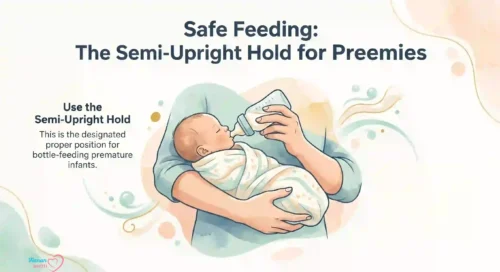
Premature babies require an especially careful and evidence-based approach to positioning during feeds, as their respiratory and swallowing coordination is less developed than full-term infants. For preterm infants, feeding specialists recommend either the side-lying position (like when being nursed at the breast, with the infant on their side with their ear, shoulder, and hip aligned) or a semi-upright position (with the infant’s head above their chest and hips, with the neck supported, such as by the inside of the feeder’s elbow), and they strongly advise avoiding feeding infants in a fully reclined or supine position. Brigham and Women’s Hospital If you have a premature baby in the NICU or recently transitioned home, always follow the specific guidance of your neonatal care team and lactation consultant, as individual needs can vary significantly.
Positions and Techniques to Avoid
Understanding what not to do is just as important as knowing the right techniques. These are the most common bottle feeding mistakes that can put your baby at risk or significantly disrupt their comfort and development.
Never feed your baby in a fully flat or reclined position. As discussed, this increases the risk of ear infections, reflux, and aspiration (inhaling milk into the lungs). Forget about laying baby across your lap flat on their back — not only can a back position lead to reflux, but it may also cause ear infections, just as you’d struggle to drink something while lying on your back. The Bump
Never prop a bottle and leave your baby to feed unsupported. Never leave your baby alone to feed with a propped-up bottle as they may choke on the milk, and never feed your baby while they are in a sling or carrier — take them out of the sling first so they’re in a safe feeding position. NHS Propped bottle feeding removes your ability to monitor your baby’s cues and respond to choking or discomfort in real time.
Avoid swaddling your baby’s arms and hands during feeding. You should avoid swaddling your baby’s arms and hands during feedings, as babies use these body parts — along with their eyes and mouth — to communicate discomfort or problems during feeds; signs like splayed fingers, clenched fists, tense arms, or grimacing may indicate the baby is overwhelmed or wants to stop. Nfant
Don’t rush or force the feed. Never force your baby to finish a feed as this will be distressing and can mean your baby is overfed. NHS Trust your baby’s hunger and fullness cues — they are more reliable than the number printed on the side of the bottle.
Burping Your Baby During and After Feeding
No guide to proper bottle feeding position would be complete without a thorough discussion of burping, because the two go hand in hand. Regardless of how perfectly you position your baby during a feed, some air will inevitably be swallowed — and that air needs to come out. Burp your baby 2 or 3 times during the feeding to get rid of any swallowed air: hold them in a sitting position on your lap and support their chin and chest, or hold them up against your chest, and gently rub their back with your other hand until they burp. Helping Hands For younger babies, burping every ounce or so is a good rule of thumb. As babies get older and become more efficient feeders who swallow less air, you may be able to stretch burp breaks to every 2 to 3 ounces.
The position you use for burping matters too. The most common method — holding baby against your shoulder and patting their back — works well, but some babies respond better to sitting upright on your lap with gentle circular back rubs, or lying face-down across your forearm. Experiment with a few techniques to find what works best for your little one. After the feed ends, keep your baby in an upright position for at least 15 to 20 minutes before laying them down for a nap. This gives the stomach time to begin digesting and reduces the likelihood of reflux or spitting up when the baby is placed flat.
A comparison of the most recommended bottle feeding positions and their ideal use cases is provided in the table below:
| Position | Best For | Pros | Cons |
|---|---|---|---|
| Cradle Hold | Newborns, general use | Bonding, easy to monitor cues | Arm fatigue over time |
| Upright Seated | Reflux, older babies | Gravity-aided digestion, anywhere | Less face-to-face contact |
| Lap Feeding | Home use, bonding | Full face visibility, arm rest | Not practical in public |
| Side-Lying | Gassy/colicky babies, paced feeding | Mimics breastfeeding, reduces air | Requires stable lap surface |
| Pillow-Assisted | Long feeding sessions | Arm support, consistent angle | Must still hold the bottle |
Conclusion
Getting the proper bottle feeding position right is one of the most practical, impactful things you can do for your baby’s comfort and health in those early months. It’s not about being perfect — it’s about being informed, attentive, and responsive to your baby’s cues in each and every feeding session. The five key positions — cradle hold, upright seated, lap feeding, side-lying, and pillow-assisted — each offer unique advantages, and you may find yourself rotating between them depending on the day, your baby’s mood, or the specific challenges you’re managing at any given time.
Remember the fundamentals: keep your baby’s head higher than their stomach, hold the bottle nearly horizontal, keep the nipple full of milk, take regular burping breaks, and never leave your baby to feed unattended with a propped bottle. These aren’t complicated changes — but they make an enormous difference. Most importantly, feeding time is bonding time. Whether you’re using formula or expressed breast milk, each bottle is an opportunity to connect with your baby through eye contact, touch, soft talking, and presence. Nail the position, trust your instincts, and enjoy this fleeting, precious season of your little one’s life.
FAQs
1. What is the best bottle feeding position for a newborn?
The cradle hold and the upright seated position are both excellent for newborns. The cradle hold offers great bonding and easy cue-reading, while the upright position is ideal for reducing reflux and gas from day one. Many feeding specialists also recommend the side-lying position for its paced-feeding benefits.
2. Can the wrong bottle feeding position cause ear infections?
Yes. Feeding a baby in a flat or near-horizontal body position can cause milk to travel into the Eustachian tubes, increasing the risk of middle ear infections (otitis media). Always ensure your baby’s head is elevated above their body during feeds.
3. How do I know if my baby is uncomfortable in their feeding position?
Watch for signs like splayed fingers, clenched fists, tense arms, turning the head away, arching the back, grimacing, gulping, or coughing. These are your baby’s way of communicating that something isn’t working — adjust the position or bottle angle and observe whether the behavior improves.
4. Is it safe to bottle feed a baby while they are in a car seat?
No. Car seats place babies in a semi-reclined position that can increase the risk of choking and milk entering the ear canals. Always remove your baby from the car seat and hold them in a proper feeding position before offering a bottle.
5. How long should a bottle feeding session take?
A typical bottle feeding session should take around 15 to 20 minutes. Feeding much faster than this often indicates the milk flow is too fast and the baby is gulping. If feeds consistently take less than 10 minutes, consider switching to a slower-flow nipple and practicing paced feeding to help your baby regulate their intake more effectively.
References:
