

- Advertisement -
Infant Milk Temperature | The Complete Safe Feeding Guide
Why Infant Milk Temperature Matters More Than You Think

- Advertisement -
Infant Milk Temperature
If you’ve ever stood in your kitchen at 3 a.m., bleary-eyed and panicking about whether your baby’s bottle is too hot or too cold, you’re in very good company. Infant milk temperature is one of those topics that sounds simple on the surface but opens up into a surprisingly detailed world of science, safety guidelines, and parental preference. Get it right and feeding time is calm, comfortable, and nourishing. Get it wrong and you risk burning your baby’s sensitive mouth, destroying the carefully preserved nutrients in breast milk, or causing unnecessary tummy troubles. This guide is here to cut through all the noise and give you a clear, trustworthy, and thoroughly researched roadmap for handling your baby’s milk temperature safely and confidently.
Why Infant Milk Temperature Matters More Than You Think
Most new parents focus so much on what their baby is eating — whether it’s breast milk or formula, organic or standard — that they overlook how the temperature of that milk affects the feeding experience entirely. But temperature is far from a trivial detail. It plays a direct role in your baby’s comfort, their ability to digest the milk efficiently, and in the case of breast milk, the preservation of its remarkable nutritional and immunological properties. Think of it like serving a fine wine at the wrong temperature — the content might be excellent, but the experience (and sometimes the quality itself) suffers dramatically when the temperature is off.
The Science Behind Baby’s Temperature Sensitivity
Newborns and young infants are, in almost every way, more physiologically sensitive than older children and adults. Their mucous membranes — the delicate tissues lining the mouth, throat, and digestive tract — are thinner and far more susceptible to both heat damage and cold shock. When a bottle is served too hot, even a small mouthful can cause painful scalding that a baby cannot communicate to you in words. They can only cry, pull away from the bottle, or refuse to feed, and a parent left wondering why their baby suddenly hates mealtime. On the cold end of the spectrum, cold breast milk or formula might actually lower the body temperature of a newborn, which can be risky Baby Brezza — particularly in the early weeks of life when thermoregulation isn’t fully developed.
How Temperature Affects Digestion and Comfort
Beyond safety, there’s the question of digestive efficiency. Warmed baby formula is easier for babies to digest, as they don’t need to use extra energy to warm it up in their tummy. Because of this, many parents have found that warm milk is less likely to cause tummy aches. Baby Brezza This makes intuitive sense — warm liquids move more smoothly through the gastrointestinal tract, and when a baby’s body doesn’t have to work overtime to process a cold liquid, the entire digestive experience tends to go more smoothly. Additionally, breast milk contains tryptophan, a substance that encourages the brain to produce the sleep hormone melatonin, so warmed milk may make a baby feel sleepy after feeding. Tommee Tippee For tired parents trying to settle a baby after a nighttime feed, that’s not a small benefit — it’s practically the stuff of dreams.
What Is the Ideal Infant Milk Temperature?
Let’s get to the number that every parent wants to know. The good news is that the answer is actually quite intuitive when you think about how nature designed the feeding process.
Body Temperature as the Gold Standard
The best milk temperature for babies is close to body temperature — around 98.6°F (37°C). This is the same warmth they get during breastfeeding. WONDERBEWBZ That warmth is what your baby already knows and expects. When babies feed directly from the breast, they receive milk at a perfectly consistent human body temperature, every single time, without any preparation required. When we move to bottle feeding — whether with expressed breast milk or formula — our entire job in terms of temperature is simply to replicate what nature already does effortlessly. Anything significantly higher than 98.6°F starts to move into potentially problematic territory, and heating breast milk beyond lukewarm temperatures is not recommended, as hot liquid can burn baby’s mouth, plus studies show the quality of breast milk deteriorates when heated beyond recommended ranges. Mama Natural
Temperature Guide for Breast Milk vs. Formula
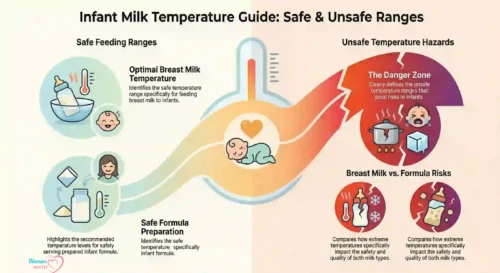
While the ideal serving temperature is the same for both breast milk and formula — that body-temperature sweet spot of around 98.6°F (37°C) — the consequences of getting the temperature wrong differ between the two. For formula, overheating primarily concerns safety (burning the mouth and throat) and the dissolution of nutrients, but formula doesn’t carry the same biologically active compounds that breast milk does. For breast milk, the stakes around temperature are actually higher, because overheating can irreversibly damage live cells, antibodies, and enzymes that make breast milk so uniquely powerful. Breastmilk should not be overheated to temperatures higher than 104 degrees Fahrenheit (40 degrees Celsius), otherwise it could compromise the nutrient quality. MSU Extension That’s a surprisingly low threshold that catches many parents off guard — 104°F is not what most of us would describe as “hot” in everyday terms, which means casual overheating is far easier to do than people realize.
Quick Reference Temperature Table
| Milk Temperature | Description | Safe for Baby? |
|---|---|---|
| 39–48°F (4–9°C) | Refrigerator cold | Generally safe, but may cause fussiness in some newborns |
| 68–77°F (20–25°C) | Room temperature | Yes — a neutral, widely accepted option |
| 98.6°F (37°C) | Body temperature | Ideal — mimics breast temperature |
| 99–105°F (37–40°C) | Slightly above body temp | Acceptable; still lukewarm |
| 106°F+ (41°C+) | Hot | Not recommended; risk of burns and nutrient loss |
| 143°F+ (62°C+) | Very hot | Dangerous; destroys beneficial bacteria and white blood cells |
How to Safely Warm Your Baby’s Bottle
Now that you know the target temperature, let’s talk about how to actually get there without causing harm. There are a few methods that pediatric health professionals and organizations consistently recommend, and each has its own practical advantages depending on your situation and time constraints.
The Warm Water Bath Method
The warm water bath is arguably the most widely recommended and safest technique for warming an infant bottle. Fill a jug or bowl with warm tap water. The water should be hot enough to heat the bottle, but cool enough to place your hand in it. Place the bottle in the warm water for no more than 15 minutes. Once the bottle is warmed, swirl it gently to make sure all the milk is warmed evenly, but avoid shaking as this can introduce air bubbles. Tommee Tippee This method is favored precisely because it’s gentle — the gradual heat transfer prevents any portion of the milk from getting dramatically hotter than another, which is one of the main dangers of more aggressive heating approaches. It also requires zero special equipment, making it the most accessible option for parents in any setting. The key is to keep the water warm but not hot — if you can comfortably keep your hand in it, it’s the right temperature.
Using a Bottle Warmer Correctly
Bottle warmers are a popular gadget for parents who want convenience and consistency, and they can absolutely be a safe tool when used properly. Use caution when using bottle warmers. It can be difficult to get just the right level of heat. Cincinnati Children’s The main danger with bottle warmers is that they can run too hot, particularly with breast milk. One study found that bottle warmers, hot water baths, and other warming methods can all cause the breast milk to exceed 80°C (176°F), which is the temperature when many of the beneficial properties disappear. Healthline This is a sobering finding that underlines the importance of not assuming a device is automatically safe just because it’s marketed for babies. If you choose to use a bottle warmer, the most important step is to always follow it up with a temperature test before serving — never skip that final check just because you trust the machine.
The Running Warm Water Technique
For parents on the go or those who need a quick method without any equipment, running the bottle under warm tap water is a perfectly valid approach. If you choose to warm your baby’s bottle, place the bottle under running warm water. Keep water out of the bottle and off the nipple. CDC This method is faster than a water bath and works well in a pinch, though it does use more water and can be slightly less consistent in terms of even heating. The same principles apply — the tap water should feel warm to your hand, not hot, and you should swirl the bottle gently afterward and always test the temperature before feeding.
Methods You Must Never Use
Not all warming methods are created equal. Some that might seem logical or convenient at first glance are actually dangerous in ways that aren’t immediately obvious.
Why Microwaves Are Dangerous
This is perhaps the single most important safety rule in all of infant feeding: never, ever heat your baby’s bottle in a microwave. This isn’t a matter of preference or parenting style — it’s a firm, unanimous recommendation from every major pediatric and public health authority including the CDC and the American Academy of Pediatrics. Microwaves heat milk and food unevenly, resulting in hot spots that can burn your baby’s mouth and throat. CDC The insidious thing about microwave heating is that the bottle itself might feel perfectly fine to the touch while the milk inside has developed localized pockets of dangerously high temperature. A baby has no way to tell you that the third sip was far hotter than the first — they simply experience the burn. Beyond the burn risk, microwaving is also particularly harmful for breast milk, as the uneven extreme heat breaks down biologically active components. This is one rule with absolutely no exceptions.
The Boiling Water Mistake
Some parents, wanting to be extra thorough about sterilization, make the mistake of placing baby bottles in or near boiling water to warm them. Warming bottles in hot, boiling water can be dangerous. There have been reports of infants and toddlers being burned due to accidental spills. Baby Brezza Beyond the accident risk, boiling water is far too aggressive for warming milk. Even if the bottle doesn’t reach boiling point, water temperatures at 212°F can drive the milk inside well above the threshold at which nutrients are destroyed. If you’ve boiled water for formula preparation (which some situations do require for safety), the CDC recommends letting it cool for around five minutes before mixing it with the powder, and then further cooling the prepared bottle to feeding temperature before serving.
How to Test Milk Temperature the Right Way
Knowing the right temperature range is only useful if you can accurately gauge when you’ve hit it. Fortunately, there are a couple of reliable and easy methods every parent can use.
The Wrist Test Explained
The wrist test is the classic parenting technique that has been passed down through generations, and it genuinely works. Drop a few drops on the inside of your wrist. It should feel warm, not hot. If it feels hot to you, it’s too hot for your baby. WONDERBEWBZ The reason the inner wrist works so well as a testing point is that the skin there is notably thin and sensitive — far more so than the back of your hand or your fingertips. The skin on the inside of your wrist is thin and sensitive, just like your baby’s, so this serves as a reliable guide. Tommee Tippee A critically important calibration point: if you feel any sensation of heat at all, the bottle is too hot. The ideal sensation when you perform the wrist test is warm, or even barely detectably warm — not a comforting cozy heat, but a temperature that’s just slightly above neutral. When in doubt, cooler is always safer than hotter.
Using a Digital Thermometer
For parents who want a more precise approach, especially those feeding premature babies or infants with specific medical needs, a food-safe digital thermometer removes all the guesswork. For more accuracy, use a food-safe baby bottle thermometer. It gives a quick reading and helps avoid overheating. WONDERBEWBZ You’re looking for a reading in the range of 98–104°F (37–40°C). A good thermometer also becomes invaluable when learning to calibrate your bottle warmer, as it lets you understand exactly how hot your device actually gets the milk and adjust your settings accordingly.
Cold Milk vs. Warm Milk — What Does the Research Say?
One of the most reassuring pieces of information for exhausted parents is this: your baby does not medically need warm milk. There is no medical reason to heat a bottle, it’s just a choice that some parents make. If your baby likes a cold bottle, great! This can save you a step in the feeding process and make life a little easier. Milk Drunk The whole practice of warming bottles is about preference and comfort, not nutritional necessity. Many babies around the world drink formula at room temperature or even cold from the refrigerator without any digestive issues whatsoever.
That said, there are contexts where temperature preference genuinely matters. Babies who transition from breastfeeding to bottles may find cold milk jarring and unfamiliar, since they’ve only ever experienced milk at a warm body temperature. In those cases, matching the temperature of breast milk can make the transition significantly smoother. Some babies may actually enjoy cold milk. Cold milk can be refreshing, and some parents find that their babies readily accept chilled formula. Cold milk might be especially appealing to babies when they are teething or in warmer weather. Grow Organic Baby The bottom line is that you should follow your baby’s cues. If they feed happily from a cold or room temperature bottle, there’s no reason to add the extra step of warming. If they resist, fuss, or don’t drink as much, experimenting with a warmer temperature is a perfectly reasonable response.
There’s also some genuinely fascinating emerging research on cold milk for specific medical situations. Feeding cold milk has emerged as a potential adjunct therapy for preterm infants, as it activates pharyngeal thermo-receptors, enhancing sensory input and triggering more effective swallowing. PubMed Central This is a reminder that the science of infant feeding is always evolving, and what seems counterintuitive may sometimes have a solid physiological rationale.
Temperature Rules for Stored and Frozen Breast Milk
If you’re a pumping parent, managing stored breast milk adds another layer of temperature considerations that go beyond just the serving moment.
Thawing Frozen Milk Safely
Proper thawing is just as important as proper warming when it comes to preserving all those valuable nutrients in breast milk. The gentlest and most recommended method is to transfer frozen milk from the freezer to the refrigerator the night before you need it, allowing it to thaw slowly over 8 to 24 hours. If you need it faster, you can thaw frozen breast milk under lukewarm, running water, ensuring the water does not leak into the container. MSU Extension What you absolutely want to avoid is immersing frozen breast milk in boiling or very hot water to speed things up — this shortcuts the thawing process but at the cost of exposing the outermost layers of milk to high temperatures that begin degrading its quality before it’s even served. Think of it like trying to defrost a steak by throwing it directly into a hot pan — the outside overcooks while the inside is still frozen.
How Long Warmed Milk Stays Safe
Once you’ve warmed a bottle of breast milk or formula, a clock starts ticking. Use prepared infant formula within 2 hours of preparation and within one hour from when feeding begins. If you do not start to use the prepared infant formula within 2 hours, immediately store the bottle in the fridge and use it within 24 hours. CDC For breast milk, the CDC guidelines also recommend using warmed milk within 2 hours. If your baby doesn’t finish a bottle, throw out any infant formula that is left in the bottle after feeding your baby. The combination of infant formula and your baby’s saliva can cause bacteria to grow. CDC This same principle applies to breast milk — once a baby has drunk from a bottle, bacteria from their saliva have entered it, and the milk should not be saved and reused regardless of how much is left.
Common Mistakes Parents Make With Infant Milk Temperature
Even well-informed, caring parents fall into a handful of predictable traps when it comes to managing their baby’s milk temperature. Understanding these pitfalls ahead of time is the best way to avoid them. The biggest and most widespread mistake is using microwave heating, which we’ve addressed in detail — but it bears repeating because it remains extremely common despite decades of consistent warnings from pediatric authorities.
Another frequent error is reheating milk that has already been warmed once. It is not recommended to reheat breast milk that has already been warmed, as this can cause a loss of nutrients and increase the risk of bacterial growth. Milkify Every time milk is heated and cooled, the window for bacterial proliferation widens and the nutritional value narrows. A single warming cycle is the maximum — if the baby doesn’t finish the bottle, the leftover milk must be discarded, not refrigerated for a second attempt later.
A third mistake is leaving warmed bottles sitting out for extended periods while the parent tends to other tasks before feeding. Warm temperatures are ideal not just for babies but for bacteria, and milk that sits at room temperature for more than two hours after warming has entered the danger zone microbiologically. Many parents also make the error of testing temperature on the back of the hand rather than the inner wrist — the back of the hand is much less sensitive and can cause you to significantly underestimate how hot the milk actually is.
Special Considerations for Premature and Newborn Infants
For parents of premature babies or newborns with medical complications, infant milk temperature requires an even more careful approach than for healthy, full-term infants. Premature infants have immature thermoregulatory systems, meaning their ability to maintain body temperature in response to cold stimuli is significantly compromised. The North America Human Milk Banking Association advocates warming feeds to body temperature for premature infants, particularly those at risk for necrotizing enterocolitis (NEC). PubMed Central NEC is a serious and potentially life-threatening intestinal condition that affects premature babies, and while the relationship between milk temperature and NEC is still being studied, the recommendation to serve milk at body temperature for these vulnerable infants is firmly established.
For newborns in their first weeks of life — even those who are full-term and healthy — the same general principle applies with extra emphasis. A newborn’s digestive system is brand new and adjusting to feeding from scratch. Serving milk at body temperature during this period reduces the physiological demands on the baby’s body and typically leads to smoother, more comfortable feeds. As babies grow and their systems mature, they generally become more tolerant of temperature variation and may happily accept room temperature or even cold milk — but the early weeks are not the time to experiment with cold feeding unless your pediatrician specifically advises it.
Conclusion
Infant milk temperature is one of those deceptively simple topics that turns out to have real depth and genuine health implications. The core message is clear: aim for body temperature (around 98.6°F / 37°C), test every bottle before every feed, use gentle warming methods like a warm water bath, and never use a microwave under any circumstances. Know that cold milk is medically acceptable for most babies, that breast milk requires extra care to prevent nutrient-destroying overheating, and that warmed milk has a strict two-hour window before it must be discarded. These aren’t arbitrary rules — they’re backed by solid science and the consensus of every major pediatric health authority. Armed with this knowledge, you can approach every feeding with confidence, knowing you’re giving your baby the safest, most comfortable, and most nutritious experience possible.
Frequently Asked Questions
1. What is the exact ideal temperature for infant milk?
The ideal temperature for infant milk — whether breast milk or formula — is approximately 98.6°F (37°C), which closely mirrors normal human body temperature and the temperature of milk as it comes directly from the breast. This temperature is comfortable, familiar, and supports easy digestion.
2. Can I give my baby cold formula straight from the fridge?
Yes, medically speaking, cold formula is safe for most healthy, full-term babies. There is no clinical requirement to warm formula before serving. Many babies accept cold or room temperature formula without any issues. However, if your baby seems fussy, doesn’t feed well, or has digestive discomfort, trying a warmer temperature is a reasonable next step.
3. Why can’t I use the microwave to warm my baby’s bottle?
Microwaves heat liquids unevenly, creating dangerous “hot spots” within the milk that can burn your baby’s delicate mouth and throat even when the bottle feels fine from the outside. For breast milk specifically, microwave heating can also damage valuable nutrients, antibodies, and immune-protective components.
4. How do I know if breast milk has been overheated?
Unfortunately, overheated breast milk often looks and smells the same as properly warmed milk, which is why temperature control is so important. The safest approach is prevention: always use a warm water bath with water that feels comfortable to your hand, and consider a digital food thermometer to confirm you’re staying below 104°F (40°C).
5. Can I refrigerate leftover warmed milk and use it later?
No — once milk has been warmed and a baby has begun feeding from the bottle, it should be discarded after feeding is complete. The combination of warming and the introduction of saliva from the baby creates conditions for bacterial growth. If the milk was warmed but the baby hasn’t yet started feeding from it, you may refrigerate and use it within 24 hours, but never refreeze or reheat it a second time.
References:
- Centers for Disease Control and Prevention (CDC) — Infant Formula Preparation and Storage: https://www.cdc.gov/infant-toddler-nutrition/formula-feeding/preparation-and-storage.html
- Bransburg-Zabary, S. et al. — Human Milk Warming Temperatures Using a Simulation of Currently Available Storage and Warming Methods (PMC): https://pmc.ncbi.nlm.nih.gov/articles/PMC4465021/
- Cincinnati Children’s Hospital Medical Center — Warming Formula or Breast Milk: https://www.cincinnatichildrens.org/health/b/breastmilk-warming-formula
