

- Advertisement -
Breastfeeding vs Bottle Feeding
Breastfeeding vs. Bottle Feeding — Benefits, Challenges & What Science Really Says


- Advertisement -
Breastfeeding vs. Bottle Feeding
Few decisions carry more emotional weight for a new parent than how to feed their baby. You’ve likely heard strong opinions from all directions — from your pediatrician to your mother-in-law to a stranger in a Facebook group. The “breastfeeding versus bottle feeding” debate is one of the most hotly contested topics in parenting, and yet the answer is rarely as black and white as people make it seem. So let’s cut through the noise together. In this guide, we’re going to look at what the actual science says, what the real-life trade-offs are, and how you can make the best decision for your unique situation — without guilt, pressure, or oversimplified slogans.
What Is the Real Difference Between Breastfeeding and Bottle Feeding?
At the most basic level, this debate comes down to what your baby drinks and how it is delivered. Breastfeeding means the infant feeds directly from the mother’s breast, receiving milk that the body produces naturally in response to the baby’s needs. Bottle feeding, on the other hand, can involve either commercially prepared infant formula or expressed breast milk delivered via a bottle — sometimes referred to as “pumping and bottle feeding.” While these sound simple enough to distinguish, the nuances run much deeper than the container holding the milk.
When people say “bottle feeding,” they most often mean formula feeding, since that is the most common alternative to direct breastfeeding. Formula is a carefully engineered nutritional product designed to mimic breast milk as closely as possible. However, it is important to note that bottle feeding with expressed breast milk is technically different from formula feeding, even though both use a bottle. Some mothers choose to pump exclusively, meaning their baby gets the nutritional advantages of breast milk without the act of nursing. This distinction matters a great deal when interpreting research on infant outcomes, since many studies combine bottle-feeding types in ways that can blur the results.

Understanding How Each Method Works
Breastfeeding is a dynamic biological process. The composition of breast milk actually changes throughout a single feeding session, across the day, and as the baby grows. The first milk produced after birth — called colostrum — is a thick, nutrient-dense substance packed with antibodies and immune factors. The WHO describes colostrum as the perfect food for newborns and recommends initiating feeding within the first hour after birth. WHO As the weeks pass, milk transitions from colostrum to “transitional milk” and eventually to mature milk, all the while adjusting its composition to suit the infant’s evolving needs. No factory can replicate this level of biological personalization.
Bottle feeding with formula, by contrast, is a static product. The formula you buy today has the same composition whether your baby is one week old or five months old. Modern infant formulas are held to rigorous regulatory standards and are designed to meet all essential nutritional needs of a growing infant. They contain carefully calibrated amounts of protein, fat, carbohydrates, vitamins, and minerals. However, they lack the living components of breast milk — the antibodies, growth factors, enzymes, and bioactive molecules — because these simply cannot survive the manufacturing and sterilization process in the same form.
The Global Picture — Who’s Feeding How in 2025?
The global landscape of infant feeding tells a fascinating and sometimes surprising story. According to UNICEF data, the regions where breastfeeding is most prevalent are South Asia and Eastern and Southern Africa, where around 60% of infants aged 0 to 5 months are exclusively breastfed, while breastfeeding rates up to six months are lowest in North America at 26%. Statista As of August 2025, WHO and UNICEF reported that only 48% of infants under six months are exclusively breastfed globally, still short of the 60% target set by the World Health Assembly for 2030. PAHO/WHO These statistics reveal not just health trends, but deep economic, cultural, and systemic gaps in maternal support around the world.
The Nutritional Science Behind Breast Milk
If you were to sit down with a nutritional biochemist and ask them to compare breast milk to infant formula, they would almost certainly tell you that breast milk is in a category of its own. It is not merely “food” — it is a living biological fluid that adapts in real time to the needs of the infant drinking it. That’s not marketing language; that’s physiology.
What’s Actually in Breast Milk That Formula Can’t Fully Replicate?
Breast milk is a complex and dynamic biological fluid uniquely designed to meet the nutritional needs of infants, with a composition that evolves in alignment with the changing requirements of the growing baby and is enriched with bioactive components that strengthen immune defenses and overall health. Wiley Online Library Among the most important of these bioactive components are immunoglobulins (particularly IgA), lactoferrin, lysozyme, and human milk oligosaccharides (HMOs) — a class of prebiotics that feed beneficial gut bacteria. Formula companies have worked for decades to add some of these components to their products, but the versions in formula are not biologically identical to those in breast milk, and they do not function in exactly the same way once they reach a baby’s gut.
One of the most extraordinary things about breast milk is what it does for the gut microbiome. Breastfeeding facilitates the establishment of a diverse gut microbiome, which is vital for immune system maturation and metabolic balance. Wiley Online Library The microbiome — the community of trillions of bacteria living in the digestive tract — plays a profound role in immunity, metabolism, mental health, and disease risk throughout life. Breastfed infants tend to have gut microbiomes dominated by Bifidobacterium species, which thrive on HMOs and produce beneficial short-chain fatty acids. Formula-fed infants show a more diverse but less protective microbiome profile. This distinction in early microbial colonization may have ripple effects that last for decades.
How Infant Formula Has Evolved — And Where It Still Falls Short
It would be unfair to dismiss infant formula as a poor option — it has genuinely saved millions of lives and provided safe, adequate nutrition for countless babies whose mothers could not or chose not to breastfeed. Today’s formulas are vastly superior to those of even 20 years ago, with manufacturers adding DHA and ARA for brain development, prebiotics for gut health, and whey protein ratios that more closely mimic the protein profile of breast milk. However, formula companies can never accurately mimic all the contents of breast milk — and we do not even fully know all of what breast milk contains or how it changes as the baby grows. American Pregnancy Association That gap in our knowledge is itself a telling indicator of just how complex breast milk truly is.
Health Benefits of Breastfeeding for Your Baby
The evidence base supporting breastfeeding’s health benefits is enormous and spans dozens of outcomes across multiple organ systems. Let’s dig into what the research actually shows — and where it gets a bit more complicated.
Short-Term Immunity and Infection Protection
Think of breast milk as your baby’s personal shield. Passive immunity in breast milk works because immunoglobulins are passed from the mother’s immune system to the baby, giving the baby temporary immunity to pathogens the mother has already encountered. American Pregnancy Association This is why breastfed babies tend to get fewer ear infections, respiratory illnesses, and gastrointestinal infections in the first year of life. Breast milk contains antibodies that help protect against infections and illnesses, such as ear infections, respiratory infections, and even sudden infant death syndrome (SIDS). Gabrielsonclinic4women The protection against SIDS is particularly striking — breastfed babies are 60% less likely to die from SIDS than those who are not breastfed, with the protective effect being even more pronounced for infants who are exclusively breastfed. PAHO/WHO
Long-Term Health Outcomes — What the Research Really Says
Here is where things get genuinely interesting — and where the science demands a bit of nuance. The long-term benefits of breastfeeding are often cited as including higher IQ, lower obesity risk, reduced rates of type 2 diabetes, and even higher adult earnings. But are these effects truly caused by breastfeeding itself, or are they confounded by the fact that mothers who breastfeed tend to also have higher education levels, higher incomes, and better access to healthcare? A sibling-comparison study using 25 years of longitudinal data found that when controlling for within-family fixed effects, the estimated associations between breastfeeding and long-term outcomes like cognitive ability, obesity, and behavioral measures dramatically decreased and largely failed to maintain statistical significance. PubMed Central This doesn’t mean breastfeeding has no long-term benefits — it means we should be cautious about overstating them and acknowledge that socioeconomic context plays a major role.
That said, there are some long-term benefits that appear more robust. Extended breastfeeding reduces the risk of overweight and obesity by 13%, lowers the risk of type 2 diabetes by 35%, and is associated with a 19% reduction in childhood leukemia for babies breastfed for more than six months. PAHO/WHO Children who are breastfed also perform better on intelligence tests, are less likely to be overweight or obese, and are less prone to diabetes later in life. WHO The economic dimension is remarkable too — a 30-year cohort follow-up study found that breastfed adults earned higher wages, with this effect mediated through higher educational attainment, suggesting that the cognitive benefits of breast milk may compound meaningfully over a lifetime.

Health Benefits of Breastfeeding for Mom
The conversation about breastfeeding almost always centers on the baby, but what about the mother? Breastfeeding is not a one-way street. The act of nursing triggers significant hormonal changes that benefit the mother’s physical and mental health in ways that deserve far more attention than they typically receive.
Cancer Risk Reduction and Hormonal Benefits
When a mother nurses her baby, her body releases oxytocin, which causes the uterus to contract and reduces postpartum bleeding. But the benefits extend well beyond the immediate postpartum period. Women who breastfeed have a reduced risk of both breast and ovarian cancers WHO — a finding that has been replicated across numerous large-scale epidemiological studies. The longer a woman breastfeeds in total across her lifetime, the greater the protective effect. Breastfeeding is associated with decreased maternal risk for breast and ovarian cancer, myocardial infarction, hypertension, diabetes, and stroke. PubMed Central Additionally, the hormonal environment of breastfeeding suppresses ovulation, providing a natural (though not infallible) form of birth control and giving the mother’s body more time to recover between pregnancies. Research also links longer breastfeeding to reduced rates of postpartum depression, with the oxytocin released during nursing playing a calming, bonding role for the mother as well as the baby.
The economic argument for breastfeeding is compelling on a societal level too. Every dollar invested in breastfeeding support yields $35 in economic returns PAHO/WHO, when accounting for reduced healthcare costs, improved cognitive outcomes, and lower rates of chronic disease. The cost of suboptimal infant feeding practices is consistently estimated at around $100 billion annually in the USA alone, with costs from child cognitive losses making up the bulk. PubMed Central From a purely financial perspective, breastfeeding is one of the highest-return health behaviors a family — and a society — can invest in.
The Real Benefits of Bottle Feeding
Here is the part of the article that often gets glossed over in favor of pro-breastfeeding advocacy: bottle feeding has real, legitimate advantages, and formula is not the villain it is sometimes made out to be. Understanding those advantages is essential for having an honest, balanced conversation.
Flexibility, Freedom, and Shared Responsibility
Perhaps the most significant practical advantage of formula or bottle feeding is flexibility. Any caregiver can feed the baby at any time, which matters enormously for working parents, single parents, parents of multiples, and families where the mother’s health, mental wellbeing, or recovery needs to take priority. Formula feeding offers convenience — any caregiver can feed the baby, giving parents more freedom and making it easier to return to work or manage day-to-day life. Gabrielsonclinic4women This isn’t a trivial benefit. For many families, this flexibility is the difference between a mother retaining her career and financial independence, or a partner feeling meaningfully involved in the early weeks of parenting.
There is also the matter of feeding frequency. Breast milk is digested more quickly than formula, which means breastfed newborns typically need to feed every one and a half to three hours, including through the night. Formula is less easily digested than breast milk, which means babies tend to eat less frequently — a factor that can make feeding schedules easier to manage, especially during nighttime feedings. Gabrielsonclinic4women For a sleep-deprived parent on the edge of exhaustion, those extra minutes between feeds can feel like a lifeline.
When Formula Feeding Is the Right (or Only) Choice
It is critical to acknowledge that for many mothers, breastfeeding simply is not possible. Medical conditions like insufficient glandular tissue, prior breast surgeries, or hormonal disorders can prevent adequate milk production. Certain medications — including some antidepressants, chemotherapy drugs, and others — are contraindicated during breastfeeding. Infants with certain metabolic disorders such as galactosemia cannot be breastfed at all. Mothers who have undergone trauma related to their bodies may find that breastfeeding is psychologically untenable. Adoptive parents and those who used gestational surrogates often rely entirely on formula. In all of these cases, formula is not a compromise — it is the appropriate and compassionate choice.
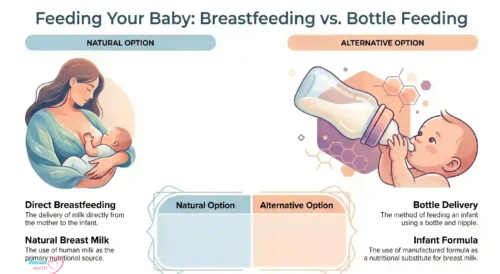
Breastfeeding vs. Bottle Feeding — Side-by-Side Comparison
Here is a clear overview of the key differences across the most important dimensions:
| Factor | Breastfeeding | Formula / Bottle Feeding |
|---|---|---|
| Nutritional Quality | Dynamic, personalized, contains living antibodies | Standardized, consistent, nutritionally complete |
| Immune Protection | High — transfers maternal antibodies | Limited — no passive immunity transfer |
| Cost | Free (plus pump costs if pumping) | $150–$300+/month depending on formula type |
| Convenience | No prep needed; always available | Requires bottles, sterilization, mixing |
| Flexibility | Tied to mother’s availability | Any caregiver can feed at any time |
| Feeding Frequency | More often (every 1.5–3 hrs) | Less often (every 3–4 hrs) |
| Maternal Health Benefits | Reduces cancer risk, burns calories | No direct maternal health benefit |
| Bonding | Enhanced by skin-to-skin contact | Possible with intentional holding/closeness |
| Diet Restrictions for Mom | Yes — caffeine, alcohol, some foods | None |
| Medical Contraindications | Some medications, illnesses | Few; suitable for most infants |
Challenges of Breastfeeding Nobody Warns You About
Here’s something parenting books don’t always prepare you for: breastfeeding is hard, especially in the beginning. The image of a serene mother effortlessly nursing a content baby is beautiful — and for many women, it is also nowhere close to their first-week reality. The challenges are real, they are common, and they are not signs of failure.
Physical Pain, Latch Issues, and Supply Struggles
The most common early hurdle is latching. When a baby does not latch correctly, the consequences for the mother can range from uncomfortable to genuinely painful — cracked, bleeding nipples, engorgement, and mastitis (a painful breast infection) are all possibilities. Poor breastfeeding techniques, such as improper positioning and latch, can cause babies to swallow air or experience gas-related pain, and concerns over perceived insufficient milk supply are significant factors influencing mothers to consider formula feeding as an alternative. Wiley Online Library The perception of insufficient milk supply is one of the most common reasons women stop breastfeeding early, even when their supply is actually adequate. This is why lactation consultant support is so valuable — and why the lack of access to such support is a genuine public health issue.
Only one in five countries trains doctors and nurses in infant feeding, leaving many mothers without proper guidance after childbirth. PAHO/WHO This systemic gap means that many women encounter breastfeeding difficulties and, without knowledgeable support, assume they cannot breastfeed when they actually could with the right help. Addressing this is not just about individual families — it is a structural healthcare challenge that the WHO and UNICEF are actively working to resolve on a global scale.
The Emotional and Mental Health Side of the Debate
Bonding, Guilt, and the Pressure on New Mothers
Let’s be honest about the emotional reality of this topic. New mothers face enormous societal pressure to breastfeed, and when they cannot or choose not to, the guilt can be crushing. The “breast is best” message — however well-intentioned — can become a blunt instrument that damages maternal mental health and self-worth. What gets lost in that message is the equally important truth that a fed baby with a mentally healthy mother thrives, regardless of what’s in the bottle.
The research on bonding is genuinely reassuring for formula-feeding parents. According to available science, breastfed, bottle-fed, and formula-fed babies experience equal outcomes in terms of attachment and emotional bonding — because the foundation for a strong bond is the act of holding, comforting, and consistently responding to the baby’s needs. The Military Wife and Mom Skin-to-skin contact during bottle feeding, maintaining eye contact, and cradling the baby close to the chest during feeds can replicate many of the bonding elements of nursing. The oxytocin release triggered by touch and warmth is not exclusive to breastfeeding. What builds a secure attachment is consistency, responsiveness, and love — things that come from the parent, not the feeding method.
It is also worth mentioning that postpartum depression affects a significant proportion of new mothers, and for some women, the stress and physical demands of struggling to breastfeed can exacerbate mental health challenges. Choosing formula — or transitioning to it — in the interest of a mother’s mental health is not giving up. It is prioritizing the wellbeing of the entire family system, which includes the baby.
Combination Feeding — The Middle Path
One option that does not get nearly enough attention in the breastfeeding versus bottle feeding conversation is combination feeding — also called “mixed feeding” — in which a baby receives both breast milk (directly from the breast or expressed and bottled) and infant formula. This approach can offer the best of both worlds for many families, and it is far more common than the binary debate suggests.
Combination feeding allows a mother to breastfeed when it is convenient and comfortable, while supplementing with formula when needed — whether due to supply concerns, a return to work, nighttime feeds, or simply a desire to share the feeding responsibility with a partner. Even a small amount of breast milk, especially in the first six months, can be beneficial — and if full breastfeeding isn’t possible, it is suggested to feed whatever breast milk is available and then supplement with formula. American Pregnancy Association This is an empowering reframe: it’s not an all-or-nothing choice. Any breast milk is better than none, but formula is a perfectly valid complement.
It’s worth noting that introducing bottles to a breastfed baby does require some thoughtfulness. The mechanics of suckling at the breast differ from drinking from a bottle, and some babies develop a preference for the easier flow of a bottle — sometimes called nipple confusion — though this concern is somewhat overstated and manageable with the right bottle nipple flow rate. Introducing a bottle after breastfeeding is well established (typically around 4–6 weeks) tends to go more smoothly than doing so in the very early days.

Making Your Decision — What Should You Actually Do?
Here is the framework that can guide your decision, stripped of ideology and grounded in practical reality. Think about it like building a house: the foundation is your baby’s nutritional needs, but the structure around it needs to support you, your family, and your circumstances too.
Start with the evidence: If you are physically able to breastfeed and have access to support, the nutritional and immune benefits of breast milk in the first six months are real and meaningful. Optimal breastfeeding could save over 820,000 children’s lives per year among children under five globally. WHO The WHO and the AAP both recommend exclusive breastfeeding for the first six months, with continued breastfeeding alongside complementary foods for two years or beyond. These recommendations are based on substantial evidence and should be taken seriously.
Respect your reality: At the same time, recognize that breastfeeding is not achievable or appropriate for every family. If you have medical contraindications, insufficient supply, mental health challenges, or circumstances that make breastfeeding unsustainable, formula feeding is a safe, nutritionally adequate, and entirely acceptable choice. A thriving formula-fed baby is infinitely preferable to a malnourished or neglected one. As the parenting community has increasingly come to embrace: fed is best.
Build your support network: Whatever method you choose, you will do better with support. For breastfeeding, that means connecting with a lactation consultant, a breastfeeding support group, or a trusted healthcare provider early. For formula feeding, it means getting clear guidance on preparation, sterilization, and feeding frequency. And for combination feeding, it means staying connected with your pediatrician to monitor growth and adjust as needed.
Conclusion
The breastfeeding versus bottle feeding debate does not have a single winner, and that is actually good news — because it means there is a valid path forward for every family. Breast milk is biologically unique, offering immune protection, microbiome support, and bioactive components that formula cannot fully replicate, and the health benefits for both baby and mother are well documented. At the same time, formula feeding is a safe, nutritionally complete alternative that has given millions of babies healthy starts and given millions of mothers the flexibility and freedom they needed to thrive.
What the science consistently tells us is that the most important ingredients in infant health and development are nutrition, safety, responsiveness, and love — and those can be delivered through either method. Your job as a parent isn’t to achieve a feeding ideal. Your job is to nourish your child and care for yourself in a way that is sustainable, healthy, and aligned with your real circumstances. That is enough. That is everything.
Frequently Asked Questions (FAQs)
1. Is breastfeeding really that much better than formula for my baby?
Breast milk does offer unique immunological benefits and living bioactive components that formula cannot fully replicate, particularly in the first six months of life. However, the magnitude of long-term developmental differences between breastfed and formula-fed children is likely smaller than often claimed, especially when socioeconomic factors are accounted for. Modern formula is a safe and nutritionally complete alternative — the most important thing is that your baby is well-fed and thriving.
2. What if I want to breastfeed but can’t produce enough milk?
Low milk supply is one of the most common reasons mothers transition to formula or combination feeding, but true physiological low supply is actually less common than perceived low supply. Before stopping, try working with a certified lactation consultant who can assess your latch, feeding frequency, and technique. Many mothers find that with the right support, supply improves. If supply remains insufficient, combination feeding — supplementing breastfeeding with formula — is an excellent middle-ground option.
3. Can my baby bond with me if I bottle feed?
Absolutely. Research confirms that bonding is determined by responsiveness, consistency, skin-to-skin contact, eye contact, and the warmth with which you hold and care for your baby — not by the feeding method itself. Holding your baby close during bottle feeding, making eye contact, and responding promptly to feeding cues builds the same secure attachment as nursing.
4. How much does formula feeding cost per year?
The cost of formula feeding varies significantly by brand and type, but parents can expect to spend approximately $150–$300 per month on infant formula, or roughly $1,800–$3,600 in the first year alone. Specialty formulas (hypoallergenic, soy-based, or amino acid-based) can cost considerably more. This financial consideration is real and valid, and breastfeeding families do save significantly on feeding costs.
5. Is combination feeding recommended, or does it interfere with breastfeeding?
Combination feeding is not only acceptable but can be an excellent strategy for families who want to provide breast milk without the limitations of exclusive nursing. It does require some planning — introducing bottles too early or using a fast-flow nipple can sometimes lead to a bottle preference — but with guidance from a lactation consultant or pediatrician, most babies adapt well. Any amount of breast milk offers benefits, so combination feeding is a meaningful choice, not a compromise.
References:
- WHO/UNICEF — Infant and Young Child Feeding Fact Sheet
- PAHO — World Breastfeeding Week 2025
- Kariyawasam et al. (2025) — Comparative Analysis of Breastfeeding and Infant Formulas, Food Science & Nutrition
- American Pregnancy Association — Breastfeeding vs. Bottle Feeding
