

- Advertisement -
High Calorie Foods | The Ultimate Guide to Healthy Weight
High Calorie Foods That Are Actually Good for You — Complete Nutrition Guide


- Advertisement -
High Calorie Foods
Let’s be real — when most people hear the phrase high calorie foods, their minds immediately jump to greasy burgers, oversized desserts, and processed junk from the snack aisle. But here’s the thing: high-calorie eating is not always the villain it’s made out to be. In fact, for millions of people around the world — athletes trying to build muscle, individuals recovering from illness, those dealing with fast metabolisms, or anyone who’s ever been told they’re underweight — high calorie foods are not just useful, they’re absolutely essential. The challenge isn’t finding calories; the challenge is finding the right kind of calories from foods that actually fuel your body, support muscle growth, and contribute to long-term health rather than tearing it down. This comprehensive guide is going to change the way you think about calorie-dense eating forever.
The science here is surprisingly nuanced. Fat contains the most calories per gram of any macronutrient, and some high calorie options such as avocado, nuts, and seeds are also dense in nutrients. That distinction — between calorie density and nutrient density — is at the heart of everything you need to understand about eating more the smart way. Whether you’re an athlete chasing performance gains, someone recovering from a medical condition, or simply a “hard gainer” who can’t seem to put on weight no matter what you try, this guide will give you a clear, actionable roadmap to the best high calorie foods on the planet. Medical News Today
What Are High Calorie Foods — And Why Do They Matter?
Understanding Calorie Density
Before you dive headfirst into a jar of peanut butter (though, honestly, not the worst idea), it helps to understand what we actually mean when we talk about calorie density. Calorie density simply refers to the number of calories a food contains relative to its weight — typically measured per 100 grams. Think of it like this: a cup of spinach has roughly 7 calories, while a handful of macadamia nuts packs well over 700. Same volume of food, wildly different caloric payoff. That’s calorie density in action, and it’s why choosing the right high-calorie foods can make or break your nutrition strategy when you’re trying to eat in a caloric surplus.
The Dietary Guidelines for Americans, 2020–2025 recommends that 45% to 65% of an adult’s daily caloric intake come from carbohydrates, with protein making up 10% to 30%, and fat accounting for 20% to 35%. Understanding these ratios is crucial because the best high-calorie diets aren’t just about piling on fat — they balance all three macronutrients intelligently. A well-designed high-calorie eating plan looks more like a strategic nutrition blueprint than a free-for-all buffet. Not all calorie-dense foods are also nutrient-dense, so people trying to gain weight need to be mindful of the quality of foods they consume. Prioritizing foods that deliver both calories and vitamins, minerals, fiber, and protein is the gold standard approach that every dietitian recommends. Medical News TodayMedical News Today
Who Actually Needs High Calorie Foods?
You might be wondering whether high calorie foods are actually relevant for you, or whether this guide is only for gym-obsessed bodybuilders. The answer might surprise you. There are many reasons people may want to gain weight — athletes and bodybuilders may wish to gain muscle mass, while others may want a larger frame, have a medical condition, or need to gain weight while recovering from an illness. Illnesses that may cause significant weight loss include certain cancers and severe burn injuries. So the population of people who genuinely benefit from a higher-calorie eating strategy is far broader than most people assume. Registered dietitian Julia Zumpano, RD, LD, explains that if a healthcare provider is concerned that someone is underweight, they may recommend a high-calorie, high-protein diet to help them add extra pounds. The key, as we’ll explore throughout this guide, is always choosing quality calories over empty ones. Medical News TodayCleveland Clinic

The Best Healthy High Calorie Foods You Should Be Eating
Nuts and Nut Butters — Calorie Bombs in the Best Way
If there were a single category of food that belongs at the top of every high-calorie foods list, it would be nuts and nut butters — without question. Nuts and sunflower seeds provide calories and protein and can be eaten as a snack or added to salads, cookies, muffins, hot cereal, yogurt, or ice cream. What makes nuts so exceptional isn’t just the calorie count — it’s the package those calories come in. Almonds, cashews, walnuts, pecans, and pistachios are all loaded with heart-healthy unsaturated fats, plant-based protein, magnesium, vitamin E, and dietary fiber. A single ounce of almonds delivers roughly 164 calories, and a two-tablespoon serving of almond butter clocks in at around 190 calories. The beauty of nut butters in particular is their sheer versatility — you can stir them into oatmeal, blend them into smoothies, spread them on toast, or eat them straight from the spoon when you need a quick calorie hit. Almonds, cashews, walnuts, and peanut butter are excellent high calorie foods for weight gain, rich in healthy fats, protein, and minerals. For anyone struggling to reach their daily calorie targets, nuts are arguably the single easiest addition you can make to your diet. University of VirginiaContinental Hospitals
Avocados — The Nutrient-Packed Powerhouse
Avocados occupy a rare and special place in the world of nutrition: they are simultaneously one of the most calorie-dense whole foods available and one of the healthiest. Avocados are rich in calories and healthy fats, which help lower bad cholesterol levels and reduce the risk of cardiovascular disease. They are also rich in dietary fibers, vitamins, and minerals such as potassium, and their high content of antioxidants may prevent oxidative stress. Per 100 grams, avocado provides 160 calories, with most coming from healthy fats (15 grams), along with 8.5 grams of carbohydrates and 2 grams of protein. That fat profile — predominantly monounsaturated oleic acid, the same fat found in olive oil — is the reason why avocados have earned near-universal praise from cardiologists and dietitians alike. A single medium avocado can add anywhere from 230 to 280 calories to a meal without making you feel bloated or stuffed, because the fiber and healthy fat content promotes satiety in a slow, sustained way. You can mash it on toast, cube it into a grain bowl, blend it into a green smoothie, or slice it alongside eggs for a nutrient-dense breakfast that powers you through the morning. Cleveland Clinic dietitians recognize avocados as a top example of healthy high-calorie foods — one of the so-called “nutritional unicorns” that exist in this food category. MattsfitChefCleveland Clinic
Fatty Fish Like Salmon — High Calories with Serious Benefits
Salmon might not be the first food that comes to mind when you think about packing in calories, but this omega-3-rich fish is genuinely one of the most nutritionally complete high-calorie foods on the planet. Salmon is packed with protein, omega-3 fatty acids, and healthy fats, making it one of the best high calorie foods to gain weight. 100 grams of Atlantic salmon provides about 208 calories, 20 grams of protein, and 13 grams of fat. Oily fish is also rich in micronutrients such as selenium, vitamin B12, and vitamin B6. Think about what that nutritional profile means in practice: you’re getting significant calories alongside complete, high-quality protein, brain-boosting omega-3s, and a stack of B-vitamins that support energy metabolism — all in one single food. A 3-ounce serving of salmon provides 155 calories along with numerous health benefits including heart health support and inflammation reduction. For weight gain and muscle building specifically, salmon hits a perfect sweet spot: it’s calorie-dense enough to help you reach a surplus, protein-rich enough to support muscle protein synthesis, and healthy enough that you can eat it multiple times a week without any concerns. Try it grilled over brown rice with roasted vegetables, or work it into a creamy pasta dish for a serious calorie boost. MattsfitChefBigMuscles Nutrition
Whole Eggs — A Complete High-Calorie Package
Eggs have had a complicated public relations history, but the science has spoken clearly: whole eggs — yolk and all — are among the most nutritionally dense, high-calorie foods available to us. A single large egg delivers approximately 78 calories, 6 grams of high-quality complete protein, and 5 grams of fat, along with a remarkable array of micronutrients including choline, selenium, riboflavin, vitamin D, and vitamin B12. The real calorie magic with eggs comes from how you prepare and combine them — two scrambled eggs cooked in a tablespoon of butter alongside a slice of whole-grain toast with avocado can deliver over 400 calories in a single compact breakfast. Whole eggs are among the best high calorie foods to gain weight and build muscle, as the key is to eat a diet rich in calories from nutritious sources. The yolk, specifically, is where most of the fat, calories, and micronutrients are concentrated, which is why skipping the yolk in pursuit of a “lighter” meal is actually counterproductive if your goal is a caloric surplus. Eggs are also one of the most versatile ingredients in any kitchen — boiled, poached, fried, scrambled, baked into muffins, or folded into a frittata, they slot effortlessly into nearly every meal. MattsfitChef
Full-Fat Dairy — Milk, Yogurt, and Cheese
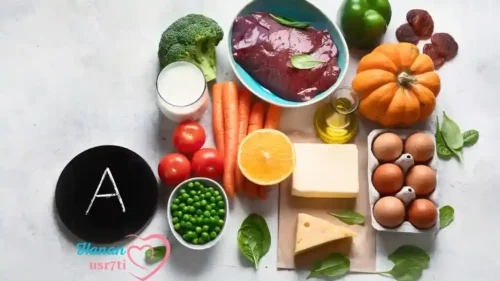
Full-fat dairy products are one of the most underrated categories in the high calorie foods for weight gain conversation, and it’s time to give them their due. Switching to full-fat dairy — using whole milk or evaporated milk for drinking and preparing cream soups, custards, puddings, and milkshakes — is one of the most effective strategies for increasing daily caloric intake, while whole milk yogurt or kefir should replace low- or non-fat varieties. Whole milk provides roughly 149 calories per cup along with 8 grams of protein and a complete amino acid profile. Greek yogurt made from whole milk is even more impressive — one cup (220 grams) of full-fat Greek yogurt provides 220 calories, 9 grams of high-quality protein, 15.5 grams of carbs, and 14 grams of fat, making it great for breakfasts, snacks, and desserts, especially topped with high-calorie additions like granola, nuts, nut butters, or dried fruits. Cheese, meanwhile, is one of the most calorie-dense whole foods available — parmesan contains about 431 calories per 100 grams, cheddar around 403, and even mozzarella delivers roughly 280. Milk, curd, cheese, and yogurt are powerful weight gain diet foods — adding cheese to sandwiches or drinking milk before bed supports muscle recovery. University of Virginia + 2
Red Meat and Poultry — Protein and Calorie-Dense Combos
For those who eat animal products, red meat and poultry represent some of the most calorie- and protein-dense foods available in the natural world. Red meats like beef, lamb, and pork are rich in protein, healthy fats, and essential amino acids like leucine, which support muscle growth — a 3-ounce steak contains about 228 calories, while opting for fattier cuts like ribeye provides even higher calorie content. Leucine, in particular, is the amino acid most directly responsible for triggering muscle protein synthesis, making red meat an extremely valuable tool for anyone pursuing serious muscle gain. Lamb chops, beef ribeye, pork shoulder, and venison are all excellent options in this category, delivering well above 250 calories per 100-gram serving depending on the cut. On the poultry side, dark meat chicken — thighs and drumsticks with the skin on — delivers significantly more calories than breast meat, with roughly 230–280 calories per 100 grams. 85 grams of steak provides 228 calories along with 24 grams of protein, supporting muscle growth and overall strength and health, which is why many athletes and bodybuilders include red meat varieties in their diet. BigMuscles NutritionMedanta
Complex Carbohydrates — Rice, Oats, Potatoes, and More
Complex carbohydrates are the unsung heroes of the calorie-dense foods world, and anyone serious about gaining weight needs to build meals around them. Rice is the classic example — a single cup of cooked white rice delivers around 204 calories and 44 grams of carbohydrates, making it one of the most economical and effective calorie sources available. Rice is high in calories and carbohydrates, and to improve its calorie content further, you can cook it with beans, meat, eggs, and other calorie-dense foods. Oats are another powerhouse — half a cup of dry rolled oats contains roughly 150 calories and provides a host of beta-glucan fiber, B vitamins, and minerals, and their calorie count climbs significantly when prepared with whole milk, nut butter, and banana. Potatoes — both white and sweet — are similarly impressive. A medium-sized baked potato contains around 160 calories and roughly 4.3 grams of protein, and complex carbohydrates like legumes, fruits, whole grains, and starchy vegetables are beneficial for weight gain because they don’t cause sugar spikes as they are metabolized slowly. When you layer complex carbs with protein sources and healthy fats — think salmon over brown rice with avocado, or a baked potato loaded with full-fat Greek yogurt and cheese — you create meals that are genuinely calorie-dense yet deeply nourishing. MedantaMedanta
Dried Fruits and Dark Chocolate — Sweet High-Calorie Snacks
Sometimes you just want something sweet, and the good news is that the high calorie snack world offers genuinely nutritious options that don’t taste like a punishment. Dried fruits like raisins, dates, cherries, apricots, and pineapples are delicious alone or added to salads, cookies, muffins, and hot cereal. What makes dried fruits so remarkable as high-calorie options is the concentration effect — when water is removed from fruit, the sugars, fiber, vitamins, and minerals become packed into a much smaller, more calorie-dense package. A cup of raisins contains roughly 434 calories; a handful of Medjool dates delivers around 278 calories along with potassium, magnesium, and copper. Dark chocolate, meanwhile, occupies its own special category. Dark chocolate is a calorie-dense treat that also provides magnesium and antioxidants. A 100-gram bar of high-quality dark chocolate (70% cacao or higher) delivers approximately 598 calories, along with flavanols that research has associated with cardiovascular benefits. Mixing dried fruit into trail mix with nuts, or melting dark chocolate over a bowl of full-fat Greek yogurt and banana, creates snacks that are genuinely satisfying and calorie-dense in all the right ways. University of VirginiaBigMuscles Nutrition
Healthy Oils — Olive Oil, Coconut Oil, and Ghee
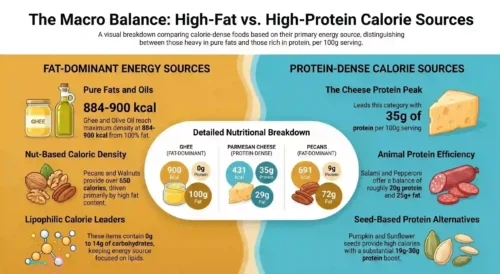
Perhaps the single most calorie-dense category of food on earth is pure fat, and the healthiest representatives of that category — extra-virgin olive oil, coconut oil, and ghee — deserve serious attention from anyone looking to boost their daily calorie intake. All fats deliver 9 calories per gram, compared to 4 calories per gram for both protein and carbohydrates, making oils the most efficient calorie delivery system available. Extra-virgin olive oil, the gold standard of healthy fats, provides approximately 884 calories per 100 grams and is renowned for its monounsaturated fat content and polyphenol antioxidants. Ghee is a calorie-dense food — 100 grams provides up to 900 calories — making it one of the best high calorie foods available, and coconut oil similarly provides approximately 860 calories per 100 grams. The practical application here is beautifully simple: drizzle olive oil over salads and roasted vegetables, cook with coconut oil or ghee, add a tablespoon of olive oil to smoothies, or stir ghee into mashed potatoes and oatmeal. Each tablespoon of these oils adds roughly 100–120 calories to a meal without meaningfully changing its taste, volume, or texture — making them perhaps the most effortless way to increase your daily calorie count. Medanta
High Calorie Foods Nutrition Comparison Table
Here’s a quick reference for some of the top high calorie foods and their approximate nutritional values per 100 grams:
| Food | Calories | Protein (g) | Fat (g) | Carbs (g) |
|---|---|---|---|---|
| Macadamia Nuts | 718 | 8 | 76 | 14 |
| Peanut Butter | 588 | 25 | 50 | 20 |
| Extra-Virgin Olive Oil | 884 | 0 | 100 | 0 |
| Ghee | 900 | 0 | 99.8 | 0 |
| Dark Chocolate (70%+) | 598 | 8 | 43 | 46 |
| Avocado | 160 | 2 | 15 | 8.5 |
| Atlantic Salmon | 208 | 20 | 13 | 0 |
| Whole Eggs | 155 | 13 | 11 | 1 |
| Full-Fat Greek Yogurt | 100 | 9 | 5 | 7 |
| Cheddar Cheese | 403 | 25 | 33 | 1.3 |
| Beef Ribeye | 291 | 24 | 21 | 0 |
| Medjool Dates | 277 | 2 | 0.2 | 75 |
| Brown Rice (cooked) | 111 | 2.6 | 0.9 | 23 |
| Sweet Potato (baked) | 103 | 2.3 | 0.1 | 24 |
| Rolled Oats (dry) | 389 | 17 | 7 | 66 |
High Calorie Foods for Specific Goals
High Calorie Foods for Weight Gain
Weight gain, when pursued intentionally and healthily, is not about eating everything in sight — it’s about eating the right things in the right quantities, consistently over time. Registered dietitian Julia Zumpano explains that it’s better for your body to gain weight slowly than quickly, recommending eating an extra 300 to 500 calories per day to gain weight slowly, along with eating small meals every three to five hours. This gradual approach prevents fat accumulation in harmful areas and allows your body to use incoming calories productively. The foods that work best for this purpose are calorie-dense yet nutrient-rich: whole milk, nuts and nut butters, avocado, full-fat dairy, oily fish, eggs, and complex carbohydrates like rice and oats. Gaining weight in a healthy way can be just as challenging as losing weight, and many people struggle with low body weight, poor appetite, fast metabolism, chronic illness recovery, or muscle loss, so choosing the right high-calorie foods can help them gain weight safely and effectively. The secret weapon for those with small appetites is liquid calories — high-calorie smoothies made with whole milk, banana, nut butter, Greek yogurt, and oats can deliver 600–900 calories in a single drinkable serving without causing the fullness and discomfort that solid food sometimes creates. Cleveland ClinicContinental Hospitals
High Calorie Foods for Muscle Building
Building muscle is a fundamentally different goal from simply gaining weight, though the two overlap significantly. Muscle growth requires not just a caloric surplus but specifically a protein surplus, since muscle tissue is built from amino acids derived from dietary protein. Adding more calories helps with maintaining or gaining weight, while adding more protein helps with preserving and building muscle, and some high-calorie foods offer both benefits simultaneously. The ideal muscle-building high-calorie foods, therefore, are those that deliver both significant calories and high-quality complete protein — and the top contenders in this category are whole eggs, salmon and oily fish, lean red meat, full-fat Greek yogurt, cottage cheese, and chicken thighs. Research from the International Society of Sports Nutrition suggests that optimal muscle protein synthesis requires approximately 1.6 grams of protein per kilogram of body weight per day for active individuals engaged in resistance training, and pairing that protein target with a caloric surplus from healthy fats and complex carbohydrates creates the ideal environment for lean mass gain. The synergy between high calorie foods and strength training cannot be overstated — without the training stimulus, extra calories tend to accumulate as fat rather than muscle. Perelman School of Medicine
High Calorie Foods for Athletes and Bodybuilders
Athletes and bodybuilders have some of the highest caloric needs of any human beings on the planet. Elite endurance athletes can burn upward of 5,000–6,000 calories on heavy training days, while competitive bodybuilders in a bulking phase routinely target 3,500–4,500 calories per day. Meeting these targets requires strategic, consistent, and often creative approaches to high-calorie eating. Generally speaking, fats have the highest calorie densities at 9 calories per gram, making them the most efficient calorie source for athletes who need to maximize intake without consuming enormous food volumes. For athletic populations specifically, the best high calorie foods are those that can be consumed quickly and digested efficiently — nut butter on rice cakes, smoothies with whole milk and oats, avocado toast with eggs, pasta with olive oil and salmon, and full-fat chocolate milk post-workout. Protein supplements in forms like Ensure or Boost, as well as homemade smoothies with Greek yogurt, ice cream, or protein powder, are effective tools for athletes who have difficulty consuming enough whole food to meet their caloric targets. Ryan and AlexMyHealth Alberta
High Calorie Foods to Avoid (The Unhealthy Ones)
Not all high-calorie foods are created equal, and this is a distinction worth drawing sharply. Eating chips, sugary sodas, donuts, and candy will add pounds, but it won’t be the source of healthy weight gain — this weight will mostly end up around the belly, which puts you at a higher risk for diabetes and heart disease, according to dietitian Julia Zumpano. The foods in this “avoid” category — ultra-processed snacks, refined sugar, fast food, trans fats, and alcohol — deliver what nutritionists call “empty calories”: energy with minimal or zero accompanying nutrients. Many calorie-dense foods are highly processed, high in fat, and low in nutrients such as vitamins and minerals, making it important for people to pay attention to the quality of food they consume to ensure their bodies are getting enough nutrients to perform at an optimal level. The practical rule here is simple: if the food’s calorie count is its only selling point — meaning it has no meaningful protein, fiber, vitamins, or minerals to speak of — it belongs in the “minimize” category. Swapping processed, empty-calorie junk for the whole-food high-calorie options covered in this guide is the single most impactful change you can make to a weight-gain nutrition strategy. Cleveland ClinicMedical News Today

How to Add High Calorie Foods to Your Daily Diet
Practical Tips to Eat More Without Feeling Stuffed
One of the most frustrating challenges for anyone trying to eat more calories is the sensation of fullness that comes with large food volumes. Stomach capacity is a real physical limitation, and trying to force yourself to eat massive meals is both uncomfortable and unsustainable. The solution lies in choosing calorie-dense foods that pack the most energy into the smallest possible volume, and in using a handful of practical strategies to sneak extra calories into meals and snacks without dramatically increasing portion sizes. Drizzle olive oil over everything — salads, vegetables, pasta, eggs, grains. Add a handful of nuts or seeds to your yogurt, oatmeal, or cereal every morning. Swap low-fat dairy for full-fat dairy across the board. Eating small meals every three to five hours, rather than two or three large meals, is an effective way to increase daily caloric intake without overwhelming your digestive system. Blend calorie-rich smoothies using whole milk, banana, nut butter, oats, and full-fat Greek yogurt — these liquid calories are often far easier to consume than an equivalent volume of solid food. Choose nut butters over jam, whole-grain bread over diet bread, full-fat cheese over “light” varieties, and you’ll find your calorie count climbing steadily without any dramatic changes to your eating habits. Cleveland Clinic
Sample High-Calorie Meal Plan
Here’s a practical example of what a well-constructed, 3,000-calorie day built around healthy high calorie foods might look like:
| Meal | Foods | Approx. Calories |
|---|---|---|
| Breakfast | 3 whole eggs scrambled in ghee, 2 slices whole-grain toast, ½ avocado, whole milk latte | ~650 |
| Mid-Morning Snack | Full-fat Greek yogurt with granola, walnuts, and dried apricots | ~450 |
| Lunch | Grilled salmon over brown rice with olive oil, roasted sweet potato | ~700 |
| Afternoon Snack | 2 tbsp peanut butter on a banana, handful of mixed nuts | ~400 |
| Dinner | Beef ribeye steak with mashed potatoes (made with whole milk and butter), steamed broccoli | ~750 |
| Evening Snack | Dark chocolate (2 squares) + glass of whole milk | ~250 |
| Total | ~3,200 |
This type of plan combines high calorie foods for weight gain with balanced nutrients — a philosophy supported by nutrition experts at leading clinical centers who emphasize that healthy weight gain is not about overeating junk food but about choosing the right high-calorie foods that provide balanced nutrition and support muscle development. Continental Hospitals
Conclusion
Let’s bring this all together. High calorie foods aren’t the enemy — they’re tools, and like any tool, their value depends entirely on how you use them. When you choose nutrient-dense, whole-food sources of calories — nuts, avocados, fatty fish, eggs, full-fat dairy, red meat, complex carbs, healthy oils, and dried fruits — you’re not just feeding your body more energy; you’re giving it the building blocks it needs to grow stronger, recover faster, and perform better. The difference between eating 3,000 calories from fast food and 3,000 calories from salmon, nuts, eggs, avocado, and whole grains is the difference between gaining unhealthy visceral fat and building lean, functional muscle. As dietitians consistently remind us, the goal is always to gain weight slowly and sustainably, prioritizing quality over quantity, and pairing any high-calorie nutrition strategy with consistent strength training for the best possible results. Whether you’re a hard-gainer, an athlete, or someone recovering from illness, the foods in this guide give you everything you need to eat more — and eat better — starting today.
FAQs
1. What is the single highest-calorie natural food I can eat?
Pure fats and oils top the list — ghee and coconut oil both deliver around 860–900 calories per 100 grams, making them the most calorie-dense natural foods available. Among whole foods with nutritional complexity, macadamia nuts (718 calories/100g) and peanut butter (588 calories/100g) are excellent choices.
2. Can I gain weight by eating high calorie foods without exercising?
Technically yes — consuming more calories than you burn will lead to weight gain regardless of activity level. However, without resistance training, most of those extra calories will be stored as fat rather than converted into muscle. Pairing high-calorie eating with strength training ensures you gain lean mass rather than just fat tissue.
3. Are high calorie foods bad for the heart?
Not necessarily. Foods like avocados, olive oil, nuts, fatty fish, and dark chocolate are all high in calories but have been consistently linked to improved cardiovascular markers in research. The high-calorie foods associated with heart risk are those high in trans fats, refined sugar, and ultra-processed ingredients.
4. How many extra calories do I need to gain one pound of weight?
A commonly used estimate is that approximately 3,500 calories above your total energy expenditure will result in roughly one pound of weight gain. This means eating an additional 500 calories per day would theoretically add about one pound per week, though individual metabolic rates vary significantly.
5. What are the best high calorie foods for someone with a small appetite?
Liquid calories are your best friend — high-calorie smoothies made with whole milk, banana, oats, Greek yogurt, and nut butter can deliver 600–900 calories in a single drink. Calorie-dense whole foods like nut butters, olive oil, avocado, cheese, and dried fruits also allow you to add significant calories to meals without dramatically increasing the volume of food you’re eating.
