

- Advertisement -
Best Snacks for a 9 Month Old | Safe, Healthy
What Makes a Snack Safe and Age-Appropriate

- Advertisement -
Best Snacks for a 9-Month-Old
Figuring out the right snacks for a 9 month old can feel like a moving target — one week your baby gums down a whole banana without blinking, and the next they turn their nose up at something they loved just days before. That’s completely normal at this stage, and it’s exactly why so many parents end up googling the same question at 9 p.m. while staring into the fridge. This guide breaks down exactly which snacks are safe, soft, and nutrient-dense enough for a nine-month-old’s developing pincer grasp and still-forming palate, along with the textures and portion sizes that actually match where your baby is developmentally. You’ll also find a sample snack schedule, a quick-reference table of common choking hazards to avoid, and answers to the questions pediatricians hear most often at this age — so you can stop second-guessing snack time and start enjoying it.
Why Snack Time Actually Matters at 9 Months
Nine months is a genuine turning point in feeding. Your baby has likely moved past thin purees and is working on chewing, gumming, and self-feeding with increasing confidence. Snacks at this stage aren’t filler between “real” meals — they’re a chance to add calories, iron, and healthy fats that a tiny stomach can’t fit in during three main meals alone. Breast milk or formula should still be the primary source of nutrition through the first year, but as solids take up more real estate in the daily routine, a well-placed snack between breakfast and lunch, or after an afternoon nap, keeps blood sugar and energy stable so your baby isn’t melting down from hunger before dinner even starts. Snack time also happens to be one of the lowest-pressure environments to practice self-feeding, since there’s no expectation of finishing a full plate the way there might be at a sit-down meal. Pediatric dietitians generally agree that one to two small snacks a day is plenty for most 9-month-olds who are already eating two to three solid meals, and that the goal isn’t volume — it’s variety and exposure to new textures, flavors, and food groups that build lifelong eating habits.

What Makes a Snack Safe and Age-Appropriate
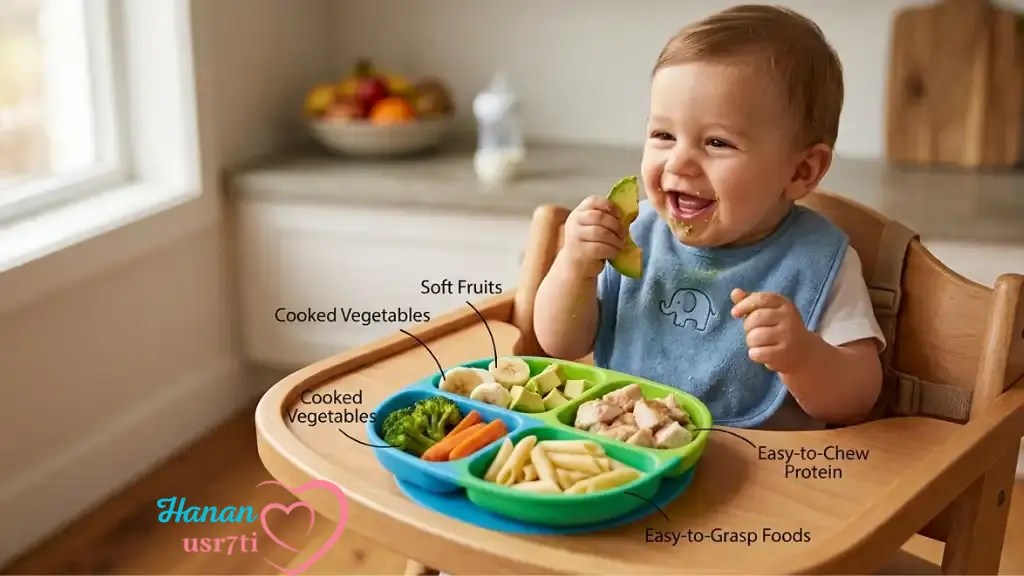
Not every soft, mushy food automatically qualifies as a good baby snack, and not every “toddler snack” on a store shelf is actually appropriate for a nine-month-old. The two things that matter most at this stage are texture and size — get those right, and most whole foods become fair game.
Texture and Size Guidelines
At nine months, most babies are developing their pincer grasp, meaning they can pick up smaller pieces between thumb and forefinger rather than relying on a full-fist swipe. That means snacks can move beyond the mashed, pea-sized pieces of earlier months into thin strips (roughly the length and thickness of an adult finger) for larger, softer foods, or small, soft cubes for things like cheese and cooked vegetables. The universal test is the “squish test”: if you can mash the food between your thumb and forefinger with light pressure, it’s likely soft enough for gums to manage. Anything that requires real chewing with molars — which most babies don’t have yet — should be avoided or cooked until noticeably softer than you’d serve it to an adult. Round, firm foods like whole grapes, cherry tomatoes, or whole nuts need to be quartered lengthwise rather than just halved, since a halved grape can still fully block a small airway.
Foods and Choking Hazards to Avoid
A short list of foods should stay off the menu regardless of how they’re cut, and it’s worth keeping this list somewhere visible in the kitchen during this stage. Honey is an absolute no until after the first birthday because of the risk of infant botulism, and this includes honey baked into foods like granola bars or graham crackers. Whole nuts, popcorn, hard candies, chunks of raw apple or carrot, large blobs of nut butter, and hot dog rounds are all classic choking hazards that pediatric emergency rooms see repeatedly. Added sugars and heavily salted snacks — think flavored crackers, cookies, or juice — offer little nutritional value at this age and can crowd out foods that are actually building your baby’s palate for vegetables and whole grains. If a snack ever seems questionable, running it past your pediatrician or a feeding specialist takes two minutes and removes the guesswork entirely.
| Choking Hazard Category | Examples | Safer Alternative |
|---|---|---|
| Round, firm foods | Whole grapes, cherry tomatoes, blueberries | Quartered lengthwise, skins removed if tough |
| Sticky foods | Large gobs of peanut butter, marshmallows | Thin layer of nut butter spread on toast |
| Hard foods | Raw carrots, apple chunks, nuts, popcorn | Steamed and softened, or grated finely |
| Restricted for age | Honey, cow’s milk as a drink, unpasteurized products | Yogurt, formula, breast milk |
The Nutrients Your Baby’s Snacks Should Actually Deliver
A snack isn’t just something to keep small hands busy — it’s real estate on your baby’s daily nutrient budget, and at nine months, two nutrients deserve special attention.
Iron and Protein
Babies are born with iron stores that begin depleting around six months, which is exactly why iron-rich foods become a feeding priority through the first year. Scrambled eggs, small pieces of well-cooked meat, iron-fortified cereal puffs, and mashed beans or lentils all make excellent iron-and-protein-forward snacks that double as building blocks for muscle and cognitive development. Combining an iron source with a small amount of vitamin C — a few strawberry pieces alongside scrambled egg, for instance — can help the body absorb non-heme iron more efficiently. Protein at this stage doesn’t need to come in large quantities; even a tablespoon or two of shredded chicken or a quarter of a soft-boiled egg contributes meaningfully to daily needs. Parents often underestimate how many of these iron-dense options can be turned into finger-food snacks rather than reserved only for “meal” time.
Healthy Fats for Brain Development
Roughly 60% of a baby’s brain is made of fat, and dietary fat continues to fuel rapid neurological growth well past the first birthday. Avocado, full-fat plain yogurt, mashed egg yolk, and a light drizzle of olive oil over steamed vegetables are all easy ways to work healthy fats into snack time without adding processed oils or sugar. Unlike adult diets, infant diets shouldn’t be fat-restricted, so parents transitioning from a low-fat mindset sometimes need to consciously add these foods back in rather than avoid them. A few slices of avocado on toast strips, or a spoonful of whole-milk yogurt with mashed banana, hits both the fat and the calcium boxes in one easy snack.
Best Fruit Snacks for a 9-Month-Old
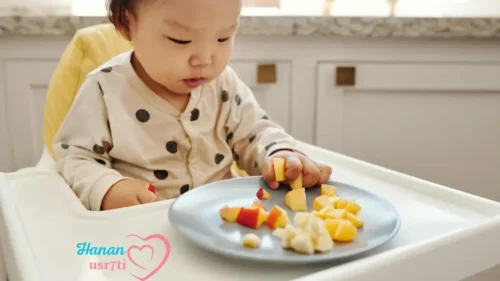
Soft, ripe fruit remains one of the easiest wins for baby-led snacking because it requires little to no cooking and naturally comes in manageable textures. Ripe banana cut into thick coins or long strips, soft pear or peach slices with the skin removed, mashed or quartered blueberries, and thin mango strips all pass the squish test with ease and offer a natural sweetness that babies tend to gravitate toward immediately. Watermelon, cut into small seedless cubes, is a favorite in warmer months both for hydration and its soft, easy-to-gum texture. Frozen fruit purees in a mesh feeder can also double as a soothing snack for babies who are teething, since the cold temperature offers some relief on sore gums while still delivering real nutrition rather than an empty teething biscuit. Rotating through two or three fruits a week rather than repeating the same one daily helps broaden flavor acceptance and reduces the odds of a sudden aversion developing from overexposure to a single taste.
Best Vegetable Snacks for a 9-Month-Old
Vegetables tend to be the harder sell at snack time, which is exactly why presentation and softness matter so much here. Steamed sweet potato cut into soft strips, roasted and mashed butternut squash formed into small patties, well-cooked broccoli florets (soft enough to squish between two fingers), and steamed green beans cut into short lengths all work well as finger foods. Roasting vegetables lightly with a touch of olive oil before mashing or cutting them tends to bring out natural sweetness that makes them more appealing without needing added salt or sugar. Pairing a vegetable with a dip — plain whole-milk yogurt or a thin hummus — can also increase acceptance, since babies often respond well to contrasting textures and flavors on the same plate. Consistency matters more than variety here in the early weeks; offering the same vegetable eight to ten times, even after initial rejection, is a well-documented strategy for building acceptance over time rather than assuming a single “no” is final.
Best Protein-Packed Snacks
Protein-forward snacks round out the nutritional picture and tend to keep babies fuller for longer between meals. Small pieces of scrambled or hard-boiled egg, shredded slow-cooked chicken or turkey, flaked low-mercury fish like salmon or cod, mashed lentils or black beans, and small cubes of soft cheese like mild cheddar or mozzarella all qualify as excellent options. Full-fat plain yogurt, ideally unsweetened, deserves a special mention since it delivers protein, calcium, and probiotics in a texture babies almost universally accept without resistance. Tofu, cut into soft strips and lightly pan-seared for grip, is another underused option that works particularly well for families building variety into protein sources early. Batch-cooking a protein source on Sunday and portioning it into small containers for the week tends to be the single biggest time-saver parents report once this snack routine becomes established.
Best Grain and Carb-Based Snacks
Whole grains provide sustained energy and fiber that keep a baby satisfied between meals, and this category tends to be the easiest to stock in advance. Whole wheat toast strips topped with mashed avocado or nut butter (thinned to avoid stickiness), plain whole-grain teething biscuits without added sugar, small pieces of soft cooked pasta, and iron-fortified oat or rice puffs all work well. Unsweetened oatmeal, cooked until soft and slightly thick, can be formed into small “oat balls” that are easy for a nine-month-old to pick up and gum. Homemade mini pancakes made with mashed banana, egg, and oat flour — with no added sugar — are a popular batch-cook option among parents managing this stage, since a batch can be frozen and reheated in under a minute for a fast, balanced snack.
Store-Bought vs. Homemade Snacks: What’s Worth It
Packaged baby snacks have their place, especially for parents juggling work, other children, or simply needing something reliable for a diaper bag, but not all of them are created equal.
| Factor | Homemade Snacks | Store-Bought Snacks |
|---|---|---|
| Ingredient control | Full control over salt, sugar, additives | Varies widely; check labels |
| Cost | Generally lower per serving | Higher, especially for organic lines |
| Convenience | Requires prep and storage | Grab-and-go, useful for travel |
| Nutrient density | Can be tailored (added healthy fats, iron) | Often fortified but sometimes low in real nutrients |
| Texture safety | Fully controllable | Must verify against choking guidelines |
How to Read a Baby Snack Label
A short list of red flags makes label-reading fast rather than overwhelming. Added sugars — listed under names like cane syrup, fruit juice concentrate, or dextrose — are worth avoiding since babies don’t need sweeteners beyond what’s naturally in whole fruit. Sodium content matters too, since a baby’s kidneys process salt far less efficiently than an adult’s, and the American Heart Association recommends essentially no added salt for infants under one year. Ingredient lists with five or fewer recognizable items tend to signal a cleaner product, while long lists of stabilizers, gums, or artificial flavors are worth skipping in favor of a simpler alternative. Puff snacks marketed for babies vary enormously in actual nutrition, so checking for whole grain as the first ingredient, rather than corn starch or rice flour alone, tends to separate the better options from the merely convenient ones.
A Sample Snack Schedule for a 9-Month-Old
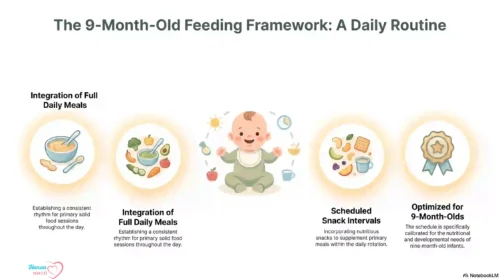
A loose daily rhythm tends to work better than a rigid clock, since babies’ appetites fluctuate with growth spurts, teething, and sleep quality. A typical day might look like breakfast around 7:30–8:00 a.m., a mid-morning snack around 10:00 a.m., lunch around noon, an afternoon snack around 3:00 p.m. after a nap, and dinner around 5:30–6:00 p.m., with breast milk or formula offered at wake-up, between meals, and before bed. This rhythm allows roughly two to three hours between eating occasions, which lines up with typical infant hunger cues without overloading a small stomach. Snacks in this schedule should stay light — a few pieces of fruit, a couple of protein cubes, or a small handful of oat puffs — rather than a second full meal, since the goal is to bridge hunger, not replace the calories a proper meal provides.
How Much Should a 9-Month-Old Actually Eat at Snack Time
Portion anxiety is one of the most common stressors parents bring up at this stage, and the honest answer is that it varies more than most guides admit. A reasonable starting point is two to four tablespoons of food per snack, split across one or two items, though appetite on any given day can be shaped by teething discomfort, a recent growth spurt, or simply how much milk was offered beforehand. Babies are generally excellent at self-regulating intake when offered nutrient-dense whole foods, so the better approach is watching for fullness cues — turning away, closing the mouth, or throwing food — rather than pushing for a “clean plate.” Consistently refusing all snacks for more than a week or two, alongside weight loss or visible feeding difficulty, is the point at which a pediatrician’s input becomes genuinely useful rather than a source of worry on its own.
Introducing New Snacks Without the Stress
Rotating in a new snack doesn’t need elaborate planning — offering it alongside one or two familiar foods tends to lower resistance far more than presenting an entirely new plate. Repetition matters more than most parents expect; research on food acceptance in infants consistently shows that eight to ten exposures to a new flavor or texture is often what it takes before a baby accepts it, so one rejected sweet potato strip isn’t a verdict. Timing also plays a role, since offering new foods when a baby is alert, moderately hungry, and not overtired tends to produce far better results than trying right before a nap or after a long stretch without sleep.
Allergen Introduction at Snack Time
Common allergens — peanut, egg, dairy, wheat, soy, tree nuts, fish, and shellfish — are now recommended by most pediatric guidelines to be introduced early and kept in the regular rotation once tolerated, rather than delayed as older advice once suggested. Introducing one new allergen at a time, in a small amount, and waiting a few days before introducing the next, makes it far easier to identify the source if a reaction does occur. Thinned peanut butter mixed into oatmeal, a small piece of scrambled egg, or a few pieces of soft cheese are all reasonable ways to work allergens into snack time specifically, since it’s a lower-pressure setting than a full meal. Any signs of a reaction — hives, facial swelling, persistent vomiting, or difficulty breathing — warrant an immediate call to a pediatrician, and severe symptoms like wheezing or drowsiness need emergency care right away.
Common Mistakes Parents Make With Baby Snacks
A few patterns show up again and again in feeding consultations, and most are easy to correct once named. Over-snacking is probably the most frequent one — offering food every time a baby fusses trains a habit of grazing that can blunt appetite at actual meals and make it harder to read genuine hunger cues later on. Relying too heavily on pouches and purees well past the point a baby is ready for texture is another common one, since it can delay the chewing and oral motor skills that solid finger foods help build. Adding salt or sugar “just a little” to make food more palatable is a habit worth resisting entirely at this age, since a baby’s palate is still forming and doesn’t need the exposure. Finally, panicking over a single refused food rather than reoffering it calmly over the following weeks tends to shrink a baby’s accepted food list far faster than the food itself ever would.

Conclusion
Feeding a nine-month-old snacks well really comes down to a short list of principles repeated consistently: keep textures soft and appropriately sized, prioritize iron, protein, and healthy fats over empty calories, introduce new foods and allergens with patience rather than pressure, and trust your baby’s hunger cues over a rigid portion chart. None of this requires elaborate meal prep or a pantry full of specialty products — a ripe banana, a few strips of scrambled egg, and a spoonful of yogurt cover most of the nutritional bases on their own. The goal at this stage isn’t perfection; it’s steady, low-stress exposure to real food that sets up good eating habits long after the high chair days are behind you.
Frequently Asked Questions
1. Can a 9-month-old have snacks between meals every day?
Yes, one to two small snacks a day between meals is generally appropriate once a baby is eating two to three solid meals, as long as snacks stay light enough not to blunt appetite for the next meal.
2. What snacks should I completely avoid at 9 months?
Honey, whole nuts, popcorn, hard candy, large chunks of raw fruit or vegetable, and anything with added sugar or high sodium should stay off the menu until at least the first birthday, and some (like honey) longer.
3. Is it okay to give my baby store-bought puffs every day?
Occasional use is fine, but relying on puffs daily can crowd out more nutrient-dense whole foods; checking the label for whole grain as the first ingredient and minimal added sugar helps pick a better option.
4. How do I know if my baby is ready for finger foods instead of purees?
Signs of readiness include sitting up well with minimal support, bringing objects to the mouth independently, and beginning to develop a pincer grasp, all of which most babies show by eight to nine months.
5. My baby refuses a new snack the first time — should I stop offering it?
No, it’s common for it to take eight to ten exposures before a baby accepts a new food, so reoffering it calmly over several weeks, alongside familiar favorites, usually works better than dropping it after one refusal.
Sources:
