

- Advertisement -

- Advertisement -
Best Snacks for an 8-Month-Old
Best Snacks for an 8 Month Old, most babies have graduated from purees alone and are reaching, grabbing, and shoving fistfuls of food toward their mouths with real enthusiasm. It’s a messy, exciting stage — and it also raises a question almost every parent Googles at 11 p.m.: what snacks are actually safe and nutritious for a baby this age? The honest answer is that snacks for an 8-month-old don’t need to be fancy or expensive. They need to be soft enough to gum, sized correctly to reduce choking risk, and nutrient-dense enough to support a growth spurt that never seems to slow down. This guide walks through exactly what to offer, what to avoid, how much is appropriate, and how to handle the inevitable snack-time meltdowns — all grounded in current pediatric guidance rather than guesswork.
Why Snacks Matter at 8 Months
Nutritional Needs at This Stage
Breast milk or formula is still doing the heavy lifting nutritionally at eight months, but solids are no longer a side project — they’re becoming a real contributor to your baby’s daily intake. According to guidance summarized by the CDC, babies this age typically need to eat something roughly every two to three hours, which usually breaks down into three small meals plus two or three snacks across the day. That rhythm matters because an eight-month-old’s stomach is still tiny, so they can’t eat enough at three meals alone to meet their calorie and nutrient needs. Iron becomes a particularly urgent focus around this age, since the iron stores babies are born with start to deplete, and breast milk alone doesn’t supply enough. This is exactly why pediatricians push parents to lean on iron-rich snacks like mashed beans, tofu strips, or iron-fortified cereal puffs rather than defaulting to fruit purees for every snack slot. Zinc, healthy fats for brain development, and a slowly widening variety of textures also matter here, which is part of why variety — not just volume — is the real goal of snack time at this stage.
How Snacks Fit Into the Daily Feeding Rhythm
Think of snacks less as “extra” food and more as scheduled mini-meals that keep blood sugar and energy steady between the three main feedings. A predictable rhythm also helps babies learn hunger and fullness cues rather than grazing constantly, which pediatric feeding specialists generally discourage. Many families find success offering a small snack mid-morning and another mid-afternoon, always seated upright in a high chair rather than crawling or being carried, since posture plays a real role in choking prevention. It’s also worth resisting the urge to fill every quiet moment with a snack cup of puffs — snacks should complement meals, not replace the more nutritionally complete plates you’re offering at breakfast, lunch, and dinner. Over time, this structure also builds the foundation for a family meal routine, which research consistently links to healthier eating patterns later in childhood.

Choking Safety Ground Rules Before You Start
The Difference Between Gagging and Choking
This is the single most important section for any parent starting finger foods, and it’s worth reading slowly. Gagging is loud, visible, and protective — your baby’s tongue thrusts forward, their eyes might water, they might cough or make retching sounds, and within a few seconds the food is pushed back into a manageable position or out of the mouth entirely. It looks alarming, but it’s actually a built-in safety mechanism that’s helping your baby learn where the “danger zone” at the back of the mouth is. Choking is different, and far more serious: it’s often silent because the airway is blocked, the baby may turn red or blue, they can’t cough or cry, and it requires immediate action. Randomized research on baby-led weaning, including the widely cited BLISS trial published in Pediatrics, found that babies who self-fed were not more likely to choke than spoon-fed babies, but gagging episodes were more common early on before tapering off by eight months. Knowing this distinction ahead of time means you won’t panic at a normal gag reflex, and you’ll be genuinely prepared if real choking occurs.
Safe Feeding Positions and Supervision
A few non-negotiable habits dramatically reduce risk regardless of which feeding style you use. Always feed your baby upright in a supportive high chair with their feet on a footrest or ledge if possible, never reclined, and never while they’re moving around, crawling, or riding in a car seat. Every single bite should happen under direct adult supervision — not glanced-at supervision from across the room, but eyes-on watching, since choking can happen and become dangerous within seconds. It’s also worth taking an infant CPR and choking first-aid course before you start finger foods in earnest; most hospitals and community centers offer short, inexpensive classes, and knowing the steps cold means you won’t have to think under pressure. Finally, cut round or firm foods — grapes, cherry tomatoes, blueberries, hot dogs — lengthwise or into small pieces well under half an inch, since round shapes can fully plug a baby’s airway in a way that irregular shapes generally don’t.
Best Snack Categories for 8-Month-Olds
Soft Fruits
Soft, ripe fruit is often the easiest entry point because babies tend to love the natural sweetness and the texture requires almost no chewing. Ripe banana, cut into thick spears or mashed with a fork, is a classic starter for good reason — it’s soft, portable, and packed with potassium. Ripe avocado offers a similar ease of use along with a strong dose of healthy fats that support brain development at exactly the age when the brain is growing fastest. Steamed or very ripe pear, peeled peach, and mashed mango are all good rotation options, and thin slices of banana or avocado also double as excellent “loaded spoon” foods if your baby is still building pincer grasp skills. The key test for any fruit at this age is whether it smashes easily between your fingers with almost no resistance; if it doesn’t, it needs to be cooked or mashed further before it hits the tray.
Soft-Cooked Vegetables
Vegetables introduce babies to savory flavors early, which pediatric dietitians increasingly emphasize as a way to prevent the common toddler pattern of rejecting anything that isn’t sweet. Steamed sweet potato spears, soft-cooked carrot sticks (cooked until they smash easily, never raw), roasted zucchini strips, and steamed green beans all work well cut into finger-length pieces that are easy for small hands to grip. Cauliflower and broccoli, steamed until fork-tender, are also good options and offer a slightly different texture that helps babies build chewing skills even before teeth arrive in force. As with fruit, the smash test applies: if you can’t mash a piece easily against the roof of your mouth with your tongue, it’s not ready for your baby’s gums yet.
Dissolvable Puffs and Melts
Store-shelf puffs and melts exist specifically for this age and stage, and they’ve become popular for good reason — they dissolve almost instantly with a small amount of saliva, which meaningfully lowers choking risk compared to harder crackers. They also give babies valuable practice with the pincer grasp, since most puffs are small enough that picking one up requires coordinating thumb and forefinger. That said, plain puffs are often fairly low in overall nutrition beyond fortified iron and a few vitamins, so they’re best treated as one snack option among several rather than a daily default. Look for options with minimal added sugar and short ingredient lists, and always supervise even though these are lower-risk than many whole foods.
Protein-Based Snacks
Protein snacks matter more at this stage than many parents realize, both for growth and for iron intake. Shredded, well-cooked chicken or turkey, cut into thin strips that shred apart easily, works well for babies developing their chewing skills. Well-cooked scrambled egg, cut or broken into small pieces, is another excellent option and doubles as an allergen-introduction food. Soft-cooked lentils or well-mashed beans, and small cubes of soft tofu, round out the plant-based side of the protein rotation and tend to be very well tolerated even by babies with limited teeth.
Dairy-Based Snacks
Plain, full-fat yogurt is one of the most pediatrician-recommended snacks at this age, offering protein, calcium, and probiotics without the added sugar found in flavored varieties. Small cubes of soft, pasteurized cheese — mild cheddar, mozzarella, or cottage cheese curds — are another solid option, though they should be cut small and soft enough to smash easily. It’s worth noting that cow’s milk itself isn’t recommended as a primary drink before 12 months, per guidance summarized on HealthyChildren.org, even though dairy foods like yogurt and cheese are perfectly appropriate in small amounts.
Snack Comparison Table
| Snack Category | Example Foods | Prep Method | Key Nutrients |
|---|---|---|---|
| Soft fruits | Banana, avocado, ripe pear | Mash or cut into spears | Potassium, healthy fats, fiber |
| Soft-cooked vegetables | Sweet potato, carrot, green beans | Steam until fork-tender, cut into strips | Vitamin A, fiber, folate |
| Dissolvable puffs/melts | Rice puffs, fruit/veggie melts | Serve as-is, supervise closely | Iron (fortified), small amounts of vitamins |
| Protein snacks | Shredded chicken, scrambled egg, lentils | Cook thoroughly, shred or mash | Iron, protein, zinc |
| Dairy snacks | Plain yogurt, soft cheese cubes | Serve small, unsweetened | Calcium, protein, probiotics |
Foods to Avoid Until Age One (or Later)
Some foods deserve a hard stop regardless of how your baby is doing with solids overall. Honey is the clearest example — it should never be given before age one because of the risk of infant botulism, a rare but serious illness caused by bacterial spores that infant digestive systems can’t yet handle. Whole nuts, whole grapes, whole cherry tomatoes, popcorn, hard raw vegetables like carrot sticks or apple slices, chunks of peanut butter, hot dog rounds, and hard candy all sit firmly on the choking-hazard list because their size, shape, or firmness makes them especially dangerous for small airways. As the USDA’s infant feeding guidelines emphasize, cow’s milk as a main drink, added sugars, and added salt should also be avoided before 12 months, since infant kidneys and taste preferences are both still developing. When in doubt about a specific food, the general rule pediatric feeding specialists recommend is simple: if you can’t smash it easily with light pressure between two fingers, it’s not ready yet.
Sample Snack Schedule for an 8-Month-Old
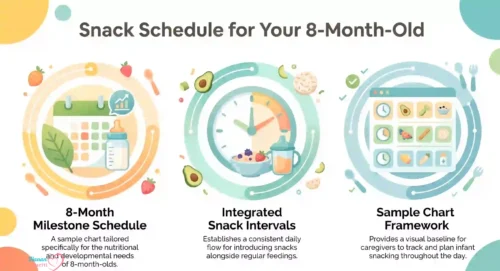
A realistic day for many eight-month-olds looks something like three meals with two snack windows tucked between them, though every baby’s appetite and schedule will vary somewhat. A mid-morning snack might be a few thin banana spears alongside a handful of dissolvable puffs, while a mid-afternoon snack could be soft-cooked sweet potato strips with a few spoonfuls of plain yogurt. Portions at this age are genuinely small — often just a few tablespoons per snack — and it’s worth trusting your baby’s cues rather than pushing them to finish a certain amount. Some days a baby eats far more than usual during a growth spurt, and other days appetite dips noticeably; both patterns are normal and don’t usually signal a problem on their own.
Homemade vs. Store-Bought Snacks
Reading Labels the Right Way
Both homemade and store-bought snacks have a place in a realistic feeding routine, and there’s no need to feel guilty about reaching for convenience on busy days. The real differentiator is what’s actually in the package, not whether it came from your kitchen or a shelf. Scan ingredient lists for added sugars (which show up under many names, including cane syrup, fruit juice concentrate, and various syrups), added salt, and unnecessary fillers, and favor products with short, recognizable ingredient lists. Puffs, melts, and teething biscuits marketed specifically for babies under one are generally formulated with texture and choking risk in mind, which is worth something even if the nutritional density is modest. Homemade snacks give you full control over ingredients and are often more cost-effective over time, but they do require more prep and more attention to texture and size to keep them safe.

Allergen Introduction Through Snacks
Snack time is actually a convenient, low-pressure window for introducing common allergens, which current guidance now recommends doing early and often rather than delaying. Peanut butter thinned with warm water or breast milk and offered in small amounts, well-cooked egg cut into small pieces, and dairy in the form of yogurt or cheese are all reasonable ways to introduce top allergens in the context of a snack rather than a full meal. The shift toward earlier allergen introduction followed major research, including the NIH/NIAID-backed LEAP study, which found that early, regular exposure to peanut protein significantly reduced the rate of peanut allergy in high-risk infants. If your family has a history of food allergies or your baby has eczema, it’s worth discussing allergen introduction timing with your pediatrician before starting, since some high-risk babies benefit from introducing allergens under medical guidance. Whatever you introduce, offer new allergenic foods one at a time and early in the day, so you have time to watch for any reaction.
Common Snack-Time Struggles and Fixes
Almost every family hits a snag somewhere in this stage, and most of them have simple, well-documented fixes. If your baby refuses to sit still for snacks, it often helps to shrink the window of expectation — a five-minute seated snack is a success at this age, not a failure. If your baby throws food constantly, it’s usually developmental curiosity rather than defiance, and offering smaller portions on the tray at a time (rather than a large pile) tends to reduce the “toy” factor. Babies who gag frequently on new textures often just need more repeated, low-stakes exposure; gagging typically decreases noticeably by eight months as oral motor skills mature, according to the BLISS trial data referenced earlier. And if your baby seems to prefer grabbing the food out of your hand over feeding themselves, that’s actually a positive sign of growing independence and fine motor development, not something to correct.
Conclusion
Choosing the Best Snacks for an 8 Month Old doesn’t need to be complicated or stressful once you understand the handful of principles that actually matter: soft textures, appropriately sized pieces, upright supervised feeding, and a rotation that covers fruits, vegetables, protein, and dairy rather than defaulting to the same puff every day. The choking-safety habits you build now — proper cutting, close supervision, and knowing the difference between a gag and a genuine emergency — will serve your family well through the entire toddler stage, not just this one. Trust your baby’s appetite cues, keep offering variety even after a few rejections, and remember that messy, slow progress at the high chair is exactly what healthy learning looks like at this age.
Frequently Asked Questions
1. What snacks are best for an 8-month-old just starting finger foods?
Ripe banana spears, mashed avocado, soft-cooked sweet potato strips, and dissolvable puffs are all excellent starting points because they require minimal chewing and are easy to grip.
2. How many snacks should an 8-month-old eat per day?
Most babies this age do well with two snacks daily, spaced between three main meals, though appetite naturally varies from day to day.
3. Can 8-month-olds eat store-bought puffs every day?
Puffs are safe as an occasional snack, but they’re best rotated with more nutrient-dense options like fruit, vegetables, and protein rather than offered as the sole daily snack.
4. Is yogurt safe for an 8-month-old?
Yes — plain, full-fat, unsweetened yogurt is one of the most commonly recommended snacks at this age and provides protein, calcium, and probiotics.
5. What snack foods should be avoided completely before age one?
Honey, whole grapes, whole nuts, popcorn, hard raw vegetables, chunks of peanut butter, and hot dog rounds should all be avoided due to botulism risk or choking hazard.
