

- Advertisement -


- Advertisement -
When Is a Baby Actually Ready for Solid Food?
Handing your baby their first spoonful of baby food Guide feels like a bigger moment than it has any right to be. Your heart is pounding, your phone is out recording, and somewhere in the back of your mind you’re wondering if you’re doing any of this right. You’re not alone in that feeling — and the good news is that starting solids doesn’t have to be complicated once you understand what actually matters: timing, texture, safety, and nutrition, in roughly that order. This guide covers everything a parent needs to know about baby food in 2026: how to spot true developmental readiness, whether baby-led weaning or purees is the better fit for your family, which first foods matter most for iron and zinc, how to introduce common allergens without fear, and what the current heavy metal and choking-safety research actually says. Every recommendation here is grounded in pediatric guidance and peer-reviewed studies, not internet folklore — so you can feed your baby with confidence instead of second-guessing every bite.
The Developmental Readiness Checklist
Rather than obsessing over the exact week, watch for these signs working together: your baby can sit upright with minimal support and hold their head steady without it lolling forward, they’ve largely lost the tongue-thrust reflex that used to push anything solid straight back out of their mouth, and they show genuine interest in your food — leaning toward your plate, opening their mouth when you take a bite, or grabbing at your fork. A baby who can do all of this at five and a half months is developmentally ready; a baby who can’t yet do it at five and a half months isn’t, regardless of what the calendar says. Pediatric guidance from a leading children’s health resource notes that appropriate first foods should prioritize nutrient density specifically because a baby’s iron and zinc stores, built up during the third trimester, begin running low right around this developmental window, which is exactly why “readiness” and “nutritional need” tend to arrive together rather than by coincidence.
Why “4 to 6 Months” Confuses So Many Parents
Part of the confusion comes from genuinely mixed messaging even within pediatric organizations, and it helps to know that you aren’t misreading anything. One physician resource points out directly that official guidelines are inconsistent, sometimes stating it’s fine to start between four and six months while elsewhere aligning with the World Health Organization’s position that only breast milk or formula should be offered before six months. Meanwhile, a family medicine physician quoted in a hospital network’s guidance takes the more permissive stance directly, noting that breastfed babies usually start closer to six months while bottle-fed babies can begin anywhere between four and six months, largely because formula-fed infants tend to hit physical size and motor milestones a bit earlier. The safest way to read all of this as a parent: six months is the target for most exclusively breastfed babies, four months is the earliest realistic floor and only applies if every readiness sign above is clearly present, and starting too early carries a real cost — one clinical resource is unambiguous that introducing solids before four months is associated with increased weight gain and adiposity in both infancy and early childhood. In other words, rushing doesn’t give your baby a head start; it can work against the very outcomes you’re hoping for.
Baby-Led Weaning vs. Purees: What the Research Actually Shows
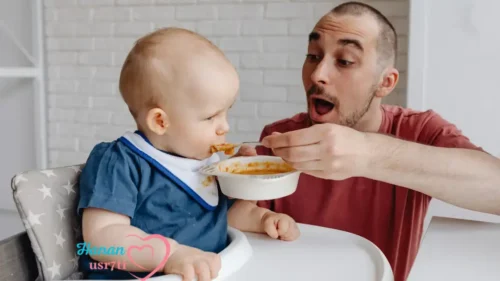
This is probably the most emotionally loaded decision new parents face, right up there with sleep training. Do you spoon-feed smooth purees the traditional way, or do you hand your six-month-old a steamed carrot stick and let them figure it out themselves (an approach known as baby-led weaning, or BLW)? Parents on both sides feel strongly, and social media doesn’t help calm anyone down. Fortunately, this is one of the few parenting debates where we actually have solid randomized trial data instead of just opinions.
What the BLISS Trial Found
The landmark study here is the Baby-Led Introduction to SolidS (BLISS) randomized controlled trial out of New Zealand, which tracked 206 healthy infants from six to twelve months. The headline result should be a relief to worried parents: researchers reported that 35% of infants choked at least once between six and eight months of age, with no statistically significant difference in choking frequency between the baby-led group and the traditionally spoon-fed control group. Gagging (which is different from choking and is actually a protective reflex) followed an interesting pattern too, since baby-led infants gagged more often at six months but less often than the spoon-fed group by eight months, likely because they’d simply had more practice managing textures earlier on. A more recent cross-sectional study out of Poland reinforces the same general safety picture while adding useful specifics: among BLW families, researchers recorded gagging in 64.8% of children, food spitting in 77.1%, and choking in 12.3%, with medical intervention required in only 0.2% of cases, and the same study found BLW children showed greater self-directed eating autonomy and broader exposure to different food textures.
None of this means either method is risk-free, and it doesn’t mean you can skip choking safety altogether — both groups experienced adverse events, and supervision remains non-negotiable no matter which philosophy you follow. What it does mean is that you can stop feeling like you’re gambling with your baby’s safety by choosing one approach over the other. The original researchers themselves cautioned in their published findings that regardless of method, parents need direct instruction on how to respond if unavoidable choking occurs, which is honestly the most actionable takeaway from the whole body of research.
Choosing the Right Approach for Your Family
| Factor | Traditional Purees | Baby-Led Weaning |
|---|---|---|
| Iron delivery in early weeks | Easier via fortified cereal, spoon-fed in known amounts | Requires deliberate iron-rich finger foods (meat strips, lentil fritters) |
| Mess level | Moderate | High, especially months 6–9 |
| Parental control over portions | High | Low — baby self-regulates intake |
| Family meal integration | Slower | Faster, since foods mirror the family plate |
| Texture progression | Must be advanced deliberately by 8–9 months | Naturally varied from day one |
Plenty of families land somewhere in the middle, spoon-feeding iron-fortified cereal for breakfast while offering soft finger foods at other meals, and there’s no research penalty for a hybrid approach. What matters far more than the label you put on your method is whether you’re offering iron-rich foods consistently, advancing textures instead of staying stuck on purees past nine months, and supervising every single meal without exception.
The First Foods That Matter Most (and Why Iron Comes First)
If you remember only one nutritional fact from this entire guide, make it this one: the era of rice cereal as the default “first food” is outdated, and iron should be driving your food choices far more than tradition does. A baby’s prenatal iron reserves, built during the last trimester, are running low right around the six-month mark, and breast milk simply doesn’t contain enough iron to fill that gap on its own.
Iron- and Zinc-Rich First Foods
Clinical guidance is specific about which foods should anchor a baby’s early diet, noting that between seven and twelve months, a baby’s iron requirement jumps to 11 milligrams per day, and because breast milk is low in iron, the choice of first foods becomes critical, with iron-fortified infant cereals like oat, barley, and multigrain varieties serving as a reliable early source. Beyond fortified cereal, pureed or well-cooked minced meat, poultry, lentils, and beans all deliver meaningfully more iron per serving than fruits or vegetables do, and pairing them with a source of vitamin C (a few strawberries, a bit of mashed orange segment) actually boosts how much iron your baby’s body absorbs. New federal dietary guidance backs this shift firmly, recommending a diverse range of nutrient-dense foods including meat, poultry, seafood, vegetables, fruits, full-fat yogurt and cheese, whole grains, and legumes or nut-containing foods prepared in a safe, age-appropriate form, while explicitly steering families away from nutrient-poor, highly processed pouches and snacks marketed for babies.
Building Out the Rainbow Plate
Once iron-rich foods are established, rotating through a genuinely wide variety of vegetables, fruits, whole grains, and dairy does double duty: it covers nutritional bases and it trains your baby’s palate to accept different flavors and textures before the notoriously picky toddler years set in. A reasonable early rotation looks like mashed avocado, steamed and mashed sweet potato, soft-cooked peas, banana, plain full-fat yogurt, and small pieces of soft-cooked pasta or toast strips. Don’t worry about introducing foods in a rigid order — outside of the allergen sequencing covered below, there’s no clinically meaningful reason to delay any single-ingredient whole food, and variety early on genuinely does pay off later.
Introducing Allergens Early — What Changed and Why
If your own parents or grandparents raised kids, they were almost certainly told to delay peanut butter, eggs, and other common allergens until age two or three “just in case.” That advice has been completely reversed, and it’s one of the most important updates any new parent needs to hear clearly, because outdated advice here can genuinely increase a child’s risk rather than reduce it.
The Peanut Allergy Turnaround
Current pediatric consensus is now the opposite of what earlier generations were told. A pediatric nutrition resource states directly that early introduction of allergens like peanut butter is recommended specifically to reduce long-term allergy risk, a shift driven by large clinical trials showing that early, consistent exposure trains a developing immune system to tolerate rather than react to these proteins. This doesn’t mean handing a six-month-old a spoonful of peanut butter straight from the jar — thinned peanut butter mixed into warm water or yogurt, or a peanut-butter-infused puff designed for infants, delivers the exposure without the choking risk of a thick, sticky scoop.
A Safe Sequence for Introducing Common Allergens
The nine foods responsible for the vast majority of childhood food allergies are peanuts, tree nuts, eggs, cow’s milk, soy, wheat, fish, shellfish, and sesame. Current guidance suggests introducing these one at a time, in small amounts, at home rather than at daycare or a restaurant, and ideally earlier in the day so you have hours to watch for any reaction rather than putting your baby to bed right after a new exposure. Wait roughly two to three days between introducing each new allergen before adding the next one, watching for hives, vomiting, unusual fussiness, or swelling; mild eczema flare-ups or a single instance of loose stool generally aren’t cause for alarm, but any difficulty breathing warrants immediate emergency care. If your baby already has moderate to severe eczema or a diagnosed egg allergy, talk with your pediatrician before introducing peanut specifically, since these babies are considered higher-risk and may benefit from an allergy specialist’s input first.
Homemade vs. Store-Bought Baby Food
Neither option is objectively “better” in a way that should make you feel guilty either way, and most families end up using a mix of both depending on the week. Homemade baby food gives you total control over ingredients, lets you match textures precisely to your baby’s stage, and costs meaningfully less per serving once you’ve bought a basic steamer and blender. Store-bought pouches and jars win on convenience, especially for the diaper bag, daycare drop-off, or the exhausted 6 p.m. dinner rush, and reputable manufacturers test for contaminants as part of routine quality control.
Comparing Cost, Convenience, and Control
| Factor | Homemade | Store-Bought |
|---|---|---|
| Cost per serving | Lower (bulk produce, batch cooking) | Higher, especially organic pouch brands |
| Time investment | Higher (prep, cook, puree, freeze) | Minimal — ready to serve |
| Ingredient control | Complete | Limited to label transparency |
| Texture flexibility | Fully adjustable to baby’s stage | Fixed per product |
| Portability | Lower unless pre-portioned and frozen | High |
A practical middle ground many parents settle into: batch-cook and freeze homemade purees or mashed foods in ice cube trays for the bulk of meals at home, and keep a stash of store-bought pouches for travel, illness weeks, or genuinely busy days. Whichever direction you lean, avoid pouches as a primary feeding method past nine or ten months, since babies need practice chewing and self-feeding, and a diet dominated by squeeze pouches can delay that skill development.
Heavy Metals in Baby Food: Separating Real Risk From Panic
This is the topic that understandably keeps parents up at night after seeing a viral headline, and it deserves a clear-eyed, non-alarmist explanation rather than either dismissal or panic.
What “Closer to Zero” Actually Regulates
The FDA’s relevant framework is called Closer to Zero, and a detailed explainer describes it precisely: it is the FDA initiative that sets action levels for lead, inorganic arsenic, cadmium, and mercury in food intended for babies and young children, where an action level is the concentration above which the FDA can treat a product as adulterated. It’s worth understanding that this is an enforcement threshold rather than a hard legal limit in the way a pesticide tolerance works, and current specific numbers include 10 parts per billion of lead for fruits, vegetables, mixtures, yogurts, custards, puddings, and single-ingredient meats, 20 ppb for root vegetables and dry infant cereals, and 100 ppb of inorganic arsenic specifically for infant rice cereal, while cadmium and mercury limits remain in draft or advisory-only status. Independent testing adds useful texture to the regulatory picture: a 2025 report commissioned by an advocacy group found that arsenic was detectable in 100% of 145 rice samples tested, with more than one in four samples exceeding the FDA’s own limit for infant rice cereal, and brown rice grown in the southeastern United States showed the highest heavy metal concentrations of any category tested. Legislative pressure to tighten this further is ongoing, with a 2026 congressional bill described as aiming to establish enforceable timelines and a structured process to drive continuous reductions in toxic exposure, building on the FDA’s existing Closer to Zero framework.
Foods and Practices That Lower Exposure
None of this means rice or root vegetables need to disappear from your baby’s diet, but rotation matters more than most parents realize. Rinsing rice thoroughly before cooking and cooking it in excess water that gets drained afterward (similar to how pasta is cooked) measurably reduces arsenic content. Rotating grains so rice cereal isn’t the daily default — oat, barley, and quinoa cereals are all reasonable alternatives — spreads exposure across a wider range of sources rather than concentrating it in one food eaten every single day. Choosing a variety of fruits and vegetables rather than relying heavily on any single root vegetable, and limiting fruit juice entirely in the first year (which offers little nutritional benefit anyway), are both simple, low-effort habits that meaningfully reduce cumulative exposure without requiring you to overhaul your baby’s whole diet.
Choking Prevention: The Rules That Actually Matter
Regardless of whether you spoon-feed or let your baby self-feed, a handful of non-negotiable safety rules apply to every single meal. Always have your baby seated upright in a supportive high chair rather than reclined or on your lap, since gravity and posture genuinely affect swallowing safety. Never leave a baby alone while eating, not even for the thirty seconds it takes to grab a napkin, since choking is frequently silent and doesn’t always produce the dramatic coughing or gasping most parents expect. Cut round, firm foods like grapes, cherry tomatoes, and hot dogs into small, irregular pieces rather than coins, since a coin-shaped piece can fully block a small airway in a way an irregular shape usually can’t.
Foods to Avoid Entirely Before Age Four
A short, memorable list is more useful here than an exhaustive one you’ll forget under pressure: whole nuts and large seeds, popcorn, whole grapes and cherry tomatoes, hard raw vegetables like uncooked carrot coins, hard candy, large chunks of peanut butter, and — critically — honey in any form, since honey can contain botulism spores that a baby’s immature gut isn’t yet equipped to handle safely, a risk that persists until roughly age one regardless of how “natural” or “raw” the honey is marketed to be.
A Sample Feeding Schedule by Age
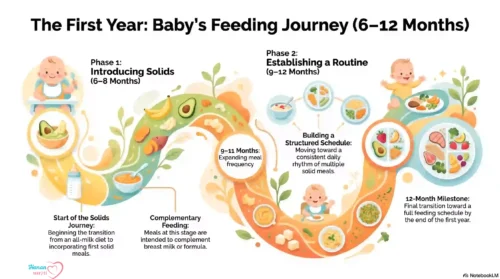
A rough framework helps more than a rigid one, since every baby’s appetite and pace genuinely differs. Around six months, one to two small meals a day of iron-fortified cereal or pureed/soft finger foods alongside continued breast milk or formula as the primary nutrition source is plenty. By seven to eight months, most babies handle two to three meals daily with slightly thicker textures and an expanding variety of single ingredients. By nine to twelve months, three meals plus one or two snacks, softer chunks rather than smooth purees, and increasing self-feeding practice sets babies up well for the transition to full family meals shortly after their first birthday.

Common Mistakes Parents Make With Baby Food
The single most common misstep is staying on smooth purees for too long out of caution, which can actually make texture acceptance harder later rather than easier — babies have a developmental window for accepting new textures, and delaying past nine months genuinely does correlate with pickier eating down the line. A close second is defaulting to rice cereal at every single meal simply out of habit, which both limits nutritional variety and concentrates arsenic exposure unnecessarily. Parents also frequently give up on a food after just one or two rejections, when research consistently shows a baby may need to be offered the same food ten to fifteen times before genuinely accepting it — rejection on day one isn’t a verdict, it’s just data. Finally, many well-meaning parents delay allergenic foods out of outdated fear, when current evidence points the opposite direction entirely.
Conclusion
Starting solids is one of those parenting milestones that feels enormous in the moment and, in hindsight, becomes just another normal part of your baby’s growth. The research is genuinely reassuring on the points that cause parents the most anxiety: baby-led weaning and traditional purees carry comparable safety profiles, early allergen introduction protects rather than endangers your child, and heavy metal exposure, while worth managing through simple rotation habits, isn’t a reason to panic over every jar or pouch. Focus your energy on the things that actually move the needle — waiting for genuine developmental readiness, prioritizing iron-rich foods early, supervising every meal closely, and introducing allergens deliberately rather than fearfully — and the rest of the process has far more room for flexibility than the internet tends to let on.
Frequently Asked Questions
1. Can I start my baby on solid food at four months if they seem hungry all the time?
Increased hunger alone isn’t a reliable readiness sign, since it’s often better addressed with more frequent breast milk or formula feeds. Solids should wait until your baby shows the full cluster of readiness signs — steady head control, sitting with support, loss of the tongue-thrust reflex, and active interest in food — which for most babies lines up closer to six months.
2. Is it normal for my baby to refuse a new food the first time I offer it?
Completely normal, and it’s one of the most common reasons parents give up too early. Babies often need ten to fifteen exposures to a new taste or texture before accepting it, so a scrunched-up face on day one says very little about whether that food will eventually become a favorite.
3. Do I need to introduce foods in a specific order, like rice cereal first?
No — outside of the deliberate, staggered sequencing recommended for common allergens, there’s no clinical reason to introduce foods in any particular order. Prioritizing iron-rich options early matters far more than which specific food comes first.
4. Is store-bought baby food less nutritious than homemade?
Not inherently. Reputable manufacturers meet nutritional and safety standards, and the bigger nutritional risk is over-relying on pouches past the age when your baby should be chewing and self-feeding, rather than the pouches themselves being nutritionally inferior.
5. What should I do if my baby gags while eating?
Stay calm and let your baby work it out on their own without immediately pulling food from their mouth or intervening, since gagging is a protective reflex, not a choking emergency. Reserve intervention for true choking signs — silence, blue-tinged lips, or clear inability to breathe — and make sure you and any other caregivers know infant CPR and choking response before starting solids.
Sources:
- American Academy of Pediatrics / AAP News — New dietary guidelines including AAP recommendations on complementary feeding: https://publications.aap.org/aapnews/news/34132/New-dietary-guidelines-include-AAP-recommendations
- HealthyChildren.org (AAP) — When Can Babies Start Solid Foods?: https://www.healthychildren.org/English/ages-stages/baby/feeding-nutrition/Pages/Starting-Solid-Foods.aspx
- Pediatrics (American Academy of Pediatrics journal) — A Baby-Led Approach to Eating Solids and Risk of Choking (BLISS trial): https://publications.aap.org/pediatrics/article/138/4/e20160772/52372/A-Baby-Led-Approach-to-Eating-Solids-and-Risk-of
- U.S. Food and Drug Administration — Closer to Zero: Reducing Childhood Exposure to Contaminants from Foods: https://www.fda.gov/food/environmental-contaminants-food/closer-zero-reducing-childhood-exposure-contaminants-foods
- PMC (National Library of Medicine) — Baby-Led Weaning vs. Traditional Complementary Feeding, Cross-Sectional Study: https://pmc.ncbi.nlm.nih.gov/articles/PMC11901614/
